Gulf of Mexico
Program
Citizens' Pollution Prevention Handbook
Acknowledgment
Many individuals contributed
to the development of this handbook. We would like to thank all Gulf of
Mexico partners who gave of their time, energy, and expertise in creating
this handbook.
This document has been funded by the United States Environmental Protection
Agency, Gulf of Mexico Program, under Cooperative Agreement Number X-820906-01-0
awarded to the Cooperative Extension Service of Mississippi State University.
The contents of this document do not necessarily represent the views and
policies of the Environmental Protection Agency, nor does the mention
of trade names or commercial products constitute an endorsement or recommendation.
Published by:
Mississippi State University Extension Service
Mississippi State University
Funded by:
U.S. Environmental Protection Agency
Gulf of Mexico Program
Contents
Introduction
The Gulf of Mexico - "America's Sea"
Issues of Environmental Concern
Save
the Gulf? Who, Me?
Agencies
and Organizations To Contact for Further Information
Bibliography
The Gulf of Mexico Program
Citizens' Pollution Prevention Handbook is a quick and easy-to-read reference
guide to help you learn ways in which you can make a difference in protecting
the environment of the Gulf.
People who live, work, and play in the Gulf area -- beach goers, boaters,
students, sport and commercial fishermen, landowners, farmers, business
owners, and coastal residents -- will find facts and figures that give
a clear picture of the current environmental status of the Gulf. The handbook
will create a deeper understanding of the impacts of personal and professional
behavior on the Gulf environment and suggest ways in which you can take
action toward eliminating pollution problems that threaten the Gulf of
Mexico.
We hope the information
contained in this handbook is useful in preventing pollution in your home
and at work. You can make a difference no matter who you are or where
you live.
The Gulf of Mexico is
truly a national treasure. Because it is a semi-enclosed body of water and
the source of many of America's renewable and nonrenewable resources, the
Gulf is sometimes called "America's Sea." Spanning the southern part of
the United States, the 600,000-square-mile Gulf is bordered by five states:
Florida, Alabama, Mississippi, Louisiana, and Texas. One thousand six hundred
miles of primary coastline also include part of the shoreline of Mexico
and Cuba. The Gulf is relatively shallow, averaging 5,000 feet deep, when
compared to the Pacific, Indian, and Atlantic Oceans, each of which averages
about 13,000 feet. The bottom topography includes broad continental shelves,
submarine canyons, abyssal plains, and ancient reefs. In some places, bottom
sediments are 10 miles thick due to deposits made by rivers that flow into
the Gulf and drain two-thirds of the continental United States.
Between 1956 and
1990, offshore oil and gas development in the Gulf of Mexico generated
more than $82 billion in federal revenues, one of the largest sources
of funds to the nation's treasury. Oil and gas from the Gulf account for
90 percent of America's offshore production. Texas, Louisiana, Mississippi,
and Alabama have about 40 percent of the total U.S. petroleum refining
capacity. Gulf Coast facilities refine about 275 million gallons of crude
oil each day.
Nearly half of all
U.S. import/export shipping tonnage passes through Gulf waters. Four of
the nation's 10 busiest ports are located on the Gulf Coast, with the
Port of New Orleans at the top of the list, handling some 170 million
tons of freight annually. Houston, Texas, ranks third, with more than
110 million tons handled each year.
The Gulf of Mexico
and its coastal areas are rich fishing grounds. Commercial fisheries are
among the most important of the Gulf's renewable resources, with more
than 1.7 billion pounds landed annually, valued at more than $640 million.
Five of the top 10 U.S. fishing ports are located in the Gulf states.
The Gulf provides more than 50 percent of the U.S. landings of fish, shrimp,
and shellfish and yields more seafood annually than the south Atlantic,
mid-Atlantic, and Chesapeake areas combined. Two-thirds of the shrimp
landed in this country come from the Gulf, making the Gulf shrimp fishery
the second most valuable U.S. fishery. More than 1,200 seafood processors
and wholesalers employ 15,000 people in the Gulf region. More than 22,000
commercial fishing boats, manned by more than 40,000 professional fishermen,
harvest seafood from Gulf waters.
More than 100 million
fish are caught each year by recreational fishermen in the Gulf. Three
million sports fishermen make more than 17 million fishing trips into
Gulf waters annually. This accounts for more than one-third of all marine
recreational fishing in the United States.
Habitats and ecosystems
along the Gulf Coast include such diverse areas as freshwater swamps,
mangrove forests, seagrass beds, and salt marshes. About half of the coastal
wetlands in the conterminous United States are located along the Gulf.
These habitats and breeding grounds shelter and feed thousands of species
of coastal and marine wildlife. The coastal wetlands of the Gulf provide
habitat for four to seven million migratory waterfowl every winter. Many
rare and endangered species of wildlife, including sea turtles and manatees,
are found in the Gulf.
Tourism is another
important business that pumps an estimated $20 billion per year into the
economies of the Gulf states. People come to the Gulf to catch some of
the nearly 50 species of finfish or shellfish, play along beautiful beaches,
view the exotic array of wildlife, or to escape colder climates.
In spite of its importance
to our quality of life, or perhaps because of it, the Gulf of Mexico is
in serious trouble. Both natural and man-made causes are contributing to
a rapid decline in the environmental quality of the Gulf. Formerly pristine
habitats and many species of marine and coastal life have been adversely
affected by an increase in human activities. Today, one-sixth of the U.S.
population lives in the five states bordering the Gulf. Of these 42 million
people, 15 million live in coastal counties. By the year 2010, coastal population
densities in the Gulf are projected to increase to an average of 227 people
per square mile (more than 1,000 per shoreline mile). These new coastal
residents will further strain Gulf resources as they demand housing, jobs,
fresh water, and the conveniences of modern life.
Numerous local and state agencies working with the U.S. Environmental
Protection Agency, through its Gulf of Mexico Program, have identified
several major areas of environmental concern.
Garbage from merchant
ships, commercial and recreational fishing vessels, cruise ships, and drilling
platforms, plus debris from inland municipal sewage and waste disposal facilities
that washes into the Gulf, is a major problem. Because circulation within
the Gulf is limited, solid waste and other pollutants float along with the
currents until, eventually, they wash up on shore. Indestructible plastic
waste tossed into the marine environment kills thousands of seabirds and
marine mammals each year by entanglement or being mistaken for food. Many
sea turtles die each year from eating plastic that looks like jellyfish,
one of their favorite foods.
Within three hours on a single day in September 1991, volunteers picked
up 18 tons of garbage on Alabama beaches, of which 57 percent was plastics.
On both coasts of Florida, there were 180 tons of garbage, 60 percent
plastics; in Louisiana, 133 tons, 68 percent plastics; Mississippi, 23
tons, 53 percent plastics; and in Texas, 199 tons, 72 percent plastics.
This debris came only from those beaches chosen as cleanup sites. However,
more than a ton of trash per mile can be found on some Gulf beaches. In
fact, three Gulf states exceeded the national average in terms of plastics
as a percentage of marine debris collected.
Water from two-thirds
of the United States drains into the Gulf of Mexico, and one-half of the
runoff from all this land actually makes its way into the Gulf. Excessive
levels of nitrogen, phosphorus, and other nutrients come from city sewage
treatment plants, industrial operations, septic tanks, lawns, gardens, and
agricultural activities. An overdose of nitrogen and phosphorus can lead
to algal blooms that deplete the water's dissolved oxygen, making it unsuitable
for other forms of life. A 3,600-square-mile oxygen-deficient "dead zone,"
located off the coasts of Texas and Louisiana, contributes to a dramatic
reduction in species diversity and abundance in the region. This area is
in the heart of one of the nation's richest and most extensive fishing grounds.
Coastal habitats, such
as marshes and estuaries, are disappearing at an astounding rate. Louisiana
alone is losing 35 to 40 square miles of valuable wetlands every year. These
nursery grounds and refuge areas for fish and wildlife also act as anti-pollution
devices by filtering sewage and contaminants before they enter open water.
An estimated 95 percent of the Gulf's commercial fish and shellfish rely
on wetlands for critical habitat during their life cycles. More than 75,000
acres of wetlands have been affected by dredge and fill operations in Texas,
Louisiana, and Florida. Urban and residential expansion in Florida has destroyed
22,000 acres of mangrove swamps. Alabama has lost 25,000 acres of wetlands
and bay bottoms in the Mobile-Tensaw Delta.
Freshwater diversion has decreased inflow into Gulf estuaries, increasing
salinity and causing the loss of more habitat. In Mississippi, water is
so contaminated in four of the state's major estuaries that oyster harvesting
is prohibited. Nearly 3.5 million acres where shellfish grow in the Gulf
are permanently or conditionally closed due to pollution.
Recent toxic release
inventory data showed that the Gulf states of Alabama, Mississippi, Louisiana,
and Texas were 4 of the top 10 states in the country in total surface water
discharge of toxic chemicals. A total of 460 municipalities and large industries
pipe discharges directly into the Gulf. Farmers spread more than 21 million
pounds of chemical fertilizers and pesticides on croplands in the Mississippi
River region each year. Industries in the same area annually release 2.3
billion pounds of toxins into the marine environment. Offshore oil and gas
operations have released an estimated 14 million gallons of oil into the
Gulf as a result of well blowouts and explosions on drilling platforms.
Tankers and barges moving petrochemicals, petroleum, and other hazardous
waste contribute to the problem.
Many environmental factors
have a direct impact on public health in the Gulf of Mexico. More people
get sick from eating raw oysters, clams, and mussels than any other seafood.
Many of these illnesses are directly linked to poor water quality due to
pollution in oyster-growing areas. Water pollution can also cause human
illness by direct contact through activities such as swimming and boating.
Other marine biotoxin events, such as red tides, which can be associated
with nutrient over-enrichment, can cause severe health problems in humans
through direct contact or consumption of contaminated seafood.
Rivers from as far away
as Montana and New York, including all of the states between the Rocky Mountains
and the Appalachians, drain into the Gulf. The greatest amount of freshwater
inflow comes from the Mississippi River, which sends more than 3.3 million
gallons of water into the Gulf every second. By comparison, the Rio Grande
in southern Texas has a discharge rate of about 15,000 gallons per second,
because the river is used extensively for irrigation and only a small percentage
reaches the Gulf. Dams and levees built for hydroelectric power generation
and flood control further alter the natural flow of freshwater reaching
the Gulf. Many plants and animals require a balanced mixture of fresh- and
saltwater in order to grow and survive. Alteration of natural flow patterns
allows saltwater to intrude into estuaries that directly affect species
diversity and abundance. Freshwater inflow is also essential for flushing
pollutants out of the estuaries.
Coastal wetlands in the
Gulf area are rapidly disappearing due to severe erosion. Since the mid-1950's,
800 square miles between Vermillion Bay and the Mississippi state line have
washed away. If the present rate of loss persists, several coastal parishes
will disappear within 50 years. Loss of vegetative cover on barrier islands
due to human activities increases the effect of wind and wave erosion and
reduces the storm protection provided by these fragile land areas.
The bountiful fisheries
in the Gulf are being fished beyond their limits as more people compete
for the resources. Several Gulf fisheries are now closed during certain
seasons to allow the stocks time to rebuild. Others are under strict regulation
from federal and state agencies. Many other species of wildlife are also
being diminished due to over-harvesting, pollution, and habitat loss. The
Gulf of Mexico is home to many rare and endangered species of wildlife,
including five species of sea turtles, the West Indian manatee, sperm whales,
whooping cranes, bottlenosed dolphins, and the American bald eagle.
The Gulf of Mexico is
America's Sea, but it's your backyard! Every day millions of people affect
the quality of the Gulf without even knowing it. Do you know...
- Where your storm
sewers drain?
- Where your garbage
goes once it leaves your curb?
- Where your septic
field drains?
- Where pesticides
and fertilizers go once they leave your lawn?
- Where the used
oil from your car is disposed?
Knowing the answers to
these questions and many more like them can help you to improve your
backyard. You may be unaware of many things in your daily life that affect
the health of the Gulf. Nonpoint-source
pollution is increasingly recognized as a significant factor in
coastal water degradation. Nonpoint-source pollution includes lawn and
garden pesticides and fertilizers, street or parking lot runoff, and septic
tank drainage. In urban areas, storm water and combined sewer overflow
are linked to major coastal problems, and in rural areas, runoff from
agricultural activities adds to coastal pollution. These sources are
attributable to people conducting their everyday activities and are examples
of just a couple of ways that your actions can have a large impact
on the quality and future of the Gulf. The first step is to recognize
the connection between your way of life and the health of the Gulf. Everyone
is responsible for the future of the Gulf, so get involved and start making
a difference. Here are some pollution sources affecting the Gulf of Mexico
and things you can do to help "Take Pride Gulfwide."
Erosion and surface runoff
cause sediments and contaminants to enter Gulf waters directly by washing
into tributaries and indirectly by being carried through storm drains and
water treatment facilities. Erosion also causes the loss of valuable wildlife
habitat and in some cases, may actually threaten building structures located
on shorelines. You can take some simple steps to reduce erosion and surface
runoff from your property.
- Minimize hard surfaces,
such as paved areas, and maximize the absorption capacity of your ground.
Protect soil by planting ground covers, grasses, shrubs, and trees and
by adding mulch. This will allow water to sink into the soil where it
can be filtered naturally to remove sediments and contaminants.
- Plant and maintain
trees, shrubs, perennial grasses, or legumes along steep slopes, drainage
channels, or ditches, and around bodies of water. These are called "buffer
strips" and help trap surface water and sediments. Native plants generally
survive best. The proper width of buffer strips of vegetation between
the land being used and the water body depends on the type of soil,
the degree of slope, and the type of vegetative cover. Consult a landscape
architect or your Extension agent. Forested areas are more effective
than grasslands. A one-acre buffer of trees, 50 feet wide, protects
almost 900 feet of a waterway by reducing soil erosion caused by rainfall
impact and allowing more water to filter through the soil.
- Use terraces to
reduce water runoff velocity on long or steep slopes. Grade your land
with a series of gentle swales (or low areas) and berms (elevated areas)
to drain water away from the house, yet allow water to sink into the
soil. This system will allow particles to settle or filter out as the
water percolates into the soil.
- Keep heavy equipment
off exposed soil during the rainy season to reduce erosion and allow
for vegetative growth. Use gravel cover for unpaved parking areas.
- Direct sprinkler
heads away from paved surfaces, especially if drainage is directly into
the street or drainage ditch.
- Irrigate or water
lawns in the evening or early morning but never on windy days or when
it has rained recently. This reduces the amount of water lost to evaporation
and runoff. Plants don't need water for several days after a heavy rain.
- Irrigate only when
necessary instead of on a schedule. This minimizes water consumption
and reduces the potential for contaminant-laden surface runoff. Apply
no more than three-fourths of an inch of water at a time for grass.
Lawns need watering when they have a bluish cast or when you can see
your footprints after walking across them.
- For areas that
need more frequent watering, use efficient watering devices such as
pop-up sprays, bubblers, drips, microsprays, and soaker hoses.
- Reduce watering
requirements by using landscape plants that are drought-tolerant. Check
with your Cooperative Extension Service for a listing of drought-tolerant
species suitable for your area.
- Drip lines under
roof eaves and downspouts are particularly susceptible to sediment erosion.
Place gravel or plant hardy vegetation under roof eaves. Add downspout
attachments to slow and spread out the draining water. This reduces
erosion and runoff.
Lawn and garden chemicals
are beneficial when correctly used. But when nutrients, such as fertilizers,
enter waterways, they can cause algal blooms that lead to oxygen depletion
and have a negative impact on other forms of life. Many fish kills can be
traced to oxygen depletion caused by an over abundance of nutrients in the
water. Many herbicides and pesticides can kill non-targeted species directly
if they enter surface waters. You should always strive to reduce the amount
of these toxic substances released into the environment.
- Choose a fertilizer
that has at least one-fourth of the nitrogen in a slow-release, water-insoluble
form. Fertilize in the dry months, usually October to May.
- Use the minimal
amount of fertilizer necessary, and apply it in small, frequent applications.
An application of 2 pounds of fertilizer five times per year is better
than 5 pounds of fertilizer twice a year. Always read and follow
label directions. Many suburban homeowners use 5 to 10 pounds of
pesticide per acre. That's about ten times more chemicals per
acre than farmers use!
- Pull weeds instead
of using herbicides. Use mulch to discourage weeds from growing in the
first place.
- Choose plants that
are pest-resistant and don't require much fertilization. Your Cooperative
Extension Service office can provide you with a list of suitable plants.
Do not apply fertilizer within 50 feet of a water body.
- Avoid applying
fertilizer to paved surfaces. If any fertilizer is inadvertently spread
on sidewalks or driveways, sweep it off before watering.
- Apply fertilizer
when the soil is moist, and then water lightly. The fertilizer will
sink into the root zone where it is available to the plants, rather
than stay on top of the soil where it can be blown or washed away.
- Mow your lawn frequently,
and leave the grass clippings to decompose on the lawn. Annually, this
will provide nutrients equivalent to one or two fertilizer applications.
Remove grass clippings within 50 feet of waterways. Never dump grass
clippings or other organic material into a waterway.
- Weakened plants
are susceptible to pests. Make sure the blades on your mower are sharp
and adjusted to a high setting to reduce the temporary stress caused
by mowing.
- Always consider
natural alternatives to lawn and garden chemicals. Pesticides kill beneficial
as well as harmful insects. Biological controls, such as natural predators
and companion planting plus a well-planned pest management program,
can prevent pollution and save money. Some bugs can be dislodged merely
by forcefully spraying them with a stream of water. Safe bacteria used
to control caterpillars are sold in garden supply stores. Consider using
natural alternatives for chemical pesticides, such as nondetergent insecticidal
soaps, garlic, and hot pepper sprays.
- Always keep lawn
and garden chemicals away from surface water. Never spray when it may
rain in the same day, and do not water heavily after application. Do
not spray on windy days. Be particularly careful in spring or early
summer because many species of wildlife are much more sensitive to toxics
during their juvenile stages.
- Never dump poisonous
chemicals into sewers, drains, toilets, or any other connections to
wastewater treatment systems. Triple-rinse containers, and apply the
water to the treated area.
- Farmers and others
who use a lot of lawn and garden chemicals should dispose of the containers
in special incinerators or at landfills with programs for handling toxic
waste. Call the EPA's RCRA Superfund Hotline at 1-800-424-9346 for the
phone numbers of state agencies who can help you dispose of hazardous
wastes.
- Wrap single containers
in several layers of newspaper, tie securely, and place in a covered
trash can. Do not burn containers; smoke and fumes may be hazardous.
The best way to dispose of lawn and garden chemicals is through
proper use.
Nutrients and pathogens
from malfunctioning septic systems cause health problems and add to the
pollutant load on coastal waters. Excess nutrients lead to algal blooms
and oxygen-poor waters. Pathogens from human sewage can cause diseases like
cholera and hepatitis. Fecal coliform bacteria associated with human and
animal wastes are used as an indicator of water quality. Pathogens from
malfunctioning septic systems are involved in the closure of shellfish harvest
areas and, in some cases, the closure of swimming areas.
- Know the location
and components of your septic system. Use the access manhole to inspect
the septic tank annually for accumulation of sludge and surface scum.
If the bottom of surface scum is within 3 inches of the tank's outlet
pipe, have the septic tank pumped and properly cleaned. Generally, have
the sludge pumped every 3 to 5 years.
- Kitchen garbage
disposals unnecessarily burden septic systems. Put kitchen organic material
in compost piles or in curbside trash cans for landfill disposal. If
you do use a garbage disposal, have the septic tank cleaned every 2
years.
- Keep surface water
out of septic tank or absorption areas. These areas already receive
all the water they need.
- Use water-reducing
devices, such as flow-restricting shower heads and toilet tank inserts,
to minimize water flow to the septic tank. Balance water use throughout
the week to avoid overloading the system at any one time.
- Keep heavy vehicles
away from the septic system because their weight can crush drain fields
and keep them from functioning properly. Don't plant trees or shrubs
near drain lines; roots can clog them.
- Don't flush into
the system material that will not easily decompose, such as hair, cigarette
filters, sanitary napkins or tampons, condoms, etc. They will reduce
your system's capacity and clog the drain field.
- Do not wash or
flush strong chemicals into the system. They could kill the bacteria
needed to decompose the wastes.
- Do not cover the
surface of the drain field with any impermeable material such as plastic
or cement. This reduces the soil's ability to "breathe," preventing
proper function of the drain field.
- Keep accurate records,
including diagrams of design, location, and size of the entire septic
system. They should include dates that the system is inspected and when
the tank has been pumped out.
- Be on the lookout
for signs of septic system failure, e.g., patterns of bright lush growth
in your lawn, toilets that flush slowly, or drains that back up. Foul-smelling
water or water that rises to the surface during heavy rains or when
your water use is high (as when doing laundry) are other signs of septic
system failure.
Look around your house
and notice what hazardous substances you might have stored. Paint, solvents,
or rat poison in the shed? Heavy cleansers (ammonia, bleach, and spot removers)
in the kitchen, bath, or laundry? A shelf of automotive oils, lubricants,
and antifreeze in the garage? These toxic materials present a serious environmental
concern. It is everyone's responsibility to handle and dispose of these
hazardous materials in a safe manner.
- Be sure all containers
are clearly marked, and always follow the manufacturer's instructions
for use. Warning labels will advise you if the product becomes more
hazardous when mixed with another substance.
- Use only enough
of the product to get the job done. Buy only as much as you need.
- Store hazardous
products in an area that will never be flooded.
- Sweep your
driveway. Accumulations of toxics and heavy metals will wash into surface
water if you hose it. Automotive wastes are major sources of contamination.
When washing vehicles, use soap sparingly and rinse on gravel, lawn,
or other absorbent ground to filter the detergents and oils before the
runoff reaches water courses.
- Avoid using hazardous
chemicals on impermeable surfaces during rainy periods.
- Never dump hazardous
products down drains, the toilet, or near flowing water, ponds, or lakes.
Do not dump them on the ground!
- Wrap empty containers
securely in several layers of newspaper and place them in covered trash
receptacles. Periodically dispose of excess containers at hazardous
waste collection sites. Don't let wastes accumulate.
- Allow the moisture
in small quantities of latex paint to evaporate and dispose of the remaining
waste properly. Larger amounts can be recycled through your local center.
For information on local recycling centers, contact your city or county
solid waste disposal organization.
- Paint thinner can
be stored in covered containers and reused once the paint has settled
out.
- Always try to use
nontoxic products instead of hazardous chemicals for cleaning. Many
new environmentally safe products are on the market, but you may already
have products in your home that will do a good job and may save you
money. Here are some alternatives:
- Air freshener
- A small dish of vinegar or lemon juice set out in a warm area
- Bleach
- Borax
- Chlorine
scouring powder - Baking soda
- Detergent
- Simple soap (or phosphate-free detergent)
- Disinfectant
- Ammonia
- Drain cleaner
- Plunger, followed by a handful of baking soda and a half cup of
vinegar. Cover and allow to sit for 15 minutes. Pour in two quarts
of boiling water, and the clog should disappear.
- Glass cleaner
- Two tablespoons of vinegar to one quart of water
- Grease remover
- Baking soda paste
- Mildew stain
remover - Vinegar solution
- Mothballs
- Cedar chips
- Oven cleaner
- Pour salt on fresh oven spills, and scrape the residue off when
the oven cools. Ammonia can be applied to tough stains.
- Stain remover
- Cornstarch paste
- Tile cleaner
- Baking soda and toothbrush
- Toilet bowl
cleaner - Baking soda
Pets and livestock contribute
to pollution because their untreated wastes are often deposited directly
on the ground where surface runoff can carry them into water bodies or storm
drains. Grazing animals can remove so much vegetative cover from an area
that it becomes highly susceptible to erosion. Larger animals can also destroy
vegetation through trampling.
Never allow pet feces to remain on streets, sidewalks, driveways, or other
impervious surfaces where it will be washed directly into storm drains.
- Locate barnyards,
stockyards, and feeding and watering areas well away from surface waters.
Maintain pasture fencing to keep animals away from surface waters and
swampy areas. Keep as much distance as possible between fencing and
surface waters. Vegetated buffer strips provide filtration and absorption
of pollutants.
- Determine the number
of animals you pasture on the basis of the productivity of your land.
Restrict grazing when plants are dormant and when soils are wet. Wet
soil is easily compacted, and traffic in muddy areas will break the
root systems of ground cover. Place salt licks and supplemental feeding
stations away from water supplies to encourage even grazing. Rest periods
are critical to proper pasture growth. A grazing rotation that allows
foliage 21 to 28 days of regrowth between grazing periods is recommended.
Divide pasture area into separate units if possible.
- Where practical,
such as in concentrated feedlots or dairy barns, collect manure regularly
for proper storage. Select a storage site where water runoff cannot
mix with manure and seepage from the manure cannot mix with surface
water. Optimal storage is on a concrete slab with walls or curbs and
a fixed roof. Cover stored manure to keep rainwater from seeping through
it. Consider constructing an animal waste lagoon.
- Apply manure evenly
to pastures, fields, and gardens where nutrients will aid plant growth.
Apply only as much as your crop or pasture can use. Excess manure will
wash off into surface waters or filter into groundwater systems. Till
manure into soil evenly whenever possible. Leave an adequate buffer
strip between manure application sites and surface waters.
Pools require large doses
of chlorine and other chemicals that should not be dumped directly into
a water body.
- Drain your pool
only when necessary and never during water restriction periods.
- Do not chlorinate
the pool water for several days before draining it. Drain the pool slowly
onto a large expanse of lawn to allow the water to filter slowly through
the soil. Never drain directly into a waterway or the street.
Your car carries motor
oil, battery acid, gasoline, antifreeze, and transmission and brake fluids.
Degreasers, rust preventives, radiator flushers, and cleaning and waxing
compounds are rubbed, buffed, flushed, or applied sometime during the life
of most cars. These automotive products contain toxic chemicals that should
not find their ways into waterways. Moreover, recycling used motor oil can
save resources. The amount of used, nonrecycled oil that is improperly dumped
in the United States each year is 10 to 20 times the amount that leaked
from the Exxon Valdez oil tanker during the 1989 Alaska oil spill.
- Maintain your car.
Note any fluid leaks. Repair oil, transmission fluid, and brake fluid
leaks immediately. This not only prevents pollution but ensures your
safety as well.
- Never dump oil
or antifreeze into storm drains, ditches, or onto the soil. One quart
of oil, when completely dispersed, can contaminate as much as 2 million
gallons of drinking water. Take used fluids to service stations or recycling
centers. Use a mild, biodegradable, phosphate-free soap to wash your
car. Use a bucket of water or a hose with a shutoff nozzle, rather than
a constant stream of water.
- Buy only the minimum
amount of automotive products you need to maintain your car. Store and
dispose of empty containers properly.
- Do your part to
save energy and cut down on air pollution. Walk, bicycle, carpool, or
use public transportation whenever you can. Buy a fuel efficient car.
Check your tire pressure often; low tires waste gas.
The manner in which boaters
use and care for their craft has a large impact on the health of the Gulf.
Boat fuels and other chemicals are often spilled into waterways. Boat wakes
can increase shoreline erosion. Propellers can damage seagrass beds and
other valuable wildlife habitats. Trash thrown overboard contributes to
the marine debris problem. Improper use of marine sanitation devices adds
pollution to our waterways.
- When fueling your
boat, take extra care not to spill fuel or over fill the tank. After
you fill the tank sufficiently, tighten the fill cap and wipe away any
dripped fuel.
- Discard all trash
properly. Never toss any litter overboard, especially plastics. Monofilament
fishing line and six-pack rings are particularly harmful to aquatic
and bird life.
- Maintain your boat
engine to avoid any oil leaks. When changing the engine oil, bring the
used oil to a marina that recycles oil or to another recycling drop-off
point. If oil spills into your bilge, use sorbent pads to soak up the
spilled oil. Never discharge oily bilge water into waterways.
- Rinse and scrub
your boat with a brush rather than with soap. When soap is necessary,
use phosphate-free soap.
- When removing the
paint from boat hulls, catch the scrapings in a drop cloth or sweep
and throw them into the trash. Bottom paints contain copper or tin that
is extremely harmful to aquatic life.
- Avoid cutting through
seagrass beds with boat propellers. Seagrass meadows, one of the Gulf's
most important habitats, are severely scarred by boat propellers and
may take up to 15 years to recover. Leave at least 12 inches of clearance
between your boat propeller and the bottom. Churned up sediments cloud
the water and damage bottom-dwelling plants and animals. Observe "no
wake" zones.
- Use onshore sanitary
facilities whenever possible. If you are navigating within 3 miles of
shore, the U.S. Coast Guard requires sanitizing gear or an onboard holding
tank. Empty the holding tank at a designated pump-out station.
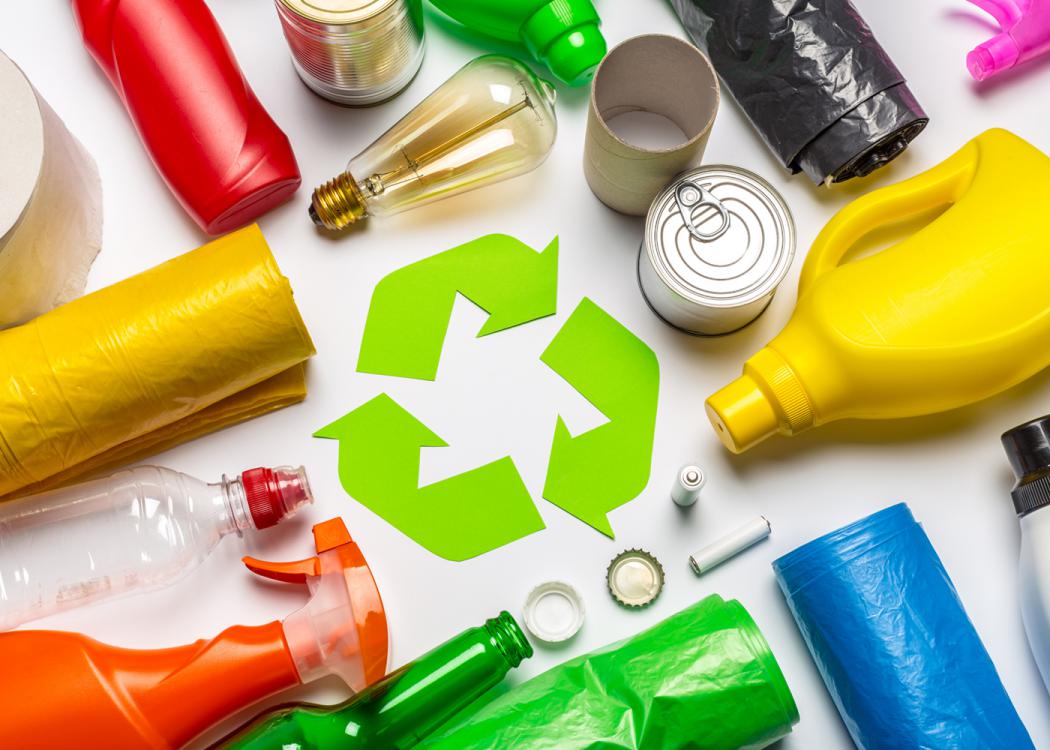
The average person in
the United States generates more than 4 pounds of trash each day--twice
as much as people in most other industrialized countries.
About 80 percent of what we throw away is recyclable, yet we recycle less
than 10 percent. Recycling one ton of paper saves about 17 trees, 3 cubic
yards of landfill space, 2 barrels of oil, 7,000 gallons of water, and
4,100 kilowatt hours of electricity--enough energy to power the average
American home for 5 months. It also prevents 60 pounds of stack emissions
from being released into the air. Recycling aluminum cans uses only 5
percent of the energy required to make new ones. Twenty-eight million
tons of grass clippings, leaves, and other yard waste are dumped in landfills
each year. This adds up to almost 20 percent of all landfill trash.
- Recycle your paper,
metal, plastic, and glass. Check with your local department of solid
waste for the location of recycling centers in your area.
- Buy recycled and
recyclable products. Encourage schools, businesses, and employers to
buy recycled paper products. One of the greatest barriers to recycling
is that there is not enough demand for recycled products.
- Write letters to
state and national governments encouraging them to use recycled paper
products; the U.S. government is one of the biggest paper users in the
world. Encourage your local newspaper to use recycled newsprint. Look
into the use of electronic mail as a means to reduce paper use.
- Don't buy goods
overpackaged with paper, plastic, plastic foam, or other materials.
Write letters to retailers and manufacturers explaining why you refuse
to buy their over packaged products.
- Laid end-to-end,
the 18 billion disposable diapers thrown away in the United States each
year could reach to and from the moon seven times. Make the switch from
disposable diapers to cloth. Disposable diapers waste resources, contaminate
landfills with human waste, and take up valuable landfill space. Besides,
cloth diapers are cheaper!
- Buy soft drinks
in recyclable or refundable containers and return or recycle them. Use
your own sturdy canvas bags whenever you shop. If you don't have a canvas
bag, reuse paper and plastic bags. Encourage your grocer to use bags
made of sturdy, recycled paper.
- Choose reusable
tableware instead of disposable plates, cups, and utensils. Take a mug
to work so you don't throw away a coffee cup every day.
- Avoid one-use consumer
items such as disposable razors, cigarette lighters, flashlights, cameras,
and nonrechargeable batteries, all of which are sources of waste.
- Make a compost
pile instead of throwing grass clippings, leaves, and food waste in
the trash. After the leaves, food, and grass decompose, you can use
the compost as fertilizer for your garden. Your county Extension agent
can provide you with information on composting.
- Buy nonperishable
products in large quantities or in bulk. Products sold in small, individual
units use far more packaging material and are usually more expensive.
- Be careful about
buying plastic products labeled "degradable." Many break down only in
sunlight and some break down into toxic materials.
What We Throw
Away
(Percent of All "Trash")
- Plastics -- 7%
- Food -- 8%
- Glass -- 8%
- Metals -- 9%
- Yard Waste -- 18%
- Paper -- 40%
- Other -- 10%
A lot of the water we
use comes from lakes, rivers, streams, and other surface sources. But much
of it comes from underground supplies, which in some areas are getting dangerously
low. Some of these water supplies are becoming polluted. And to make matters
worse, we're disrupting natural water systems by channeling rivers, building
dams, and draining wetlands. In the Gulf of Mexico region, this disruption
has created water shortage concerns and destroyed valuable wildlife habitat.
- Install a low-flow
shower head with a maximum flow rate of 2.5 gallons per minute or less.
You'll cut your bathroom water use by 30 to 50 percent, and you'll conserve
the energy required to heat the "extra" water.
- Add low-flow aerators
to threaded faucets in kitchen and bathroom sinks. These inexpensive
devices reduce flow rates while maintaining enough force for washing
and other uses.
- If you have a dripping
faucet, you may be wasting hundreds of gallons of water a week. Replace
worn out washers to stop faucet leaks.
- If your toilet
"runs" between flushes, you are wasting a lot of water. In fact,
you usually can't hear a leaky toilet valve until you're losing more
than 250 gallons per day. To test your toilet, place food coloring or
dye tablets in the toilet tank, and then check the bowl for traces of
color after 15 minutes. Buy an inexpensive repair kit to repair any
leaks.
- When you replace
a toilet, install a low-consumption model or a water saver. Standard
toilets use 5 to 7 gallons per flush; "water-savers" use 3 to 4 gallons
per flush; and new low-consumption models use 1.6 gallons, or less,
per flush. Until you replace your toilet, put a plastic bottle filled
with water in the tank to cut down on water needed for a flush. (Don't
use bricks. They can disintegrate and cause plumbing problems.) Bathrooms
use more than 65 percent of home indoor water.
- To conserve water
and energy, wait until you have a full load before running your dishwasher
or washing machine. Use the water-saving cycle whenever you can.
- Use phosphate-free
detergent. When phosphates end up in lakes, estuaries, and streams,
they can kill aquatic organisms by promoting algae growth that depletes
oxygen supplies in the water.
Our continued and increasing
use of fossil fuels is causing many serious environmental problems. Digging
coal mines, drilling oil wells, and transporting fossil fuels can damage
wildlife habitat. Burning fossil fuels to generate electricity contributes
to air pollution and, possibly, to global warming. Fossil fuels provide
more than 80 percent of the world's energy. Each year, the amount of energy
that leaks through windows in American homes equals the energy produced
by the oil that flows through the Alaskan pipeline. The United States has
5 percent of the world's population but consumes nearly 25 percent of the
world's energy.
- Set home heating
temperatures no higher than 68 degrees Fahrenheit. Each degree below
68 °F lowers heating costs an additional 2 to 3 percent.
- Use fans instead
of air-conditioners to cool your home on hot days. If you use an air-conditioner,
set the temperature no lower than 78 °F. Each degree above 78 °F
lowers cooling costs by an additional 5 percent.
- Change or clean
furnace and air-conditioner filters once a month to keep heating and
cooling systems running efficiently.
- Install a clock
thermostat to save heating and cooling energy at night and when no one
is home. A clock thermostat can be set to turn on heating and cooling
systems only when needed and to turn them off at other times, such as
at night or when no one is home.
- Set your water
heater to a lower setting (about 120 °F). If you have a dishwasher,
check to see if the manufacturer recommends a certain water temperature.
Insulate your water heater.
- Wash clothes in
cold water. Hang them out to dry or buy a clothes dryer with a moisture-sensor
control so the dryer will stop automatically when clothes are dry.
- Replace incandescent
light bulbs with lower watt or fluorescent bulbs. Although fluorescent
bulbs often cost more, they save money in the long run because they
last much longer than standard incandescent bulbs and use one-fourth
the electricity. If you install outdoor security lights, use high-pressure
sodium lamps and turn them off during the day.
- If you leave lights
and a radio on in the house while you're away, use timers to turn them
on and off.
- Save energy by
eliminating drafts in your home. Repair broken windows and warped doors,
caulk and weatherstrip around windows and doors, put up storm windows
and doors in the winter, and use insulated curtains. Install solar heating
devices whenever possible. Roof-mounted collection grids for hot water
heaters and solariums are two types of solar devices suitable for the
Gulf region.
- When shopping for
any major appliance, compare the energy consumption figures on the black
and yellow "energy guide" labels, and buy the most energy efficient
appliance.
- Call your utility
company to arrange for an energy audit of your home to give you specific
ideas about how to save energy and money.
- Plant trees or
bushes in your yard. They will save you money on heating and cooling
by providing shade and serving as windbreaks. They also replenish the
earth's oxygen supply and provide habitat for wildlife.
Activities that occur
in waters, including wetlands, generally require federal and/or state permits.
The public has the right to get involved in these permitting decisions.
The permitting agencies can issue a permit, deny a permit, or issue a permit
with special conditions that mitigate environmental impacts. You can help
by providing input into the decision-making process on the permit action.
You can also help by reporting violation such as activities being performed
without a permit or where special conditions to a permit (such as constructing
new wetlands to mitigate for those that were lost due to the action) have
not been adhered to.
If you follow the simple steps in this handbook, your actions will help
improve the environmental quality of the Gulf of Mexico and the earth.
Now you know why it is important for every one of us to share in maintaining
this valuable resource. It is easy and will take a couple of minutes each
day. Carry the message to others. Encourage everyone you meet to Take
Pride Gulfwide!
America's Clean Water
Foundation
750 First Street, NE
Suite 911
Washington, DC 20002
202-898-0902
(Helps citizens understand the Clean Water Act and encourages their involvement
at the local level)
Center for Marine Conservation
1725 DeSales St. NW
Washington, DC 20036
202-429-5609
(Promotes conservation of threatened marine wildlife and critical habitats)
Clean Ocean Action
P.O. Box 505
Sandy Hook, NJ 07732
908-872-0111
(Crusades against pollution and ocean dumping)
Coast Alliance
235 Pennsylvania Ave. SE
Washington, DC 20003
202-546-9554
(Promotes conservation of coastal wildlife and habitats)
Coastal Society
P.O. Box 2081
Gloucester, MA 01930-2081
508-281-9209
(Promotes wise use and management of the coastal zone)
Environmental Action
Foundation
1525 New Hampshire Ave. NW
Washington, DC 20036
202-745-4870
(Helps communities protect people's health and clean up pollution)
Environmental Defense
Fund
257 Park Ave. S
New York, NY 10010
800-225-5333
(Free recycling brochure; champions clean air and water)
Gulf of Mexico Program
Bldg. 1103, Room 202
Stennis Space Center, MS 39529
601-688-3726
Electronic Bulletin Board - 800-235-4662
(Multiagency effort to protect and restore Gulf of Mexico and its resources)
Environmental Protection
Agency
Office of Solid Waste
401 M St. SW
Washington, DC 20460
800-424-9346
(Information about your state's recycling coordinator and how to plan
a hazardous waste collection in your community)
Greenpeace USA
1436 U St. SW
Washington, DC 20009
202-467-1177
(Protects wildlife, habitat, and natural resources)
National Audubon
Society
700 Broadway
New York, NY 10003
212-979-3000
(Sanctuary management, research, and education to protect wildlife and
habitat)
National Wildlife
Federation
1400 16th Street NW
Washington, DC 20036-2266
202-797-6829
(Fights for endangered species and safe drinking water; exposes toxic
polluters; saves wetlands and forests)
Nature Conservancy
1815 North Lynn St.
Arlington, VA 22209
703-841-5300
(Buys and maintains land to protect the environment and save the world's
rare animals and plants)
Seventh Generation
49 Hercules Drive
Colchester, VT 05446-1672
802-862-2999
(Free catalog of recycled products)
Sierra Club
730 Polk St.
San Francisco, CA 94109
415-776-2211
(Promotes protection of land, wildlife, and people; crusades against pollution)
The Windstar Foundation
2317 Snowmass Creek Road
Snowmass, CO 81654
303-923-2145
(Publications about alternative products and other environmental topics)
Galveston Bay Foundation
17324-A Highway 3
Webster, TX 77598
713-334-3665
(Promotes wise management of Galveston Bay)
Gulf Coast Conservation Association
4801 Woodway Ste. 220W
Houston, TX 77056
713-626-4222
800-626-4222 (Texas only)
(Concerned with marine fisheries issues)
Marine Education
Services
University of Texas, Austin
P.O. Box 1267
Port Aransas, TX 78373
512-749-6764
(Field trips and classroom education for educators and students)
Nature Conservancy
Texas Field Office
P.O. Box 1440
San Antonio, TX 78295-1440
512-224-8774
Texas Adopt-a-Beach
Program
Texas General Land Office
1700 N. Congress, Room 730
Austin, TX 78701-1495
512-463-5108
800-85-BEACH (Texas only)
(Supports reduction of coastal and marine debris)
Texas Coastal Cleanup
Center for Environmental Education
1201 W. 24th St.
Austin, TX 78705
512-477-6424
(Organizes beach cleanups; documents sources of marine debris)
Texas Parks and Wildlife
Department
Resource Protection Division
Environmental Quality Branch
4200 Smith School Rd.
Austin, TX 78740
512-389-4636
(Coastal and marine resource management)
Texas Sea Grant College
Program
Texas A & M University
P.O. Box 1675
Galveston, TX 77553-1675
409-762-9800
(Research, education, and advisory services concerning coastal and marine
resources)
Texas State Aquarium
Education Department
P.O. Box 331307
Corpus Christi, TX 78463
512-886-6018
(Educational activities for teachers and students)
Texas Water Commission
Environmental and Recycling Information Center
512-908-2944
(Used oil recycling information)
Texas Soil Conservation
Service State Office
W.R. Poage Federal Building
101 South Main
Temple, TX 76501-7682
817-774-1214
(Provides information and technical assistance for wetlands restoration
and construction of terraces, waterways, waste lagoons, and other soil
and water conservation practices)
Aquarium of the Americas
Education Department
111 Iberville St., Suite 500
New Orleans, LA 70130
504-565-3800
(Educational programming for schools)
Lake Pontchartrain Basin Foundation
P.O. Box 6965
Metairie, LA 70009-6965
504-836-2215
(Research and education to improve environmental quality of Lake Pontchartrain
Basin)
Louisiana Department
of Environmental Quality
P.O. Box 44066
Baton Rouge, LA 70804
504-342-6390
(Pollution control; permitting)
Louisiana Department
of Wildlife and Fisheries
2000 Quail Drive
Baton Rouge, LA 70898
504-765-2800
(Coastal and marine resource management)
Louisiana Office
of Litter Reduction and Public Action
P.O. Box 94291
Baton Rouge, LA 70804-9291
504-342-8148
(Promotes reduction of marine and coastal debris)
Louisiana Sea Grant
College Program
Louisiana State University
Wetlands Resources Bldg.
Baton Rouge, LA 70803-7507
504-388-6448
(Research, education, and advisory services concerning coastal and marine
resources)
Nature Conservancy
Louisiana Field Office
P.O. Box 4125
Baton Rouge, LA 70821
504-338-1040
Louisiana Department
of Environmental Quality
Solid Waste Division Recycling Section
504-765-0249
(Used oil recycling information)
Louisiana Soil Conservation
Service State Office
3737 Government Street
Alexandria, LA 71302
318-473-7751
(Provides information and technical assistance for wetlands restoration
and construction of terraces, waterways, waste lagoons, and other soil
and water conservation practices)
Mississippi State University
Coastal Research and Extension Center
2710 Beach Blvd., Suite 1-E
Biloxi, MS 39531
601-388-4710
(Research, education, and advisory services concerning coastal and marine
resources)
J.L. Scott Marine Education Center and Aquarium
115 Beach Blvd.
Biloxi, MS 39530
601-374-5550
(Educational activities for students and teachers)
Mississippi Bureau
of Marine Resources
2620 Beach Blvd.
Biloxi, MS 39531
601-385-5860
(Coastal and marine resource management)
Mississippi-Alabama
Sea Grant Consortium
Gulf Coast Research Laboratory
Caylor Building
P.O. Box 7000
Ocean Springs, MS 39564
601-875-9341
(Research, education, and advisory services concerning coastal and marine
resources)
Mississippi Bureau
of Pollution Control
P.O. Box 10385
Jackson, MS 39289-0385
601-961-5171
(Pollution abatement; permitting)
Mississippi Wildlife
Federation
520 North President Street
P.O. Box 1814
Jackson, MS 39215-1814
601-353-6922
(Promotes conservation of wildlife and habitat)
Nature Conservancy
Mississippi Field Office
P.O. Box 1028
Jackson, MS 39215-1028
601-355-5357
Mississippi Bureau
of Pollution Control
Larry Estes
601-961-5171
(Used oil recycling information)
Mississippi Soil
Conservation Service State Office
Dr. A. H. McCoy Federal Building
Suite 1321
100 West Capitol Street
Jackson, MS 39269-1399
601-965-4330
(Provides information and technical assistance for wetlands restoration
and construction of terraces, waterways, waste lagoons, and other soil
and water conservation practices)
Alabama Coastal Cleanup
Alabama Department of Environmental Management
2204 Perimeter Rd.
Mobile, AL 36615-1131
334-450-3400
(Marine debris information and beach cleanups)
Alabama Department of Environmental Management
Water Division
1751 W. L. Dickinson
Montgomery, AL 36130
334-271-7700
(Pollution control; permitting)
Auburn University
Extension and Research Center
4170 Commanders Drive
Mobile, AL 36615
334-438-5690
(Research, education, and advisory services concerning coastal and marine
resources)
Nature Conservancy
Alabama Field Office
2821-C 2nd Ave. S
Birmingham, AL 35233
205-251-1155
Marine Environmental
Sciences Consortium
Dauphin Island Sea Lab
P.O. Box 369
Dauphin Island, AL 36528
334-861-2141
(Research and educational activities)
Project Rose
205-348-4878
800-392-8098
(Used oil recycling information)
Alabama Department
of Economic and Community Affairs
10936-B, U.S. Highway 98
Fairhope, AL 36532
334-928-3625
(Information on Boater's Pledge and Adopt-A-Beach programs)
Alabama Soil Conservation
Service State Office
P.O. Box 311
Auburn, AL 36380
334-887-4535
(Provides information and technical assistance for wetlands restoration
and construction of terraces, waterways, waste lagoons, and other soil
and water conservation practices)
Florida Department of
Environmental Regulation
Twin Towers
2600 Blair Stone Rd.
Tallahassee, FL 32399-2400
904-488-0784
(Pollution control; permitting)
(Used oil recycling information - 800-741-4337)
Florida Sea Grant Program
University of Florida
Box 110409
Gainesville, FL 32611
904-392-2801
(Research, education, and advisory services concerning coastal and marine
resources)
Keep Florida Beautiful
402 W. College Ave.
Tallahassee, FL 32301
904-561-0700
(Coastal and marine debris awareness)
Mote Marine Laboratory
1600 Thompson Pkwy.
Sarasota, FL 34236
813-388-1385
(Environmental education and research)
Nature Conservancy
Florida Chapter
2699 Lee Road, Suite 500
Winter Park, FL 32789
407-628-5887
Florida Soil Conservation
Service State Office
Federal Building, Room 248
401 Southeast First Avenue
Gainesville, FL 32601-6849
904-377-1098
(Provides information and technical assistance for wetlands restoration
and construction of terraces, waterways, waste lagoons, and other soil
and water conservation practices)
National Response Center
U.S. Coast Guard
(24-Hour Hotline)
800-424-8802
U.S. Environmental Protection Agency
(24-Hour Hotline)
214-655-2222
Braus, J. (ed) 1990.
Your Choices Count - National Wildlife Federation Citizen Action Guide.
National Wildlife Federation, Washington, DC. 25 p.
Casteel, P. 1992. "America's Sea" Texas Shores, Texas A & M
Sea Grant College Program, Galveston, Texas, Vol. 25, No. 2. pp. 5-24.
Clean Ocean Action.
1989. Clean Ocean Action, 1989 Annual Guide. New York, New York.
52 p.
Cornell Cooperative
Extension, et al. 1991. Sound Gardening - Gardening With an Eye on
Water Quality. Cornell University, Ithaca, New York. 23 p.
Cottingham, D. 1988.
Persistent Marine Debris: Challenge and Response - the Federal Perspective.
National Oceanic and Atmospheric Administration. Washington, DC. 41 p.
Culliton, Thomas
J., et al. 1989. 50 Years of Population Change Along the Nation's Coasts
- 1960 - 2010. U.S. Department of Commerce, NOAA/NOS, Rockville, Maryland.
41 p.
Daniel, J. 1992.
"Give Drinking Water a Helping Hand," GEM Notes. Institute of Water
Research, Michigan State University, East Lansing, Michigan. Vol. 4, No.
1. pp. 1 - 2.
Folit, R. 1989. Bay
Repair Kit - What Each of Us Can Do To Keep Our Bays Clean. Sarasota
County Natural Resources Department, Sarasota, Florida. 18 p.
Freeman, H. et al.
1992. Industrial Pollution Prevention: A Critical Review. USEPA
Pollution Prevention Research Branch, Cincinnati, Ohio. 40 p.
Holm - Shuett, A.,
Sly, C., and Greg Shuett. 1990. Earth Day 1990 - Lesson Plan and Home
Survey - Energy, Solid Waste/Recycling, Toxics, Transportation and Water
with Fact Sheets and Action Guide. Stanford University, California.
42 p.
Lee, V., and E. Ely.
1990. National Directory of Citizen Volunteer Environmental Monitoring
Programs. U.S. Environmental Protection Agency. Washington, DC. 43
p.
National Wildlife
Federation, 1989. Conservation Directory, 34th Edition. National
Wildlife Federation, Washington, DC. 333 p.
National Oceanic
and Atmospheric Administration. 1992. Fisheries of the United States
1991, Current Fishery Statistics No. 309100. U.S. Department of Commerce,
Washington, DC. 113 p.
O'Hara, K.J., S.
Iudicello, and R. Bierce, (eds.) 1988. A Citizen's Guide to Plastics
in the Ocean: More Than a Litter Problem. Center for Environmental
Education, Washington, DC. 131 p.
Tibbetts, J. 1992.
"Forest Buffers Help Clean Rivers," Coastal Heritage. South Carolina
Sea Grant Consortium, Charleston, South Carolina, Vol. 7, No. 1. p. 9.
U.S. Environmental
Protection Agency. 1990. Meeting the Environmental Challenge - EPA's
Review of Progress and New Directions In Environmental Protection.
USEPA, Washington, DC. 27 p.
____________. 1990.
Let's Reduce and Recycle: Curriculum for Solid Waste Awareness.
USEPA, Washington, DC. 144 p.
_____________. 1990.
Educators Earth Dry Sourcebook. USEPA, Washington, DC. 5 p.
Washington State
Department of Ecology. 1991. Water Quality Guide - Recommended Pollution
Control Practices for Homeowners and Small Farm Operators. Olympia,
Washington. 31 p.
Yepsen, R. B., Jr.,
and James Jarratt (eds.) 1987. Organic Plant Protection. Mississippi
State University, Mississippi State, Mississippi. 24 p.
Gulf of Mexico
Program Office
Building 1103 Room 202
Stennis Space Center, MS 39529-6000
Office: (601) 688-3726
By Dave Burrage,
Marine Resources Specialist, Mississippi State University Coastal Research
and Extension Center Mississippi
State University does not discriminate on the basis of race, color,
religion, national origin, sex, age, disability, or veteran status.
Publication 1939
Extension Service of Mississippi State University, cooperating with U.S.
Department of Agriculture. Published in furtherance of Acts of Congress,
May 8 and June 30, 1914. Ronald A. Brown, Director
Copyright by Mississippi
State University. All rights reserved.
This document may be copied and distributed for nonprofit educational purposes
provided that credit is given to the Mississippi State University Extension
Service. |