
|

MAFES Research Highlights
Spring 2000
Volume 63, Number 2
Contents
The Roaring Twenties were called such for the economic prosperity that
occurred during that decade, but in 1927, that epithet took on a different
meaning when the mighty Mississippi River roared over its banks.
As one of the longest rivers in the world, the Mississippi had flooded often
over the course of American history. In 1927, after more than a month of heavy
rains over the mid-Mississippi Valley, the river broke through the Delta levee
in 13 places to inundate 26,000 square miles in seven states and wash away more
than $1 billion in crops. Between April and June, the muddy waters pushed
900,000 people to higher ground and took an estimated 1,000 lives.
Before 1927, never had so many people been killed and left homeless because
of a natural disaster, and never had such a vast amount of land been covered
with water. The Flood of 1927 was perhaps the greatest flood in U.S. history.
Two years later, before the Delta had fully recovered from the disastrous and
deadly waters, one of this country's greatest economic slumps hit on Oct. 24,
1929, when the stock market crashed. Black Thursday, which occurred only eight
months after President Herbert Hoover had entered the White House, marked the
beginning of a depression that would last for the next decade. "In Hoover
We Trusted, Now We're Busted" became a rallying cry during a period in
which businesses closed, factories shut down and banks failed. And, as farm
incomes dropped by 50 percent, farmers had to declare bankruptcy. Those who had
always been able to provide for themselves were suddenly lining up for handouts.
Today, producers are struggling with similar risky issues, and several MAFES
agricultural economists offer suggestions for "weathering" today's
economy in MAFES Offers Risk
Management Techniques.
MAFES researchers are improving reproductivity of beef and dairy cattle to
help the state's producers maximize their profit potential. See
Synchronizing Ovulation Will Benefit Dairy and Beef Cattle.
Every year, the USDA publishes impact statements provided by land-grant
institutions such as Mississippi State. Several impact reports on MAFES research
projects are included in this Highlights.
Milk is a leading agricultural commodity in Mississippi, and MAFES conducts
dairy research at three sites around the state. Learn more about the state's
dairy research.
MAFES researchers Rick Evans and Roscoe Ivy at the Prairie Research Unit in
Monroe County have combined two unusual items to improve cattle feed. Their
research is featured in North
Mississippi Cattle Graze On Seaweed.
MAFES continues its research on the state's agricultural products at 20 sites
around the state. We invite you to come visit us and learn more about what we're
doing. Vance H. Watson
Director
by Rebekah Ray
Agriculture has been the backbone of civilization since the beginning of
human history. Even today, agriculture is so fundamental to modern culture that
life would be essentially impossible without it.
Through the years, agricultural producers have had to contend with volatile
weather, insect predators, crop diseases, low prices, financial crises,
increased overseas competition, fluctuations in supply and demand, changes in
government regulations and programs, and a variety of other obstacles that
increase the risks of farming. Yet, despite these risks, producers are doing a
better job than ever at supplying the food and fiber that make our civilization
possible and enjoyable.
"There is much talk today of a farm crisis, and although agricultural
production has generally been plagued with crises stemming from various
conditions, today's situation is financially distressful for producers,"
said Barry Barnett, MAFES agricultural economist.
Individual producers are hurting, and to them, there is a farm crisis. In the
past, the federal government came in and eased situations for producers to help
them stay in business, Barnett said.
In both 1998 and 1999, producers experienced low prices, and the government
subsidized farm incomes by enacting emergency legislation. This past year,
farmers across the country received the highest farm subsidy ever, $22.5
billion.
"There have always been farm crises. The farm crisis of the early 1980s
had different causes from today's," Barnett said. "When aggregating
across all crops, the number of U.S. harvested acres has remained relatively
constant over the past two decades. Within the U.S., there have been periodic
shifts in acreage across crops. Outside the U.S., acreage has increased for some
crops."
The last three years have been good production years, and increases in food
production have outpaced increases in market demand. However, good production in
the U.S. and worldwide has increased supplies of agricultural products. At the
same time, demand in foreign markets has plummeted because of economic crises
and reduced purchasing power in Asia, South America and Russia.
The gist of the problem is that agricultural production is up and demand has
not kept pace with it. Because of this, American producers are in a quandary of
how to survive these risky times.
Risks cannot be eliminated, but they can be managed. The benefits of
following a risk management program include more effective strategic planning,
better cost control, minimized losses and maximized opportunities, better
methods of decision-making and better utilization of resources.
"The livelihood of agricultural producers depends on making
well-calculated decisions that will help ensure the long-term financial
viability of a farm business enterprise. Good risk management techniques can
help," Barnett said.
Risk Management Strategies. Risk management
consists of a number of complex and interrelated decisions. Successful risk
management strategies will vary widely depending on farm-specific
characteristics. It is as much about identifying opportunities as it is about
avoiding problems.
Good risk management strategies can help guide producers through critical
situations. Many are already using risk management techniques, Barnett
said.
During spring 1999, MAFES ag economists mailed cotton and soybean producers
across the state approximately 1,600 surveys, with 504 responses received. The
research was conducted jointly with Texas A & M, Purdue and the University
of Nebraska.
Effective procedures include production strategies such as installing
irrigation equipment, planting transgenic seeds, diversifying crops, practicing
forward-pricing, purchasing insurance to cover crop and revenue losses, rotating
crops, taking marginal lands out of production, eliminating unnecessary tillage
operations, practicing good pest and disease resistance management and planting
proven and tested seed varieties.
"Getting on top of financial costs will help producers
tremendously," said Keith Coble, MAFES agricultural economist.
Financial management techniques include maintaining capital reserves, renting
out sections of land, developing good marketing strategies, investment planning,
and evaluating machinery and labor needs.
"Farming is inherently risky. Remember that there is usually a trade-off
between risk reduction and profit. To set up appropriate risk management
strategies, producers need to evaluate new risk tools as they come along,"
Coble said.
On Feb. 11, the MSU Extension Service sponsored Risk Management 2000, a
teleconference to inform producers of risk management techniques. Broadcast
simultaneously at six locations around Mississippi, the teleconference included
several MSU researchers, including MAFES agricultural economist John Lee.
"One approach to reducing financial risk is to use some of the 1999
government disaster payments to pay down farm debts carried over from the
previous year. Some producers who cannot pencil out a profit at current low
prices may consider renting their land out for a year or two. This provides
income, eliminates the need for borrowing production money and frees farm
equipment for contract work," Lee said.
Additionally, producers should work to preserve equity. They should check
into stretching out terms of loans or even refinancing the loan. Another option
could be to negotiate deferral of the principal payments and make a payment only
on the interest, Lee said.
Causes of the Crisis. The current farm situation
has been blamed on numerous problems, but the basic problem is one of low prices
for grain, oilseed and cotton caused by global production and stocks growing
faster than consumption.
Weather. Three consecutive years of good weather worldwide have
more than filled grain bins and elevators and increased the worldwide level of
stocks relative to use.
Competition. South American countries are reclaiming acres once
covered with prairie grasses for agricultural production, and their producers
are quickly adapting advanced technology and genetically engineered seed to
produce soybeans, corn, wheat and cotton.
Imports and Exports. In the early 1970s, a weak U.S. dollar
encouraged other countries to import large amounts of U.S. agricultural
products. Today, ag exports account for about $50 billion annually, up from $7
billion 30 years ago. However, many former U.S. export customers are now
producing their own commodities to become competitive in the world market.
Trade Barriers and Tariffs. Countries like China and India have
limited their imports of grains. The European Union allows its producers to
export goods at low prices, and blocks U.S. agricultural imports. Moreover, U.S.
sanctions against Iran, Cuba, Libya, Sudan and other countries have cut off many
Third World countries that have the potential to purchase American farm
products.
Farm Policy. The "Freedom to Farm" provision of the
1996 Farm Bill gave farmers the flexibility to grow crops that fit their farms
best. However, it provided for flat and declining support payments that are
unresponsive to periods of low prices. This unmet need led Congress to provide
supplemental assistance at record levels in 1998, 1999 and possibly again in
2000.
While farmers are suffering from low prices, consumers have access to
plentiful supplies of food, with less of their income going for food than at any
time in modern history.
Moreover, the agricultural crisis seems to go unnoticed in a humming national
economy. Less than 2 percent of the country's population live on farms, and
agricultural production accounts for only a percent or two of the nation's gross
domestic product.
In these challenging times, practicing smart risk management techniques can
help producers survive and prosper. There are many, many ways to manage risks
associated with agricultural production. MAFES offers suggestions for
Mississippi producers.
For more information on managing risks, log onto www.agecon.msstate.edu/risk
Risk Management 2000 is located at www.ext.msstate.edu/special/risk2000
by Bonnie Coblentz
Farming has always been risky business and current economic pressures mean
more is at stake with each decision a farmer makes. Mississippi State University
is helping the state's producers get additional assistance.
Michael Ouart, Extension state program leader for agriculture and natural
resources, said Mississippi's crop producers are facing special challenges from
higher input costs and lower prices they receive for their products.
"The key to coping with this situation is to pay close attention to
management and marketing strategies," Ouart said. "Because of years of
low prices and weather problems, some farmers in Mississippi are facing
especially difficult times."
Risk Management 2000 is a new emphasis the Extension Service is placing on
farm management. A Feb. 11 teleconference offered at six statewide locations
spelled out key risk management tips.
"These key management tips and principles may be more important now than
ever because of the economic situation we're in," Ouart said.
The Risk Management 2000 agribusiness program focuses on managing cotton,
grain and oilseed crops.
Because commodity prices are low, input costs are up and producer exposure to
risks are greater than normal. To evaluate the efficiency of their overall farm
operations, growers must now look at their management and farm practices and not
just at one commodity.
"Techniques offered by Risk Management 2000 help farmers combine the
best existing farm practices with the best new technologies to create a total
management plan," said John Lee, MAFES agricultural economist.
Additionally, a brochure has been published listing specific management tips.
These have been divided into whole farm management, successful agronomic
management, and cotton, soybean, rice, wheat, corn and grain sorghum management
tips.
A web site dedicated to these risk management issues can be found at the
following web address. http://www.ext.msstate.edu/special/risk2000
by Linda Breazeale
Mississippi dairy and beef producers will benefit from efforts of MAFES
researchers who are attempting to synchronize ovulation in heifers to improve
cattle reproductive performance and increase profitability.
Methods are in place
to synchronize estrus, or heat, but not to control ovulation, or release of the
egg. Ovulation typically occurs 24 to 48 hours after a cow comes into
heat.
In MSU's Animal and Dairy Science Department, MAFES animal and dairy
researcher Peter Ryan is working with other scientists to determine the best
method for using a slow-release drug delivery system to cause a group of heifers
to ovulate at the same time.
"In dairy heifers, administration of gonadotropin-releasing hormone (GnRH)
can be used to synchronize ovulation, but the time from GnRH administration to
ovulation is extremely variable," Ryan said. "This variability
contributes to low conception rates in heifers that are on an ovulation
synchronization treatment."
The researchers want to find out if a controlled-release drug delivery system
will improve the response to GnRH. Their efforts are jointly funded by MAFES and
Thorn BioSciences, the producer of the slow-release hormone therapy.
MAFES reproductive physiologist Scott Willard said finding an effective
slow-release system will reduce the number of injections required for the
synchronization process and ultimately save cattle producers time and
money.
"By tricking them into ovulating when we want them to, we can compress
the cycle into a shorter window and eliminate the need to see a behavioral
estrus," Willard said. "Currently, farmers watch for behavioral signs
that a cow is in heat, and some may not show those outward signs."
The researchers are trying to create a nine-day protocol that will take the
guesswork out of the formula.
"Although observation for estrus is relatively easy to work into the
management scheme for lactating dairy cows that are milked two to three times
daily, additional effort is needed for heifers because they are not observed as
frequently," said John Fuquay, professor emeritus of reproductive
physiology.
MAFES dairy researcher Bill Tucker said cattle have a narrow window of
opportunity for breeding.
"When you are busy with other chores, it is easy to miss signs of
heat," Tucker said. "Ovulation synchronization is not just important
for heifers, but for lactating cows as well, since milk production will begin
dropping off if the cow does not become pregnant in a timely
fashion."
One aspect of the ovulation research included the testing of a special
electronic heat detection system.
During the study, researchers investigated various injection intervals for
the timing of ovulation. Their goal was to bring together a group of heifers at
various stages of their estrus cycle and begin hormone injections. They then
followed a prescribed protocol for a specific length of time and identified the
ideal time to artificially inseminate.
MAFES animal researcher Allen Williams said the development of an effective
method to synchronize ovulation will benefit dairy producers, who use artificial
insemination almost exclusively, but it will have even greater potential for
beef producers.
"The benefits in the dairy industry are great, but you could magnify
those benefits by 10 in the beef industry," Williams said. "Only about
6 percent of beef producers use artificial insemination for their herds. Timing
is much harder for beef producers."
Dairy animals are observed closely twice a day, but beef producers work their
animals much less often. If a successful pregnancy depends on a farmer observing
the behavior of an animal in heat, the odds are not very good.
Williams said hormone therapy and artificial insemination are economically
beneficial for cattle producers. The cost of synchronizing estrus, buying semen
and inseminating cattle is $26 to $35 per pregnancy. Using a bull will cost a
producer about $30 to $32 per pregnancy.
"Artificial insemination allows herds to make much faster genetic
progress, and producers can concentrate the breeding and calving seasons,"
Williams said.
by Bonnie Coblentz
Giving a longer shelf life to fish increases quality and often opens new
markets.
Foods that stay fresh longer have greater consumer appeal. They also can
survive the transport time needed to reach distant markets, or they can be
stored fresh and used when needed to maintain a steady supply.
MAFES food microbiologist Doug Marshall is working on ways to increase the
shelf life of fish and shellfish. At the Mississippi State University Food
Science and Technology Department, Marshall is focusing on ways to decontaminate
products and rapidly detect the quality of seafoods.
"Consumers expect the food supply to be high quality and
wholesome," Marshall said. "The quality of seafoods you buy at the
retail level can be poor, and it is a severe damage to the industry to have
low-quality products on the market."
While all meats have a limited shelf life, fish and shellfish are vulnerable
to spoilage more quickly than beef, pork or chicken. The reason, Marshall said,
is that the microorganisms on the meat of warm-blooded animals are suited to
warm temperatures. Placing this meat in cold storage greatly slows the
multiplication of these spoilage organisms.
Fish and shellfish, however, are cold blooded and assume the temperature of
the water. Since the water is often cool, these microorganisms can survive more
easily in cold storage.
One approach to extending the shelf life of fish and shellfish is to remove
or inactivate the organisms on the surfaces of the food. Marshall is trying to
develop biological, chemical and physical methods to accomplish this goal.
"The overall objective is to offer processors a broader range of
possibilities of inventory control," Marshall said. "When you have an
extensive delay between the processor and the consumer, the product will be of a
poor quality before it ever reaches the consumer."
Marshall is studying a biological method to control the contamination of fish
and shellfish. He dips the meat in a bath of beneficial bacteria that restricts
spoilage organisms. This biological control extends the meat's shelf life.
A chemical control under investigation provides a longer shelf life by using
phosphates and organic acids to kill and remove spoilage organisms from the
surface of fish.
The third decontamination method uses a rapid heat process to physically
inactivate microorganisms from the surface of the meat. Marshall said the
ongoing project with the USDA Agricultural Research Service steam pasteurizes
catfish before skinning and filleting the meat.
"If we can reduce the levels of microorganisms on the skin surface, we
will have fewer microorganisms to contaminate the meat," Marshall
said.
Quality control is related to extending the shelf life of a meat product.
Marshall said the current standard for checking quality is a sniff test.
Nationwide, there are three registered noses whose pronouncements of quality are
legally binding, although subjective.
"We need an objective method to determine the freshness or spoilage of
seafood that anyone can use," Marshall said. "It needs to be quick and
easy and not require highly trained people to do it."
There is a computerized machine that can test multiple samples at once and
provide freshness information within seven minutes. Marshall developed the
standards for this machine to use to determine the freshness and quality of
shellfish.
His and other research at MSU's Food Science and Technology Department offers
new opportunities to decontaminate food, extend its shelf life and detect meat
quality.
"If you have an extended-shelf-life product, you can open up new markets
for that product and also assist in inventory control. A company can run a plant
on a constant basis, stockpiling the excess inventory and using the
extended-shelf-life product when demand is high," Marshall said.
MAFES food engineer Juan Silva is studying the value of using ozone and
hydrogen peroxide to kill microorganisms on catfish fillets. Roberto Chamul,
research assistant, explained this project.
"We're trying to see what effect ozone and hydrogen peroxide have on
selected microorganisms that may be on the fish and see if we can improve the
shelf life of catfish," Chamul said.
Varying concentrations of ozone and hydrogen peroxide were added to the
chilled water catfish are dipped in at processing plants. High chemical
concentrations remove microorganisms but destroy the appearance of the
fillets.
"We found there are always some microorganisms resistant to treatment,
but this does lower their numbers," Chamul said. "We're trying to find
the ideal concentrations so as not to affect the sensory quality of the
fillet."
This research was conducted in response to industry needs as some
Delta processors are considering buying expensive ozonators to treat the
fillets. Results of the research and consumer taste panels have established
procedures that allow processors to correctly treat the fillets.
by Rebekah Ray & Debbie Nettles
This country's agricultural sector has done a great job at producing food and
fiber but it could use some help at informing society about the benefits of
agriculture.
For their industry to continue to thrive, agricultural leaders need better
communications strategies with the non-agricultural sector and with local, state
and national decision-makers. To help open these needed lines of communication,
land-grant universities have joined with the USDA Cooperative State Research,
Education and Extension Service (USDA-CSREES) in an ongoing Image Enhancement
Impact Reporting Campaign to identify and quantify how agricultural programs
benefit society, the economy and the environment.
Each year, land-grant and USDA-CSREES personnel throughout the nation prepare
Image Enhancement/Impact Statements that are entered into a USDA national
accountability database. This database is used to produce an annual series of
Science and Education (S&E) Impact fact sheets that promote the benefits of
the USDA/land-grant partnership.
Land-grant personnel in the South use the impact information to produce
"Southern Successes," that highlight agricultural successes in this
region. In January, Mississippi State hosted the Southern Successes writing
team. Both S&E Impact sheets and Southern Successes are available at http://www.reeusda.gov/success/impact.htm
Several MAFES research impact statements were posted to the 1999 Southern
Successes under the Southern Region Impact Reports.
Preventing Erosion in Soybean Production
Issue
The Black Belt Prairie of east Mississippi is one of the largest soybean
production areas in the state. About 150,000 acres of this non-Delta land is
classified as highly erosive, and the often-shallow topsoil lies over
unproductive chalk subsoil. As the topsoil erodes, agricultural production will
be extremely difficult.
No-tillage practices reduce soil erosion and trips across the field, but
previous research in the Prairie area shows significant yield reduction for
no-tillage, making it unattractive economically.
What has been done
Between 1994 and 1998, on-farm research evaluated a one-pass land preparation
system during the fall for producing soybeans and corn as rotational crops.
Costs and net return data were collected for all treatments.
Impact
Combining a one-pass land-preparation system using corn as a rotational crop
cuts trips through the field from five to one, allowing more timely spring
planting and improved ground residue cover. This procedure also increased yield
by two bushels an acre and net return by $6 an acre. The one-pass system also
showed $20 an acre greater net return than with no-tillage.
If this system is adopted on 150,000 acres in the Black Belt Prairie,
producers could benefit from an almost $1 million increase in net income.
Applying the economic multiplier effect of four increases the economic benefit
to Mississippi by about $4 million.
Normie Buehring, Superintendent
Northeast Mississippi Branch Experiment Station, Verona
Improving Animal Waste Management
Issue
Swine, dairy and poultry producers seek answers about proper storage and use
of animal waste as a soil nutrient.
What's been done
A multidisciplinary research team at MSU is researching ways to manage animal
wastes and allow animal industries to grow in an environmentally friendly
manner.
Proper animal-waste management uses are an important source of nutrients for
crop and forage production, with minimal negative impact on the environment. For
example, using sawdust or sand bedding presents a dilemma for many dairy
producers.
The team constructed a manure/sand solids separation facility to identify
management procedures to evaluate waste-associated nutrients in animal
runoff.
This research checks for nutrients as waste is flushed from the barn prior to
entering the dairy lagoon. Researchers also examined impacts of runoff from
swine lagoon effluent irrigation and focused on cycling nutrients into a forage
production system.
Impact
Information obtained from these studies can help reduce water contamination
and determine waste-application rates that protect water quality.
The development of a cost-effective sand-trapping system will allow dairy
producers to benefit from sand-free stall bedding without financial penalties
associated with removing sand from treatment lagoons. Environmentally, the
sand-trapping systems allow a lagoon to function at optimal capacity by keeping
the treatment volume intact.
Runoff associated with the land application of animal waste continues to be a
topic of hot debate. A multidisciplinary team is studying how applying swine
lagoon wastewater to forage crops affects the quantity of nutrients in simulated
runoff. This study will allow livestock producers to better use the nutrients in
wastewater for crop production, while protecting environment.
Timothy Burcham, MAFES agricultural engineer
Mississippi State, Starkville
Improving Water Quality in Catfish Ponds
Issue
Producers sometimes attempt to maximize resources by raising too many fish in
aquaculture ponds. Constructed wetlands in catfish production can improve water
quality and reduce fish kills. Eliminating discharge of poor pond water benefits
fish production.
What has been done
Research begun in 1993-94 evaluated the effectiveness and design criteria of
newly constructed wetlands for improving water quality in ponds that had been
stocked with 5,000 catfish fingerlings per acre. Follow-up evaluations were
recorded in 1995-96 and 1997-98. Expected improvements in water quality among
treatment ponds were achieved as the marsh systems reached maturity.
Research included determining the accompanying reductions in risk of crop
loss, incidence of off-flavor, and release of nutrient-laden effluent into the
environment; documenting costs vs. benefits of using wetland construction in
pond culture; and providing information and technology transfer to the
pond-culture industry.
Impact
Preliminary economic analyses of using constructed wetlands in a 48-acre,
multi-enterprise Mississippi Black Belt farm showed the average annual projected
cost of catfish production would increase by 7 to 8 cents per pound of catfish
harvested. Further testing is needed to ascertain its effects on the yields of
marketable catfish or other fish species under intensive commercial-scaled
operations.
Benedict C. Posadas, MAFES marine economist
Mark W. LaSalle, marine resource specialist-estuarine
Coastal Research and Extension Center, Biloxi
Assessing the Impact of Agriculture on Global Warming
Issue
Global warming is discussed often by the national media. Atmospheric
scientists note that carbon dioxide and other greenhouse gases are increasing in
the atmosphere at approximately 1.5 percent per year from burning fossil fuels
and other human activities. Because these gases absorb infrared radiation,
climatologists predict concentrations of the gases will cause warming of the
Earth's surface air and other climatic effects.
Long-term climate changes have important implications for human health,
agriculture, severe weather and the economy.
What has been done
A study is under way to determine the contribution agriculture makes in
generating radiative gases and to examine the probable consequences projected
global warming may have on crop production.
Agricultural activities contribute about 25 percent of the total radiative
forcing by burning fossil fuels, tilling the soil and causing breakdown of
organic matter and generating methane or nitrous oxide. Methane is produced in
animal waste lagoons and in flooded rice production, while nitrous oxide results
from fertilization. Crop production will benefit from increased carbon dioxide.
Higher temperatures, however, will damage crops produced for seed, during the
flowering and seed-growth periods. High temperatures also cause damage to the
flowering process and abscission of flowers, resulting in yield losses.
Additional effort also should be made to develop cultivars more tolerant to high
temperatures.
Impact
Several aspects of crop production are recognized as contributing to the
production of radiative gases that may cause global warming. Reduced tillage and
more judicious use of nitrogen fertilizer will lower the release of greenhouse
gases. Alternative practices that shift the flowering periods to avoid high
temperatures of late summer will allow crops to escape injury.
K. Raja Reddy, MAFES plant physiologist
Mississippi State, Starkville
Developing Nematode-Resistant Cotton
Issue
The root-knot nematode, one of the most damaging cotton pests in the United
States, costs cotton producers millions of dollars each year in lost yields.
Nematodes cause root damage that stunts cotton plant growth and generally
weakens plants, making them more susceptible to other pests or diseases. This
pest also causes other problems such as decreased cotton fiber length.
What has been done
MSU researchers have used genetic engineering techniques to develop
nematode-resistant cotton varieties. These experimental lines show great promise
for fighting off the root-knot nematode, and they are high yielding and produce
cotton with good fiber quality and length. Research continues on the varieties,
but another three to four years of field testing and screening must be done
before a nematode-resistant cotton cultivar can be released.
Impact
A nematode-resistant cotton cultivar could have as great an impact on cotton
producers as the development of genetically engineered Bt cotton, which kills
certain insects that feed on cotton. Cotton producers could gain millions of
dollars in increased yields and higher-quality cotton. Further economic gains
would be seen in the reduced need for chemical pesticides on cotton fields.
Reducing uses of chemical pesticides in favor of an environmentally safe,
genetically engineered cotton variety, would also help to preserve water quality
in agricultural production areas.
Roy Creech, MAFES agronomist
Mississippi State, Starkville
Applying Spectral Techniques to Ag Production
Issue
Overapplication of water and agricultural chemicals such as fertilizers and
pesticides can raise farm management costs and increase problems associated with
environmental contamination.
Improved methodology and techniques are prerequisites to using knowledge.
Current remote-sensing technologies provide quick, detailed information and good
resolution but usually do not provide information about specific requirements
for particular sites in a field. Relationships between remote-sensing data and
requirements established for crops grown under well-controlled conditions need
to be investigated.
Resource managers can then get information organized within a theoretical
framework to help with the decision-making process.
What has been done
Groups of cotton plants were grown under optimal conditions using
computer-controlled irrigation and fertilization, along with pest control.
Levels of nitrogen, potassium and water were varied among the groups.
Remote-sensing data were related to leaf-nutrient content or water-stress level,
the leaf content of major components (chlorophyll and starch among others),
agronomic data (height, number of leaves, fruit distribution, etc.), and some
physiological parameters such as how well the plants were
photosynthesizing.
Impact
This research can establish a set of tools for thorough physiological
interpretation of the vegetation component of remotely sensed images. When
merged with other data about a field (such as weather, soil types, topography,
planting dates), the interpretation can help generate crop-health maps and
assist in developing early and timely detection of crop-stress indicators.
This research can provide valuable information for applying spectral
techniques to crop ecosystem functioning and landscape and farm-level management
systems.
K. Raja Reddy, MAFES plant physiologist
Lee Tarpley, visiting research scientist
Mississippi State, Starkville
Managing Risk with Crop Insurance
Issue
Farming comes with inherent risks so producers need to find alternatives to
help minimize financial risks.
What has been done
An increased push toward revenue insurance is evident as governmental safety
nets disappear and producers face an increasingly complex set of choices. MAFES
agricultural economists are analyzing present and potential risk-management
instruments to help growers minimize financial losses.
Management tools include various types of insurance, forward-pricing and
futures, or crop diversity. Although risks cannot be eliminated from farming,
they can be managed but likely at some cost to the grower. Yield and revenue
insurance policies help manage risks.
The Crop Insurance Reform Act of 1994 changed the government's role in crop
disaster payments. Beyond catastrophic insurance, growers can purchase buy-up
insurance to protect their investments, but USDA statistics indicate Mississippi
growers have less insurance than their counterparts do in other states.
MAFES is examining why Mississippi farmers insure a smaller percentage of
crops.
Impact
Ongoing research is analyzing current premium rate structure for federal crop
insurance in the Midsouth.
Barry Barnett, MAFES agricultural economist
Keith Coble, MAFES agricultural economist
Mississippi State, Starkville
Improving the Precision of Cotton Pest Control
Issue
Producers need a precise and reliable method to determine when cotton insect
control can be stopped in late season without reducing yields. Greater precision
is needed in insect-management decisions in early season when probability of
damaging insect infestation is low but crop susceptibility to injury is
great.
What has been done
A multistate, multiagency, and multidisciplinary research and demonstration
project between Mississippi and Arkansas has been under way since 1993. The
project expanded in 1994 to include Louisiana, Tennessee, Texas and Virginia.
Most of the project has been to develop and validate COTMAN, a computerized
expert system for cotton management.
The greatest progress has been in validation of end-of-season rules for
termination of insecticide treatments (node above white flower 5 plus 350 HU
rule), where one to five late-season insecticide applications were avoided with
no effect on yields. The team is concentrating on validation of early-season
management rules for insect control, irrigation, and plant-growth-regulator
treatments and for defoliation in late season.
Impact
Economic impact evaluations of on-farm experiments in Mississippi show an
average reduction of about two late-season insecticide applications, with
potential savings of $30 per acre. This provides a projected multimillion-dollar
savings to cotton producers, provides opportunity for substantial reduction in
pounds of insecticide used in cotton production, and could result in reduction
in selection for insecticide resistance in cotton insects.
F. Aubrey Harris, MAFES entomologist
Delta Research and Extension Center, Stoneville
by Suzanne Berry
Milk. It does a body good, a dairy calf's body, that is.
Recently completed research at MAFES' Coastal Plain Branch Experiment Station
in Newton has shown that immunity levels of newborn dairy calves that were
tube-fed colostrum at birth were higher than those that nursed their
mothers.
Colostrum, the first milk a cow provides after giving birth, contains
immunoglobulins that are necessary for passive immunity to protect calves from
infections. A calf is born without the necessary antibodies to resist viral and
bacterial infections, which can cause high mortality rates within the first week
of life. Acquired passive immunity from receiving colostrum is critical for the
survival and subsequent growth of the newborn calf.
"We've studied colostrum in dairy cattle because in western states,
'chugging calves' has been going on for years. We wanted to see how it would
affect calf immunity levels, given the hot and humid conditions during
Mississippi summers," said Joey Murphey, MAFES dairy researcher and
superintendent at the Coastal Plain Branch.
There is a tremendous increase in demand for milk in the early fall when
school begins. In order for dairy farmers around the state to meet these
demands, cows need to begin calving during the late summer and early fall.
"Cows suffer from heat stress just as some humans do. This complicates
the birthing process and the immediate postpartum period," said Murphey.
"The cow is exhausted after labor and then giving birth, which makes it
difficult for her to stand up, allowing the calf to nurse. The calf is also
stressed from the difficult labor process and is often too weak to stand and
nurse. Without receiving high doses of colostrum from the mother's milk, the
calf doesn't receive high levels of antibodies for immunity."
Approximately 60 percent of calves that are allowed to nurse do not receive
enough antibodies, as they are too weak at birth to nurse vigorously.
"Immunoglobulins found in colostrum are very large protein molecules. At
birth, the wall of the small intestine is very thin and permeable, allowing
these large molecules to pass directly through the lining of the gut and into
the bloodstream," said Murphey.
During the 24 hours following birth, the lining thickens, making it more
difficult for the molecules to pass into the bloodstream. After this time, the
digestive system recognizes the immunoglobulin molecules as large proteins,
releasing enzymes that digest them, so they are of little benefit to the immune
system, Murphey said.
Ensuring that a newborn calf has sufficient levels of colostrum for the
immunity needed to survive is extremely important. Without enough high-quality
colostrum immediately after birth, a calf can easily die from viral or bacterial
infections that might appear. Acquiring proper levels of immunity within the
first few hours of birth almost ensures the calf's survival, Murphey said.
Economic Impact. The Mississippi dairy industry generated an estimated
$381 million in 1999. This amount included cash receipts for the sale of 66.2
million gallons of milk, valued at $90.7 million, according to year-end
statistics provided by the MSU Department of Agricultural Economics.
The health status of a cow is just one of many factors that determines how
much milk it will produce in its lifetime. With the average cost of a
replacement cow in the state last year at $1,400, and the average life span of a
dairy cow at just 4 years, it is important that each calf starts its life as
healthily as possible.
MAFES Research. The most efficient absorption of antibodies found in
colostrum occurs immediately after the birth of a calf. The nutritional
importance decreases over time, and it ceases completely about 24 hours after
birth.
MAFES researchers took initial blood samples to check for existing antibodies
to ensure that test calves had not already nursed their mothers. If antibodies
were found, the calf was excluded from the test group. If not, researchers tube
fed the calf one gallon of colostrum. The control group nursed without human
intervention.
Procedures. After giving birth, the test cows were milked and the
colostrum was graded for quality before being fed to the calves. Specific
gravity of the colostrum was measured with a colostrometer to check density of
the fluid. A reading of 70 grams per liter or more provides the necessary volume
of antibodies needed for immunity. The average score for dairy cows is between
50 and 60, whereas beef cows have scores between 300 and 400. First-calf heifers
have lower scores, but as the animal matures, the level of antibodies in the
colostrum increases.
Esophageal feeding tubes were used to feed calves colostrum. Additionally,
the calves' temperature and a blood sample were taken immediately after birth
and repeated at 48, 120 and 240 hours after birth. Calves allowed to nurse their
mothers had consistently lower immunity levels than the calves fed a gallon of
colostrum with the feeding tube.
The dairy industry is a major contributor to Mississippi's annual income. The
Tylertown area in southwest Mississippi is the center of the state's dairy
industry and has been referred to as the "Cream Pitcher of the South."
MAFES research helps producers across the state keep providing top-quality milk
to the area.
by Rebekah Ray
Seaweed may be an anomaly in north Mississippi, but MAFES animal researchers
at the Prairie Research Unit in Monroe County are using this marine alga to
improve production of the state's beef cattle.
Fescue, which grows abundantly north of Highway 82, is often used as forage
for cattle, horses, sheep and other ruminants. However, much of the state's
fescue is infested with Neotyphodium coenophialum, an intracellular
endophyte that can have toxic effects on livestock. Endophytes grow between cell
walls and are harder to overcome than intercellular bacteria that grow within
cell walls. No foliar treatment has been found for treating this fungus.
For the past two years, MAFES animal scientist Richard Evans and MAFES
agronomist Roscoe Ivy have sprayed both fungus-free and fungus-infested tall
fescue with an extract from the seaweed Ascophyllum nodosum. Steers
produced from this preliminary research have shown positive responses to the
seaweed extract.
"Many cattle produced in southern states are shipped west to the
southern plains for grazing and finishing in the feedlots and are then processed
for shipment back to eastern markets. Animal health has always been a concern
with southeastern cattle grazing on fescue. Treating fescue with a seaweed
emulsion has produced steers with increased resistance to diseases and an
increased weight gain," Evans said.
Fungus-infested fescue is frequently planted as groundcover for lawns and
golf courses because of its resistance to insects. When used as forage for
cattle, though, results have not been as beneficial.
"The endophyte causes reduced adult weight gains, rougher hair coats
that will not shed off in the summer, lower weaning weights in calves, and
depressed immunocompetence," Ivy said.
Additionally, fescue raises body temperatures 3 to 4 degrees or more, which
is detrimental to fertilization. Both egg and sperm are affected, and
reproductive rates decrease, Evans said.
Fescue toxicity causes major negative economic implications for livestock
industries in Mississippi. Production of beef cattle contributed $166 million to
the state's economy in 1998.
In the 1980s, Virginia Tech began investigating the effects of treating tall
fescue with seaweed extract. MAFES joined the project in 1996.
Trials at both institutions were comparable. At the Prairie Research Unit,
researchers sprayed 24 acres of fescue with a water-based emulsion of A.
nodosum. Known commercially as Tasco™-Forage, the emulsion was made from
finely ground black seaweed powder obtained from Acadian Seaplants Ltd., in
Dartmouth, Nova Scotia. In April and July, MAFES researchers sprayed fescue with
an emulsion of three pounds per acre of seaweed extract and 30 gallons of
water.
After grazing on both infected and non-infected tall fescue that had been
treated with the seaweed extract, cattle showed improved immune function, an
effect that appears to be long-lasting. Responses were measured after
transporting cattle from Virginia and Mississippi to a feedlot in Texas.
Measurement continued every 28 days and increased antibody functions were
measured in the seaweed fed cattle through the 130-day finishing period.
"Seaweed-treated fescue is an additional tool available for increasing
animal health and may be particularly helpful for north Mississippi cattle
producers where fescue coverage is heavy," Ivy said.
Fescue covers more than 600,000 acres in Mississippi and grows especially
well in the Prairie and hill sections of the state. Mississippi is one of
several southern states located in the "fescue belt," an area that
covers about 35 million acres in the Southeast.
Cattle can detect fungus-infected fescue and tend to shy away from it if
other, more palatable forage is in the area. In many cases, though, this is the
only forage available.
"We realize that using fungus-infected fescue as forage has problems,
but because it is in most pastures in the southern U.S., we're making every
effort to use it more effectively by offsetting some of the negatives,"
Evans said.
Losses to fescue fungus are estimated to be $6 million annually. Spraying
fescue with seaweed extract may help overcome some problems related to using
infected fescue as a forage. Part of MAFES research includes evaluating other
methods of administering the seaweed, such as mixing it into feed or using as a
mineral supplement.
"Seaweed is an environmentally friendly product. Harvested like hay from
oceans, seaweed has shown it can help produce cattle with slightly increased
weight gains and increase immunocompetence," Ivy said.
by Bonnie Coblentz
MAFES biologists are encouraging Mississippi catfish producers to control
snails in ponds to combat an internal parasite that caused some severe
fingerling losses last year.
Tentatively identified as Bolbophorus confusus, the trematode was
first found in Mississippi Delta channel catfish in 1999. Although rarely fatal
to large catfish, the parasite can kill catfish fingerlings.
MAFES researchers Jeff Terhune and David Wise at the Thad Cochran National
Warmwater Aquaculture Center (NWAC) in Stoneville have been monitoring the
parasite and its spread in Mississippi.
"This trematode poses a very serious problem that can be financially
devastating if left unattended, so producers need to pay close attention to
what's going on with their ponds. If both pelicans and snails are found on a
farm, the producer needs to start some type of regime such as combining chemical
and biological treatments to keep the snail populations from becoming
unmanageable," said Terhune.
The parasite first surfaced in the Delta when a producer brought diseased
fish to the NWAC for diagnosis. Tests showed 10 of his 32 ponds were severely
infected with trematodes and 18 others were infected to a lesser extent.
Further tests found the trematode in six Delta counties. Twelve of the 14
farms examined in these counties tested positive for infestations that varied
greatly in severity. The trematode problem was first seen in Louisiana, where it
has caused severe fingerling mortality and farm production losses.
Snail control appears to be the current best line of defense. It appears that
if catfish ponds can be cleared of snails, or their numbers greatly reduced, the
trematode will be controlled.
Terhune and Wise are working on ways to rid ponds of snails. Hydrated lime
and copper sulfate applications near the pond edges seem to offer the most
promise.
"We've found an effective treatment is 50 pounds of hydrated lime per 75
feet of levee," Terhune said. "That treats just the pond margins, a
swath about two feet wide around the pond."
Such a treatment uses about one ton of hydrated lime per 15-acre pond at a
cost of about $200. Catfish producers should begin treatments if they see any
pelican activity around their ponds and if they have significant snail numbers.
Jim Steeby, area aquaculture agent with the Mississippi State University
Extension Service, said the parasite appears to have a life cycle that starts
with the white pelican, moves into the ram's horn snail and from there infects
catfish in commercial production. The cycle is complete when pelicans eat the
catfish.
"In larger fish, it possibly diminishes some appetite, causing the fish
to not grow as well," Steeby said. "But as the parasite develops under
the skin of the smaller fish, it appears to cause liver and kidney damage and
kills many fingerlings."
MAFES and College of Veterinary Medicine researchers are hoping to prevent a
widespread problem in Mississippi by finding a way to break the parasite's life
cycle and prevent catfish losses. The trematode appears to infect fingerlings at
much higher rates than it does larger catfish.
Lester Khoo, a CVM veterinarian working in the fish diagnostic laboratory at
the NWAC, said the high numbers of deaths of trematode-infected catfish may
indicate the catfish is an adopted host and not the true host.
"We're trying to understand why these fish are dying," Khoo said.
"Normally you don't get such high mortality with a parasite as they usually
are better adapted to the host."
Another area of interest is identifying the adult form of the trematode.
Steeby said this is harder than it sounds because adult birds, such as the white
pelican, carry a variety of parasites in their body, including more than one
type of trematode.
"We're trying to document the life cycle on this parasite and we're
missing the adult stage," Steeby said.
Once the adult form is identified, researchers can determine whether other
fish-eating birds are spreading it. Linda Pote is conducting this work at MSU's
veterinary college with assistance from the U.S. Department of Agriculture.
"If you get more birds and snails infected, the fish-eating birds
migrate and move around so much that pretty soon you could have the potential
for large numbers of infected ponds," Steeby said.
MSU researchers are trying to raise farmers' awareness of this problem and
get them into snail treatment programs for this spring to reduce severe
fingerling losses.
by Bonnie Coblentz
The African plant kenaf may have secured a niche of its own in Mississippi
agriculture as a filter for reducing swine odors.
MAFES agricultural engineer Tim Burcham is testing a bio-reactor he developed
to filter and biologically treat wastewater from hog production facilities. He
is finding kenaf successfully reduces odor and wastewater treatment.
"There's potential for this system to provide a cost-effective odor
control using only natural products," Burcham said.
Kenaf (Hibiscus cannabinus L.) is a member of the Malvaceae family, as
are cotton and okra. Grown worldwide as an annual fiber crop, kenaf is a woody
plant ideally suited to grow in Mississippi. Six to eight tons of usable kenaf
can be grown per acre. Kenaf fibers are used to make different products ranging
from paper to woven fabrics to industrial absorbents. For Burcham's filter
system, whole kenaf plants are chopped up and used. Biological
"slimes" accumulate in kenaf filters, which are removed when full and
treated in a composting facility. The compost can be used on crops or sold as a
valuable fertilizer or soil amendment.
"The treated wastewater and kenaf compost can be used to provide
moisture and nutrients for growing kenaf and other forage crops," Burcham
said. "Swine producers can use the wastewater and kenaf compost effectively
to support the agricultural process."
In most operations, hogs are kept on wire grates above a water tank. Waste
falls through and the water is flushed out to lagoons every few days. Odors from
swine operations come from wastewater storage lagoons, swine housing facilities
and fields on which wastewater is spread.
By reducing wastewater odor, Burcham's system reduces the odors associated
with hog production. Researchers are still collecting data, but preliminary
results are promising.
Burcham's system features a kenaf filter and bio-reactor, as well as a pump
circulating the hog wastewater through the system. The unit is being tested at
Mississippi State University's South Farm.
Wastewater in the test pit trickles through the filters seven times a day
during a seven-day test cycle, being treated and stabilized as it passes
through. The test system is similar to those found in municipal water systems,
but uses kenaf in the filter. A separated control group of pigs is used for
comparison.
While this filter seems effective at reducing odors, it also has a potential
drawback. Many swine producers use wastewater as fertilizer for forage
production. Early data indicates that Burcham's filter system reduces nutrients
in the wastewater, which decreases its value as a fertilizer.
Because the system reduces nutrient concentrations, hog producers may need
less acreage to spread the wastewater in an environmentally sound manner.
Applying the effluent on a smaller area could help provide a larger buffer
between the hog operation and its neighbors.
MAFES Assistant Director Nancy Cox said odor is the largest problem of the
Mississippi hog industry.
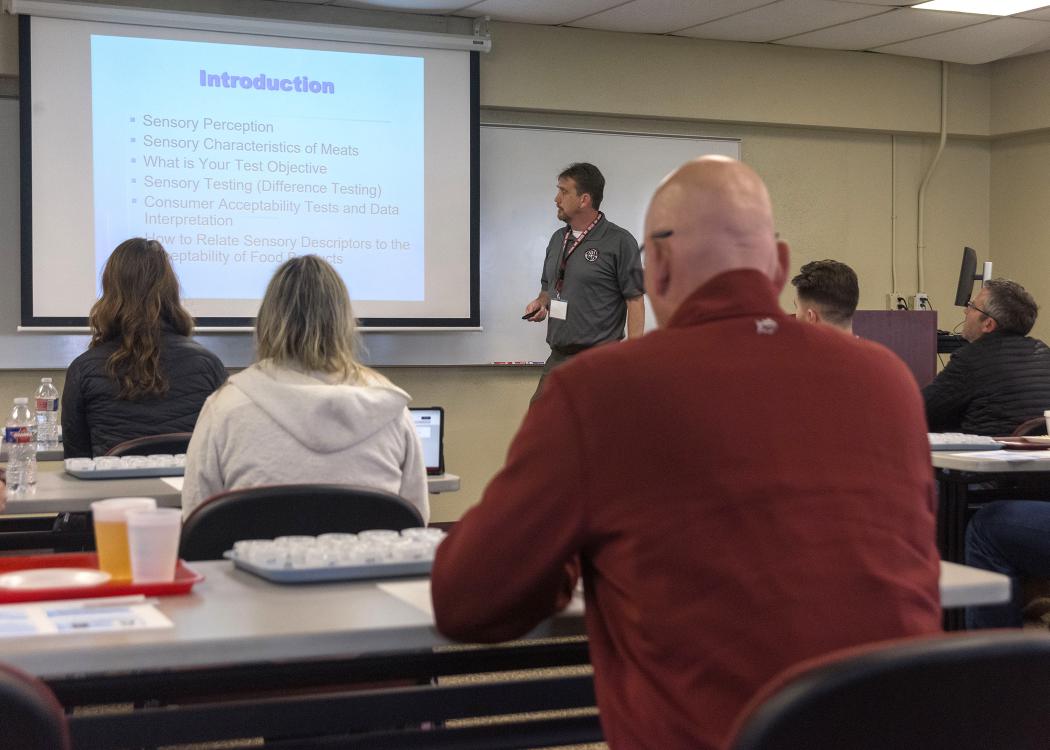
MSU's food science and technology department trained an odor panel to
objectively assess the degree of odor to evaluate the performance of the kenaf
filter system and other technologies. Cox said the odor panel determined that
kenaf filters dramatically reduced odor from the wastewater.
"Odor is totally subjective and you must train to really tell the
difference," Cox said. There is no machine at this time that works as well
as the human nose to detect odors like these."
This is a cooperative project of MAFES, the Forest Products Lab, and MSU
departments of food science and technology, chemical engineering, agricultural,
biological engineering, plant and soil sciences, agricultural economics and
animal and dairy sciences.
by Bob Ratliff, MSU University Relations
Kenaf is a tall-growing cousin of both cotton and okra and has been used for
centuries overseas to produce paper, ropes and other products.
In a recently published book, Mississippi State scientists provide a detailed
look at its potential as the South's newest fiber crop.
"Kenaf Properties, Processing and Products" is co-edited by
forestry professor Terry Sellers Jr., and MAFES horticulturist Nancy Reichert.
Published by MAFES, the 535-page text covers all aspects of a crop that is
ancient in Africa and Asia, but was introduced to the United States in the 1930s
as a substitute for hemp and jute.
Textiles, pulp and paper, animal bedding, potting media, and oil absorption
and related products used to clean the environment are among derivatives
possible from kenaf's woody outer stalk and pulp-like core.
"Research at Mississippi State has shown that kenaf can be grown in high
yields, delivered on a year-round basis and processed into a variety of
environmentally friendly consumer products," said MAFES Assistant Director
Marty Fuller.
The book's 40 chapters were written by researchers at MSU -- Sellers and
Reichert, among them -- and other universities, USDA and at such diverse
industries as the Temple-Inland Forest Products Corp., D.B.M. Farms Inc., and
Mississippi Valley Gas Company Engineering Department.
Reichert, whose areas of specialization include horticulture, biochemistry
and molecular biology, said no single text previously has provided a
comprehensive study of kenaf's properties and commercial applications.
"Most people do not know the potential kenaf has as a cash crop,"
she said. "We're hoping it will eventually be adapted for growth across the
South."
by Bonnie Coblentz
A team of nine Mississippi State University students conducted an
experiment on weightlessness as part of a NASA outreach program.
NASA's Reduced-Gravity Project made it possible for the animal and dairy
science team to test the action of a firefly enzyme in a weightless environment.
The team and their advisor were in Houston at NASA's Lyndon B. Johnson Space
Center March 6-18 for preparation and two flights.
MSU's College of Agriculture and Life Sciences and MAFES funded the work with
NASA.
Scott Willard, MAFES animal and dairy reproductive physiologist and team
advisor, said the experiment was to determine how zero gravity affects enzyme
reactions. It also studied the possibility of using an enzyme that makes
fireflies glow to monitor how genes change.
"We used the firefly enzyme as a reporter enzyme to monitor gene
expression in living cells," Willard said. "But first, we needed to
determine if the reaction of this enzyme was affected by microgravity. Whether
or not the activity of this enzyme was affected by zero gravity also could
indicate that other enzymes in the human body are similarly affected."
The team flew in a KC-135A airplane designed to perform the parabolic
maneuver needed to achieve zero gravity. Each two- to three-hour flight created
30 to 40 zero gravity sessions that lasted about 25 seconds each. The plane flew
a wave-like pattern, reaching 34,000 feet before descending 10,000 feet in each
maneuver. Weightlessness was achieved as the plane "topped the hill"
and descended into the "valley" before climbing again.
Team members used these windows of opportunity to conduct the experiment.
Advance preparations allowed the experiments to be carried out efficiently and
accurately while in a weightless environment.
All the team's equipment was fastened to a metal plate not larger than 24 by
60 inches and then bolted to the floor of the airplane. All unattached equipment
needed to be confined not to float away yet be convenient for use. The fliers
had to be very comfortable performing the experiment and only had about 30
seconds each time to do tests. They planned to run it at least 10 times on each
flight.
Two students comprising the ground crew for the project worked to meet NASA's
specifications, mount the equipment correctly and ensure it worked properly. One
task was getting liquids into the machine without them flying around. The NASA
engineers also were concerned about the fluid dynamics and whether the liquids
would stick to the sides of the containers.
In Houston, the ground crew performed the same experiments on the ground that
other team members conducted in the air to compare results.
MSU's team was one of 47 groups chosen to participate. This research occurred
at press time for Highlights, so results from it will be included in the fall
issue.
This research occurred at press time for Highlights, so results from it
will be included in the fall issue.
by Rebekah Ray
Mississippi State University ranks eighth in the nation in funding for
research in the agricultural sciences, according to a National Science
Foundation survey.
MSU generated almost $55.3 million in agricultural research funds in 1998,
the most recent data available. In 1997, MSU was 15th in the nation with more
than $44.7 million in agricultural research funds.
Dr. Charles Lee, vice president for MSU's Division of Agriculture, Forestry
and Veterinary Medicine, attributed the research growth to the commitment of
faculty and administrators, the trust of state and federal policymakers, an
increase in federal partnerships and the support of individuals served by MSU.
"The Mississippi Legislature has provided the critical base to help make
our faculty more competitive for funds from federal and industry sources. Given
the economic importance of Mississippi's agriculture, forestry and veterinary
medicine and the challenges faced by much of the agricultural sector, it is
critical that we expand our research. Efforts are under way to include more
alternative enterprises, value-added products and processing, and to reduce
production costs."
Most of the agricultural research dollars at MSU are spent within the College
of Veterinary Medicine, Forest and Wildlife Research Center, and MAFES, which
shares many faculty with the College of Agriculture and Life Sciences.
"Partnerships with other university units, including the College of
Engineering and College of Arts and Sciences, help strengthen research in the
agricultural sciences," Lee said. "The MSU Extension Service then
works to extend new knowledge and technologies from this research to the people
of the state."
Other top-funded institutions include the University of California-Davis,
University of Georgia, University of Florida, North Carolina State, Texas
A&M, Oregon State, University of Minnesota, Michigan State and Virginia
Tech.
Since 1972, the National Science Foundation has annually surveyed
universities, colleges and other research centers to determine trends.
by Rebekah Ray
Boyett Graves, superintendent of the MAFES Truck Crops Branch at Crystal
Springs, retired effective Jan. 30, 2000, after a 38-year career in
horticulture.
Graves joined the Vegetable Research Unit in Perry County, Miss., in 1981.
When that unit merged with the Truck Crops Branch in 1996, he was named
superintendent of the two locations.
Before joining MAFES, Graves worked as an assistant county agent in Sabine
and Morehouse parishes in Louisiana. He also worked as a horticulturist for the
Virginia Truck Experiment Station, where he was involved in sweetpotato and
Irish potato breeding programs, as well as general vegetable crops research.
Graves, who has undergraduate and master's degrees from Louisiana State
University, will retire to Louisiana.
By Suzanne Berry
Plant pathologist David Ingram and entomologist C. Don Parker Jr. recently
joined the Central Mississippi Research and Extension Center in Raymond.
Ingram's research focuses on solving immediate problems in the vegetable
industry. He will concentrate on commercial vegetable production, as well as
small fruit and nut research.
Ingram had worked as an agronomist for 11 years at the Brown Loam Branch
Experiment Station, where his research focused on development of no-till
production systems for growing ryegrass for grazing steer calves. He was also
involved in crop rotation and fertility and weed control for both forages and
row crops.
Ingram received a 1980 bachelor's degree in general agriculture and a 1983
master's degree in plant pathology from Mississippi State University. His
doctorate is from Washington State University, where he specialized in root
diseases of Pacific Northwest crops such as winter wheat and barley.
Parker has researched chinch bugs in corn, pesticide efficacy and threshold
in cotton and resistance management strategies for insect pests. He has examined
tobacco budworms and corn earworms in the corn-cotton cropping system, as well
as the temporal distribution of the larvae on cultivated and wild hosts during
the growing season. These studies were related to additional resistance
management concerns for heliothines in corn-cotton cropping systems. They also
provided data needed to evaluate the effect on other lepidopteran pests in Bt
corn.
Parker received a bachelor's degree in agricultural pest management and
master's and doctorate degrees in entomology, all from Mississippi State
University.
By Rebekah Ray
MAFES poultry researcher Michael T. Kidd joined Mississippi State
University's Department of Poultry Sciences to continue researching poultry feed
additives.
Kidd's research focuses on improving the nutrient content of feed for
broilers. Because broiler meat production is a major contributor to
Mississippi's economy, Kidd is examining how various feed additives can increase
the efficiency of broilers at least cost. He is also researching how feed
additives can improve broiler immune responses and the general health of
broilers.
Kidd previously worked as research director for Nutri-Quest, Inc., where he
developed new products and provided technical support for existing products to
be used in poultry feed.
Kidd obtained his undergraduate and masters degrees in poultry science from
the University of Arkansas. His doctorate from North Carolina State emphasized
research in nutrition and immunology.
MAFES researchers Joe Massey and Barry Stewart have recently joined the
Department of Plant and Soil Sciences at Mississippi State University.
As an environmental pesticide chemist, Massey will investigate the
environmental fate and chemistry of crop protection products. His research will
include the development of Best Management Practices to reduce the effects of
agricultural chemicals on Mississippi water quality. Another research project
will apply remote sensing techniques to water quality issues.
A former research chemist with Dupont Agricultural Products, Massey worked in
environmental chemistry and pesticide research.
His bachelor's degree in chemistry is from the University of Central
Arkansas, and his master's and doctoral degrees are in soil and crop sciences
from the University of Arkansas.
As a MAFES agronomist, Stewart will research natural turf surfaces for
athletic fields that are more appealing in appearance and have improved player
safety characteristics such as impact absorption and traction.
Stewart worked as director of technical services at the American Coal Ash
Association in Alexandria, Va., before joining the faculty at Mississippi State.
He received an undergraduate degree in plant science from the University of
Wisconsin-River Falls, and a master's degree and doctorate in soil chemistry
from Virginia Tech.
|