

North Mississippi Branch Experiment Station
The North Mississippi Branch Experiment Station was established in 1904 by the Mississippi legislature. The station was originally established on 200 acres of severely eroded hill land adjoining the northeast city limits of Holly Springs. Because of the hilly terrain and lack of suitable plot land, 188 acres were purchased 3 miles north in 1928. In 1947, an additional 220 acres adjacent to the 188 acres was purchased, the original property was sold, new buildings were built and the station moved to its present location. An adjoining 100 acres was added in 1951 making up the present 508 acres. The station’s first location was selected to study erosion control and soil fertility in cotton and corn. Most of the pioneering work in using terraces for erosion control began with the station’s establishment.
Marshall rye grass was developed at the station and released by MAFES in 1980. the release has to be one of the highlight’s of the station’s history.
USDA-ARS soil and water research began on the station in 1956. Present research includes measuring mineral in ground water from fertilizer applications and mineral loss from ground application of different levels of poultry litter.
Forage production is a significant and vital part of cattle production in Mississippi. However, seasonal variation in the quality and quantity of forage production often leads to poor utilization of this resource. Therefore, balancing pastures supply and increase pasture quality may increase the productivity and sustainability of beef cattle production in Mississippi. The introduction of high quality forages, such as chicory, may be a good approach to achieve these improvements in sustainability and cattle production. A grazing study was initiated in 2004, to evaluate the
perennial forage herb, chicory as an alternative to annual ryegrass for spring stocker cattle production. Replicated ryegrass and chicory pastures were established in randomized block design. Crossbred steers were randomly assigned into eight groups of 5 steers. The groups were allocated to one of the pastures replications and began grazing in early April each year for a 56-day period. While spring average daily gains and gains per acre were similar for ryegrass and chicory, there may be and advantage in using chicory over ryegrass in other seasons, given its good summer and autumn growth and the fact that chicory is a perennial crop. Subsequent studies are being conducted to determine the extent of this advantage.
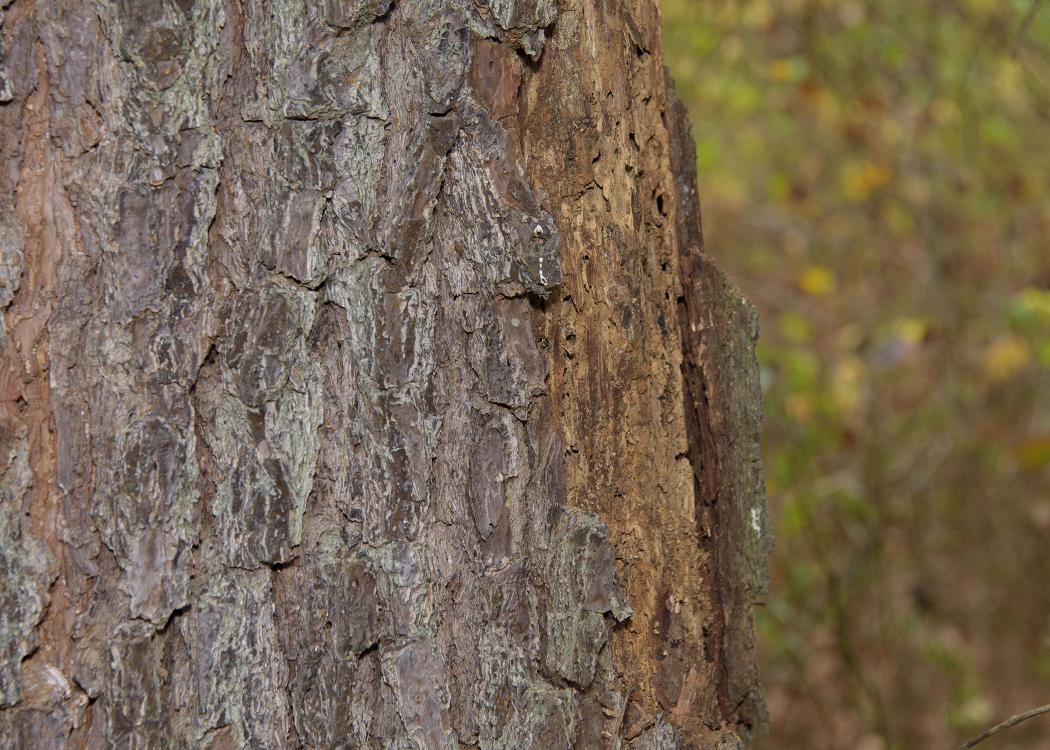
Although forestland has increased in Mississippi, so has the number of non-industrial private forest landowners. Individual tract size has been decreasing due to fragmentation. Forest research at the North MS Branch Station of MAFES is designed to enhance productivity on private forests and farms. Researchers have installed field studies and demonstrations addressing pine productivity, kudzu control and wildlife habitat enhancement. Plantation studies with shortleaf and loblolly pines will examine different methods of site preparation for establishment on retired farm fields. Meanwhile, agroforestry installations will evaluate loblolly and shortleaf pine growth and interactions with agronomic crops. In addition, the potential to use agroforesty systems for biofuel production and hunting leases may enhance the cash flow to private landowners through market diversity.
In March of 2007 a Loblolly Pine Genetic Level Study was initiated to provide information concerning the type of genetic gains available to a Mississippi landowner using varietal (clonal) stock, mass control-pollinated stock (full-sib) and open pollinated second-generation stock. The block design employed will be able to provide growth and yield figures that will be directly applicable to the landowner. Testing of the varietal stock will allow determination of individual genotypes best suited to the site and provide the north Mississippi area with the ability to be on the leading edge of forestry. By including mass control-pollinated stock and open-pollinated second-generation stock with the varietal material in a single test will allow the non-industrial private landowner the ability to determine the type of material best suited for their specific situation. The study design is a split-plot design consisting of six blocks, with each block split into three plots (1.second generation open-pollinated, 2.mass control pollinated and 3.loblolly pine clones) and arranged in 100 tree block plots at a spacing of 12 x 9 feet. Following planting the site will be maintained through a series of chemical spraying to eliminate any competition from hindering growth and survival of the study. Tip moth control will be done using a new product developed by Bayer CropScience called SilvaShield.
Another problem common to northern Mississippi is controlling kudzu, one of the 10 worst invasive weeds in the state. Kudzu vine can grow 60 feet in a season, covering crops and trees. Initially established for erosion control and forage, kudzu has proven itself as an extremely aggressive plant, displacing native vegetation. A kudzu control demonstration on the station has been used to inform local landowners how to eradicate this invasive weed.