|
|
|||||||||||||||||||||||||||||||||||||||||||||||
Agronomy NotesJune, 2004 Soybeans At mid-May, the Mississippi soybean crop was close to 90 percent planted. Progress has been well above average, but it all hinged on cooperative weather. Many areas west of us experienced weather extremes that hampered planting progress, but it is this type of weather that makes you realize the window of opportunity for early planting can be quite narrow. We capitalized on earliness this year, but it required being prepared. If fields are dry enough in March/April to hold up a tractor, you have to take advantage of the opportunity. Any normal rain this time of year can take you out of the field for a week to 10 days, especially on clay soils. Our approach to early planting needs to remain the same, just plant. I do not look at soil temperatures, but I do pay attention to drainage. It is very much like cutting hay, you have to start sometime, and the window can be very narrow early. Several fields started blooming as early as the first week of May. These earliest blooms were on plantings that occurred mid- to late-March. Although this may be considered early, it is not a major cause for alarm. Larry Heatherly, USDA-ARS senior research agronomist at Stoneville, Miss., and others over the last few years have documented plants adding 40 to 70 percent growth after bloom. Plants that begin blooming at 8 inches are capable of achieving a final plant height of 20 to 30 inches - more than sufficient in narrow row plantings. Determinate varieties are more of a concern, but we have experienced no height problems on plantings from late March to early April in over 15 years of testing. In most years, plantings in late March to early April will not emerge until mid-April. That is not too early for Group 5s. Narrowing your row configuration can compensate for reduced height. If you feel that this goes totally against what you thought to be true, you may be correct. We did what we used to do (May and June plantings) because it was the best information we had at that time. Research has opened some new doors. Another factor that we have not paid enough attention to is flat plantings. Soybeans planted on beds this year have grown off well. This is not as much due to drainage this year but temperatures. Beds warm faster and promote excellent early-season growth. If you told me I could utilize one input in soybean production, I would request a row every time. It is difficult to use narrow rows on beds, but given the advantage of beds, I expect to see an increase in wide beds and various other configurations. It is not essential for all acreage, but it can minimize many problems. In recent years many have learned that it does not require a large plant to produce high yields. To achieve more height, a number of growers are planting Group 5s first, followed by Group 4s. This goes against spreading maturity, but they are achieving more plant growth. Sometimes height is reduced by cool, wet conditions which causes stunting. Even if this occurs, a taller growing Group 5 has helped minimize the problem. However, we still need to plant our Group 4s first and finish with our full-season varieties. In 1992, I saw several hundred acres of Hutcheson (Group 5) - planted on 30-inch rows and furrow irrigated - cut over 70 bushels per acre. Once they dried down, they averaged 14 inches in height. A tremendous yield from fairly short plants. In the mid 1990s, Floyd Hancock and others conducted a planting date/row spacing study. Hutcheson was one of the varieties used in this test. If there is one universal complaint, it was that it was too short. In those tests Hutcheson yielded the highest when planted early (late March). If you do a good job matching variety to row spacing, you will not lower yields by planting early. If you can irrigate, however, you can plant anytime in an April to early May window and still achieve high yields. I realize I have spent a lot of time this spring talking about early planting, but I feel that it is necessary to cover as many points as possible since not everyone is on the same page. We have learned a lot watching the crop this spring. Many saw plants subjected to conditions that they never believed they could have tolerated. Every year our knowledge expands and I rely on numerous peers in Mississippi and other states for research information and guidance. We attempt to pass this information on to you. Some might have been slightly premature because, we were often trying new things as we went. No one has contributed more to this effort than Dr. Larry Heatherly, USDA-ARS Stoneville. Dr. Heatherly has decided to retire at the end of the year and I want to publicly thank him for his efforts, his advice, and his friendship. Larry and others provided much of the groundwork for the early planting system and when the recent crop report (May 16th) listed Mississippi at 93 percent planted I know Larry was smiling. Not everything we do is perfect. In past years we did a lot of replanting. Today, replanting in Mississippi is almost nonexistent. Sure, there are extremes but our replanting efforts have changed dramatically. Personally, I feel we owe it to two factors: 1. Early planting and 2. Use of the proper seed treatment. A lot of our information comes not only from research plots, but also from growers pushing the window on planting. In addition, I use something that I know many of you have watched over the years: "volunteer plants". How many times have you seen beans emerged prior to planting and thought, "Boy they sure are tough"? I even know several who have kept limited acreage of volunteer plants over the years to see what they would do. They have done surprisingly well in most cases. After all the concerns regarding the earliness of this crop Dr. Heatherly (at the suggestion of Owen Taylor) compiled some very interesting information. The table below is a list of planting percentages averaged over the 1998-2002 seasons. It starts with the most northern location and goes south. One point that stands out is that all locations north of Mississippi had a higher percentage of the crop in the ground one week after the 50 percent last frost date than we did. Think about these numbers, up until this season our planting percentage one week after the 50 percent last frost date has not been as high as the northern areas. Our 5 year planting percentage on May 4th is 44 percent. This may seem like a lot but this is 5 weeks after the 50 percent last frost date at Stoneville. The closest we came was 10 percent but that was 2 weeks after the 50 percent last frost date. In other words, if folks in Davenport, Iowa and Hastings, NE are not concerned about frost I think we can relax a little. One factor that does deter planting for us is our rainy springs versus the Midwest. However, Midwest soils are much colder than ours at planting. Planting progress for soybeans in IA, NE, IL, MO, and MS in relation to 50% last spring frost (36º)date. Compiled by Dr. Larry Heatherly, USDA-ARS, Stoneville, MS. Rice Most of the rice crop has progressed quite well this spring. About 30% of the rice is flooded, another 30 to 40% is going to flood and most of the remaining acreage will be ready for a flood within the next 10 days. Herbicide applications have really been backed up within the last week because of high winds. We have not even had early morning and late evening periods of calm winds the last few days. Fertilizer applications have been delayed in some instances because the large percentage of rice that is ready for fertilizer has strained the fertilizer suppliers' ability to transport the product to the airstrip. Fields that had a residual herbicide applied at or near planting have been really clean. I have seen some fields that did not have a residual herbicide and the grasses got big before an application was made; though, some of the newer grass herbicides have worked really well, in most situations, a second application is going to be needed after flooding to get control of the tillered grasses. For those of you who had a stand of rice between April 15th and April 22nd, you should be watching for joint movement in early June. I know it seems early, but do not get caught waiting for the end of June or first of July for midseason. Furthermore, on fields that are being flooded, watch them closely about one week after the flood. Phosphorus deficiencies are easily noticed and can be corrected by flying TSP into the flood if the problem is diagnosed soon enough. I hate to end on a bad note, but we are seeing glyphosate injury once again. With the winds we have had, I expect more problems to appear next week. If you have glyphosate symptoms on your rice, please contact your county agent as soon as you suspect the problem so that the proper steps can be taken in terms of managing the crop and contacting the Bureau of Plant Industry.
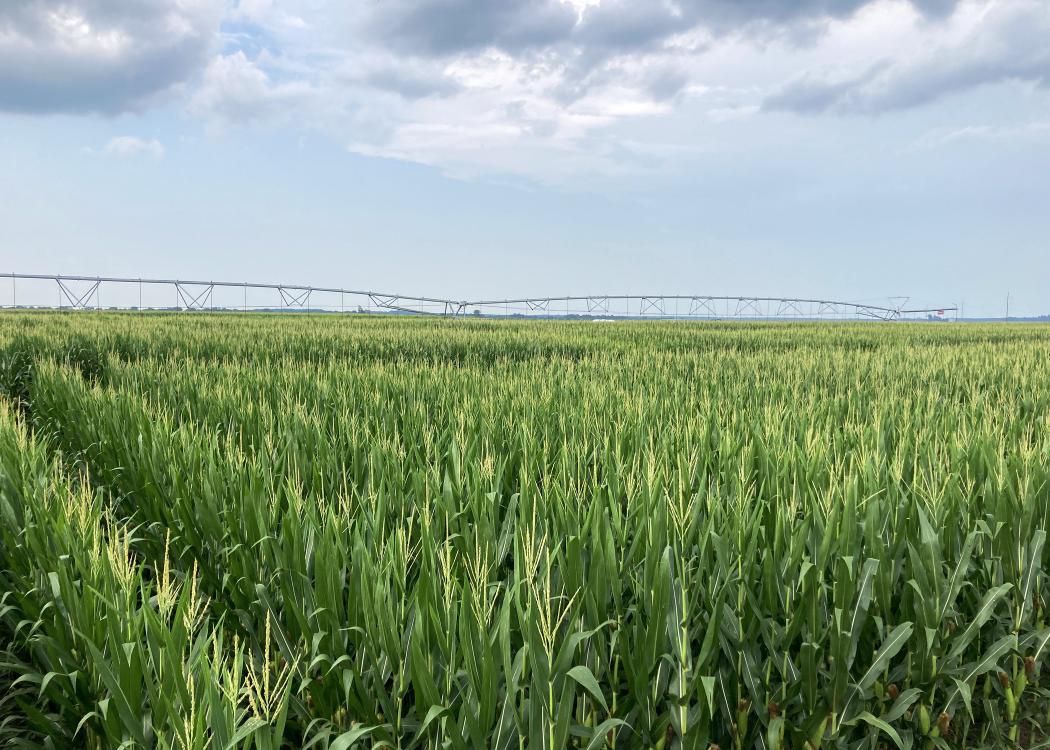
Corn Mid-season supplemental nitrogen-Corn fields in many areas are in excellent condition as they approach reproductive development. Thus, growers may consider applying some supplemental nitrogen to support an exceptional yield potential, particularly if they side-dressed a conservative nitrogen rate. This justification is different from last year, when wet, saturated conditions during May caused substantial denitrification losses and delayed nitrogen application. Although many areas received substantial rainfall this year during mid-May, denitrification losses should be relatively minor compared to last year, unless soils remained saturated for several weeks. Mid-season supplemental nitrogen should be applied one to two weeks prior to tassel for optimum crop utilization and response. Nitrogen should not be applied to saturated soils. Granular ammonium nitrate is generally the preferred nitrogen source for mid-season application because it is not subject to volatilize, compared to urea. Urea volatility can be substantial when temperatures are warm and rapid evaporation occurs. However, urease inhibitors on urea fertilizer may reduce volatility. Granular nitrogen fertilizer sources will burn plant leaf tissue where granules lodge in the whorl. Thus, application should be limited to around 200 lb.. of fertilizer per acre if the corn is less than three feet tall or 100-150 lb.. per acre if the corn exceeds three feet tall. Foliar nitrogen application-University research generally indicates little or no corn yield response to foliar nitrogen fertilizer sources. Many foliar nitrogen sources only supply 2 to 5 pounds of nitrogen per acre, which may limit corn or sorghum response, since that is a minimal proportion of nitrogen needs. Thus, granular nitrogen sources are generally suggested when mid-season nitrogen supplementation is warranted. Scouting Needs-Producers should continue scouting fields for potential problems and management decisions throughout the entire growing season. Producers with irrigation capacity should monitor soil moisture status nearly daily during the sensitive early reproductive period. Scouting should also reveal fertility deficiencies and prevalent weed competition problems. Weed problems can often be suppressed by applying various timely layby treatments. Although control options become limited the taller corn becomes, scouting does provide insight into future problems. The second generation of corn borers will occur late this month. Also, monitor fields for postemergence herbicide injury and drift. Irrigation needs-Corn's most critical and largest moisture requirement occurs during a four week period following tasseling, which should occur during June and early July for most of Mississippi's crop. Potential corn yield can be reduced up to 4 - 8 percent per day due to water deficit during this period. Thus, insufficient irrigation water or slight delays can quickly reduce yield potential and evaporate profitability. Corn plants use about 1.50-1.75 inches of water per week during peak water use, so producers nearly always must supplement rainfall with irrigation to meet crop demand during this extremely critical period. Therefore, growers using irrigation should begin incrementally meeting crop demand before irrigation system capacity cannot replenish soil moisture, especially with center pivot irrigation systems.
Grain
Sorghum Irrigation timing-Grain sorghum is very drought tolerant, however, it will respond positively to supplemental irrigation during droughty conditions. These characteristics make grain sorghum well suited for limited irrigation. Grain sorghum is most dependent upon moisture around the boot stage. The boot stage is characterized by the head swelling inside the flag leaf sheath, immediately prior to heading. Grain sorghum water use is maximized from rapid vegetative growth stages through the soft dough stage. Water use during this time typically peaks at about 1.5 inches per week and rapidly declines after the soft dough stage. Therefore, a furrow irrigation application just prior to the boot stage, followed by another at bloom (if needed) should provide nearly the entire yield potential of full irrigation. Centerpivot irrigation systems typically require several applications since total water application is limited (compared to furrow irrigation) by runoff potential.
Forage Wrap up your spring hay problems-In an average year (whatever that is), Mississippi will typically have a lot of rain during the spring and on into early summer. While this is great for ensuring that our forages have enough moisture to grow, it can make early hay cuttings very difficult to cure, and the resulting hay quality can be very low. It is particularly difficult to dry cool-season grasses, such as annual ryegrass, and hay fields with high legume content. Even the first cutting of bermudagrass can be difficult to get dry enough. Hay making is expensive, with a cost of between $20-$40 per round bale. Therefore, it is important that we try to make the very best quality stored feed that we can, and avoid situations where we are going to waste hay. Unfortunately, there is not much we can do about the weather, and waiting for the sun to shine can often end up causing us to lose forage quality from the hay crop getting too mature. So what can we do? Making baleage-Making round bale silage could offer a solution to this problem for some farmers. Making baleage requires cutting the forage crop as you would a hay crop: allowing the crop to dry down (wilt) to 40-60% dry matter, baling into tight bales, and wrapping the bale tightly in plastic to exclude air. In this air-free environment the forage ferments and is preserved until fed to animals. It is important to cut forage for baleage well before the reproductive (seed head) stage, as fermentation requires adequate levels of fermentable carbohydrates. Making baleage adds some expense (around $6-$7/round bale) to the stored feed making process when you include the need for plastic wrap and the extra labor. However, making baleage has less chance of quality loss during production and storage, which can generally offset the extra costs of production. Baleage also tends to be better quality and more palatable to livestock than conventional hay, so there is often less wastage at feeding, and animal performance will typically be better. Equipment requirements-There are some important equipment considerations when making baleage. While most of the equipment used to make baleage is the same as that required for making hay, there are some additional pieces of equipment and production procedures that need to be incorporated into the production process. Baling the forage crop at 40-60 dry matter means that the forage will be very heavy, so tractor ground speeds need to be reduced to allow the baler to pick up the forage and deal with the extra weight. It is also helpful to have narrow windrows to help the baler pick up the wet forage. Bale diameters will also need to be smaller (42-48 inches) than conventional hay bales as the extra weight (baleage can weigh up to 1 ton per round bale) can overload the baler and transport equipment. Certain balers may not be suitable for making baleage so it is important to consult your dealer to determine the capabilities of your baler. In general, it appears that the belt-type and chain-type balers are better than the fixed-chamber balers for making baleage as they are able to vary bale diameter. The major cost associated with making baleage is the need to purchase a wrapping machine, unless you have a neighbor or friend who already has one. These can vary in price from $4,000 to $15,000 depending on the features. Before making this investment, farmers need to determine whether this will get a return in terms of more feed (less wastage), better animal performance, and ultimately dollars in the pocket. If you look at the reduction in hay production, storage and feeding loss alone, which can be as much as 20-30%, you are probably going to gain around $10/bale. If the extra cost of baleage production is $6/bale over hay, then you are gaining an extra $4/bale total for each bale of silage. This means that you would need to make anywhere from 1000-4000 round bales to recoup the cost of the wrapping equipment. Therefore, it may not be worth the expense for small livestock production systems that do make a lot of stored feed each year. Storing baleage-Another advantage of wrapped baleage is the ability to store bales outside without any loss. This is obviously not the case for dry hay where storing outside can lead to at least 20-30% loss and often 100% loss. However, care must be taken to ensure that the wrapping maintains an airtight seal during storage, as air will cause the baleage to spoil. Avoid using a hay spick to move the bales and try to avoid contact with any sharp objects that may pierce the wrapping. Ultimately, the benefits of switching to baleage production will depend on the size of your operation, how much loss you are experiencing from hay production, and whether you are getting significant improvements in animal performance from using baleage.
Soil
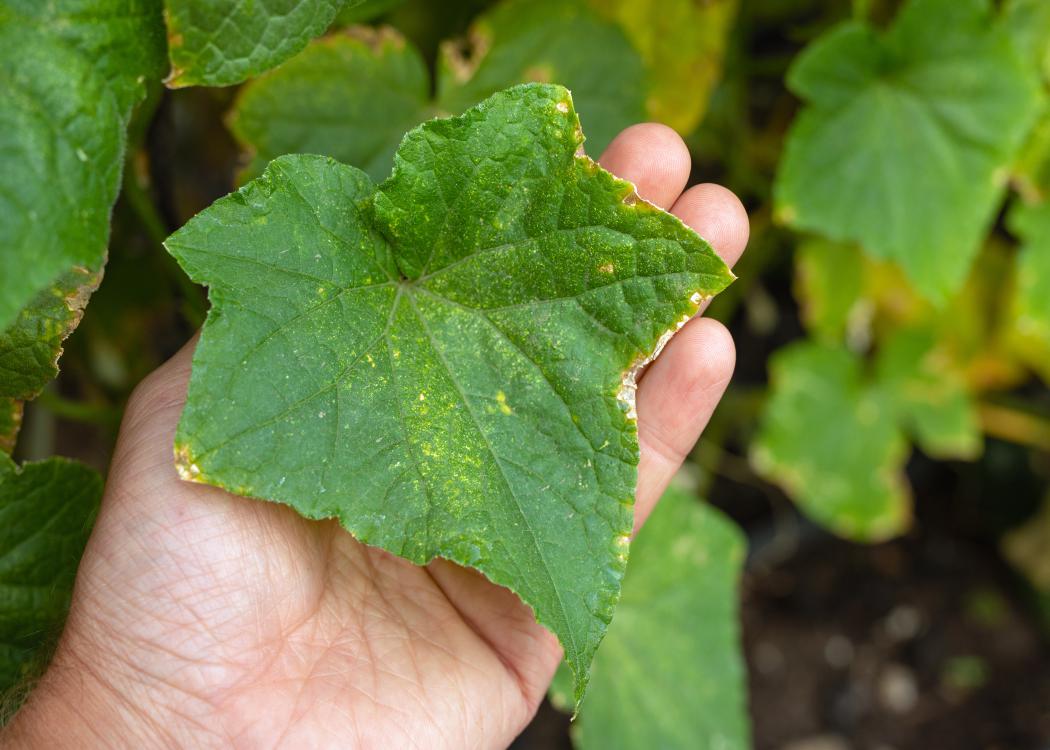
& Nutrient Management Sulfur seems to be the nutrient of the year as we have seen and discussed sulfur issues in corn, cotton, and forages. The current growing season had relatively early planting, however temperatures were not very high through the first few weeks. I think this, and occasional heavy rains over the winter, contributed to the current flurry of sulfur related activity. Sulfur for crops in past years came from a variety of sources that did not require management decisions. Older fertilizer materials such as MAP and single superphosphate provided sulfur in addition to the primary nutrients in them. Significant amounts of sulfur is derived from rainfall; current National Atmospheric Deposition Program data for Mississippi shows current annual deposition to be 13-14 pounds per acre. This has decreased over time with increased use of clean air technology in automobiles and industry. Irrigation water also provides sulfur. Sulfur ranges from 0.5 to 43 ppm in water analysis data provided by Jim Thomas from 31 wells throughout the Mississippi Delta counties. Sulfur is generally associated with soil organic matter. In fact, the soil test sulfur reported by the Mississippi State University Extension Service Soil Testing Laboratory for row crop samples is a function of the organic matter in the sample. This relationship was tested and verified by Wayne Houston in his doctoral work a 'few' years ago. Because plants take up sulfur in the sulfate form, sulfur in the organic matter has to be mineralized (much like nitrogen) before the plant can use it. The rate of this mineralization is slower in cool weather. In addition to slower mineralization, plant root systems probably have been slow to start in these cooler temperatures. Both mineralization and root development should increase as the weather warms, so look for symptoms to decrease in corn and forage crops over time. Tap-rooted cotton should be monitored throughout June. Yellowing from sulfur deficiency is expressed in the upper part of cotton plants whereas nitrogen in expressed in the lower, older parts. This difference is due to the relative mobility of the different nutrients within the plant. For confirmation when sulfur is suspected, use laboratory analysis of 'good' and 'bad' plants for both nitrogen and sulfur content. The ratio of nitrogen to sulfur (in percentage or ppm, as long as each in the same unit) is thought by many to be more indicative than relying solely on the sulfur content. The 'target' N/S ratio is 7/1 to 15/1. One corn field we looked at this year had ratios of 21/1 and 25/1 in the good and bad respectively, so it was really bad and not-so-good. When sulfur is confirmed, monitor the situation for a short time because the deficiency may go away as cotton roots grow deeper into the soil. Topdressing a dire situation with any sulfate source at 20 pounds sulfate-S per acre also will work, as long as rain or irrigation can move it into the soil. This may be 100 pounds of ammonium sulfate (21-0-0-21S), potassium sulfate (0-0-52-16S), potassium magnesium sulfate (sul-po-mag or K-mag, 0-0-21-23S). Another program is sidedressing using ammonium thiosulfate (12-0-0-26S) blended with liquid nitrogen solutions. If it can be applied, gypsum (18% S) may be used. Elemental sulfur is available; however the sulfur in it must be oxidized to the sulfate form before plants can utilize it. The oxidation rate depends on the particle size of the particular material, temperature, and moisture, so it has more utility in a planned fertility program than in remedial use. Elemental sulfur continues to be the material of choice if soil pH is to be lowered. In summary, sulfur has generated a great deal of interest thus far in 2004. If you suspect it is an issue in a particular crop, use plant sampling to confirm it and continue to monitor the field. If a corrective measure is necessary, several options are available from commercial sources. Be prepared to address sulfur more in coming years if tillage decreases soil organic matter, the air continues to become cleaner, and non-sulfur fertilizer materials continue to be widely used. Dr.
Michael Collins, Department Head |
|||||||||||||||||||||||||||||||||||||||||||||||
|
|
|||||||||||||||||||||||||||||||||||||||||||||||