
Agronomy Notes

May, 2003

Contents:

CORN
GRAIN SORGHUM
FORAGES AND PASTURES
RICE
SOYBEANS
COTTON


CORN

Dr. Erick Larson

Replanting/Late Planting suggestions - Late-planted corn significantly reduces yield potential because plant development is delayed, increasing the chance of late-season water and heat stress, and insect and disease pressure. Corn planted during the optimum time frame spaced uniformly about 8 - 12 inches apart will still have around 80-90% of optimum yield potential depending on the yield level. Late planting can reduce yield potential similarly or substantially more even with an optimum stand. Thus, planting corn in May is generally only recommended if the initial stand is a disaster and other crop options are not available or not economically feasible.

Kill an unacceptable stand - When replanting corn, destroy the existing stand with herbicides or tillage before replanting. Surviving plants will have a huge disparity in plant development, causing severe competition with adjacent replanted plants. This normally results in significant yield loss because of a high percentage of barren plants.

Rootless corn - Several fields have recently had young corn plants falling over and possibly dying because they lack proper nodal root development. The nodal roots develop from the crown of the stem. This condition is often referred to as "rootless corn syndrome." The primary reasons why nodal root development failure has occurred include soil erosion from heavy rainfall in early April and planting into wet clay soils. Shallow planting often promotes rootless corn syndrome and helps explain the phenomena related to other causes. Corn planted less than one inch deep will move the nodal root origination point up to or above the soil surface, subjecting these roots to many factors that can retard growth (hot, dry and/or compacted soil, herbicide injury or carryover, and surface-feeding insects). Corn planted at the recommended seeding depth (1 1/2 -2 inches) will develop the nodal roots below the soil surface, avoiding these potential problems. Frequent March rainfall delayed corn planting across much of the state, tempting many growers to push the envelope by planting into marginally wet soils during the first dry spell. Corn planted in excessively moist soil compacted the soil around the seed-furrow, especially on heavy clay soils, causing the furrow to open when the soil dried and present the same problems as shallow planting. Heavy rainfall or wind erosion eroded soil away from the crown of emerged corn plants, especially on light textured soils with raised beds, exposing the nodal root system as well. The ability of corn plants to recover from this condition depends upon favorable environmental conditions. Corn plants may recover if rainfall or irrigation water is received, which should promote nodal root development. However, sunny, dry, windy conditions can quickly desiccate the mesocotyl (shoot from the seed to the crown of the stem), if it is exposed, killing such plants. Cultivation may also promote root development, if soil can be moved around the base of plants without knocking them down.

Purple/Stunted corn - Young corn plants appearing stunted with purple lower leaves is likely suffering from phosphorus deficiency. This deficiency is especially prevalent when corn is grown following a rice crop. New leaves emerging from the whorl are usually green, but may turn purple shortly thereafter. Phosphorus deficiency symptoms often occur as young plants are exposed to good growing conditions following cool and wet conditions. This results in a lag phase where vegetative growth exceeds the roots' ability to supply phosphorus. Young plants are especially vulnerable because their root systems are small and phosphorus is immobile in the soil solution. Any cultural or environmental factors which limit root growth will aggravate deficiency symptoms. Examples of such conditions include: cool temperatures, too wet or dry soil, compacted soil, herbicide damage, insect damage, and root pruning by side-dressing knives or cultivators. Acidic soil can also intensify phosphorus deficiency symptoms. Low soil pH severely limits phosphorus availability to plants, which may cause deficiency symptoms even where high soil test phosphorus levels exist. Plants normally recover when favorable growing conditions allow root expansion. However, phosphorus deficiency will likely reduce yield by delaying maturity, decreasing root and stalk development, and reducing energy transfer and storage. Treatment options to quickly remedy phosphorus deficiency have limited effectiveness, since phosphorus is immobile in the soil solution. Surface application of phosphorus fertilizer will limit availability to the top couple inches of soil. Phosphorus injected as a side-dress treatment would increase availability to roots, however, be careful not to prune roots.

GRAIN SORGHUM

Dr. Erick Larson

Sorghum establishment - Scout sorghum fields diligently during establishment for stand, insect and weed problems. Sorghum seedlings have considerably less vigor than corn which often translates to more difficult stand establishment. Chinch bugs also prefer sorghum compared to corn and since chinch bug populations tend to thrive during warm, dry conditions which are normal in May, they can cause major sorghum establishment problems. Postemergence herbicide options for sorghum are quite limited, so timely identification and response also is imperative to control weed problems. Scout sorghum fields at least twice a week until sorghum exceeds six inches tall to identify field problems.

Minimum Stand - Grain sorghum has tremendous ability to compensate for low stands by producing tillers, especially if plants are spaced uniformly. Thus, the optimum plant population for sorghum is very broad, ranging from 40,000 to 70,000 plants per acre for dry land production. Replanting would be required only if stands were reduced to less than two plants per foot of row or skips exceeding five feet occur in adjacent rows.

FORAGES AND PASTURES

Dr. David Lang

Make High Quality Hay - High quality hay doesn't just "happen", you must plan for timely harvests and maintain good grass management techniques. It may seem like these are difficult and expensive, but growing you own high quality forage will minimize the need to purchase supplements. Many times hay is an after thought and is taken from a pasture after it's been grazed. This hay is of poor quality which will not provide adequate nutrition for growing animals, but may be adequate to meet maintenance needs and keep mature animals alive. "Dry cow hay" should not be your only source of hay for the winter, if you need to feed cows nursing calves. Growing animals need to be fed high quality forage, preferably by grazing it, or supplemented during pasture shortages with high quality hay. Each Mississippian has $100 of free forage testing at the state chemical lab at Mississippi State University per year. This includes every member of your household, so see your county extension office for details on taking and sending a hay sample for analysis. This test will help you determine which class of livestock to feed your different types of hay. Keep track of where and when you cut hay from your fields when you stack and store your hay.

There are many factors which improve hay quality. First and foremost is your attitude and commitment to timely hay harvests. Set aside a field which will be devoted to hay production and don't graze it. Sample the soil and maintain high levels of phosphorus and potassium (potash) and lime you soil to a pH of 5.8 to 6.5. See "Soil Testing for the Farmer" on how to take and interpret a soil test and also "Forage and Pasture Crop Fertilization Guidelines" . Persistence of desirable forages depends upon maintaining adequate soil fertility.

It's a good practice to walk your fields and take note of the type of forage plants and weed species in each field, particularly your hayfields. You may need to add more desirable forages and improved varieties, or undertake a complete renovation. Many times, however, you can work with what you have if you control weeds (see "Weed Control in Pastures"), fertilize, harvest every 30 to 35 days, and add additional seed. Bermudagrass seed can be topdressed into an existing stand to help fill in bare areas. Red and white clovers can also be seeded directly into a summer pasture in the fall and can considerably improve forage quality. Alyceclover and annual lespedeza make good summer time additions to grass pastures and hayfields and can be planted from March to June. Successful topdressed seedings, whether in the spring, early summer or fall, require a close clipping or grazing and timely rainfall.

Mississippi State University is currently searching for a Forage Extension Specialist to replace Dr. Malcolm Broome, who retired last year. In the meantime, don't hesitate to contact me at dlang@pss.MsState.edu or your local livestock/forage area extension specialist with your forage and pasture questions. Also, don't forget to put Saturday, June 7th on your calendar. This will be the hay field day at Raymond, MS. Several types of hay equipment will be demonstrated and additional information on making quality hay will be presented.

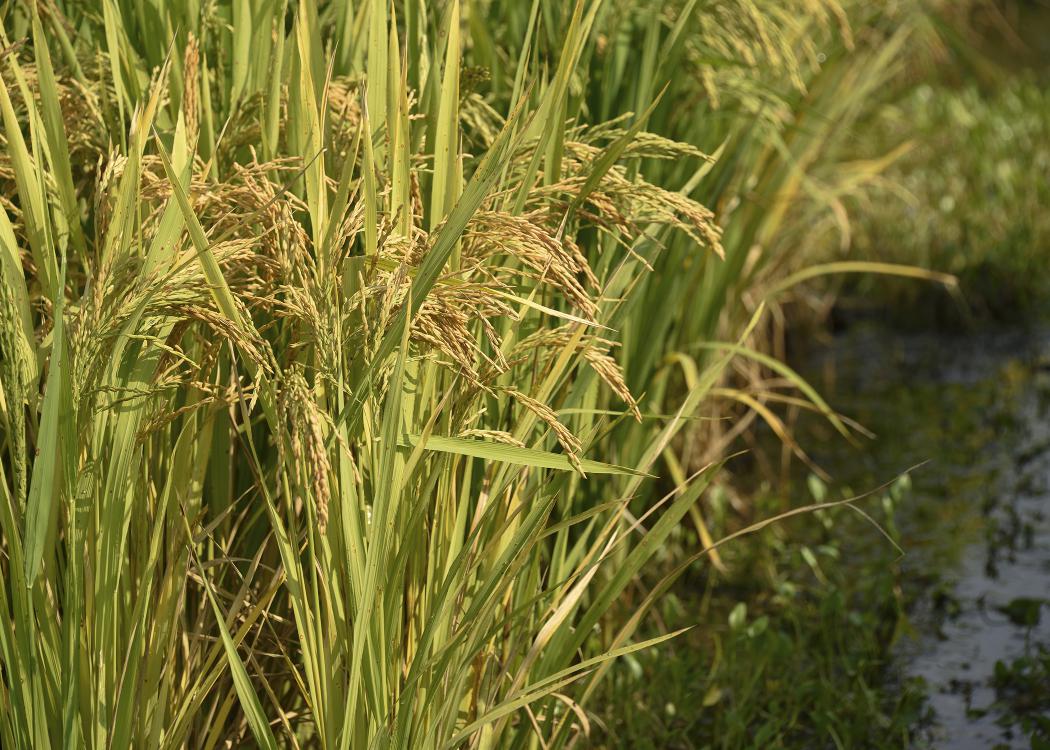
RICE

Dr. Joe Street

Planting. With the upward movement in rice price, many growers are planting more than they intended but it is still too early to tell how much will be planted. USDA has estimated that we will plant 255,000 acres and at this point, that estimate is as good as any.

Water Management. As this is written, much of the early-planted rice needs flushing. I know flushing is not an easy task but it is an excellent management tool. Uneven rice emergence causes uneven maturity and can reduce milling quality at harvest. With Clearfield rice, water management is essential for effective activity from Newpath herbicide.

Multiple inlet irrigation or side inlet as it is often called continues to gain popularity but it is still under utilized. Although it may not work on every field, I do not know of anyone who has tried it and then gone back to conventional irrigation. The initial setup with plastic tubing is a little more labor intensive but once it is set up, overall operation reduces labor costs. Savings for labor usually range around 30 percent compared to the standard irrigation system. Multiple inlet irrigation has several other advantages including faster activation of fertilizer and herbicides over the entire field. The flood may be maintained shallow enough to catch rainfall without overflow. The average water use is reduced 25 percent. Try it on a small scale and see if it saves water and labor on your farm.

Weed Control. Last month, I indicated that I had asked FMC to pursue an aerial label for Command in Mississippi. We will not have the label for this season but several large-scale aerial trials are scheduled to evaluate efficacy and potential off-target movement of Command. If we do not have any problems with these trials, hopefully, we will have the aerial label for next season.

With the introduction of Clincher and Regiment, I have had phone calls regarding waiting until after flood to control the grass, which is missed by the soil applied herbicides, and controlling it with Clincher or Regiment. While both these herbicides will control relatively large grass later in the season, yields may be reduced by weed competition if the weeds are not controlled early. As I have stated before, for best results, control weeds early when they are small.

Early Season Nitrogen Application. Application of 100 pounds of Ammonium Sulfate to two to three leaf rice and flushing is a common practice. In research plots, this practice does not increase yields unless sulfur is a limiting factor. However, early fertilizer application may have other agronomic benefits such as getting to flood earlier and perhaps reducing weed control costs.

SOYBEANS

Dr. Alan Blaine

The recent rains followed by a dip in temperatures has had many express concerns about early planted soybeans.

As of today (April 30th), approximately 50 percent of the state crop is planted. We have had numerous growers plant from early to late-March for the past three years and have not experienced any problems. However, I have attempted to caution everyone I speak with about getting in too big a hurry to plant, particularly on irrigated acreage, land lacking adequate surface drainage, and wide row plantings.

We had some reports several weeks ago of frost injury on soybeans. We have made it a point to look closely at several emerged stands following the last three cold snaps, and have yet to see any problems. Often times when a problem occurs, it is usually not just one particular factor causing the problem. At this time, I suspect something other than injury from cool weather. Soybeans are an extremely hardy plant. In the ground they are protected, but once emerged broadleaf crops, unlike grass crops, do not have their terminal growing point protected like corn and other grass crops.

Accurately predicting the weather is not easy to do. In reality, if you and I could predict the weather, we would both be doing something else for a living.

The biggest concerns I have observed thus far are: planting too deep, excessive seeding rates, and the potential growth on early plantings; particularly in wide rows.

With the potential for less than desired seed quality present this year, it is imperative that we do everything possible to minimize stress on emerging seedlings. Planting too deep is a common problem particularly this time of year.

Every so often a grower will tell me, "I planted my beans 3-4 inches deep in moisture and got a perfect stand", this is rarely the case given the type of emergence of broadleaf crops. An optimum stand will not be achieved at these depths. This time of year we often encounter heavy rains; therefore, seed placed at 1.5 inches deep will often appear to be forced deeper following a heavy rain and may have to try to push through crusting soil.

Planting deeper than needed subjects seed to cool soils, thus slowing emergence. It has been our experience that shallow plantings early help ensure better stands. Keep in mind, I am talking about planting that occurs prior to day and night time temperatures increasing . Planting in April is of no comparison to planting in June. As temperatures begin to increase and weather fronts begin to spread out, it will be essential to place seed in adequate moisture.

The time of the year, day and night temperatures, the five day weather forecast, and seed quality are all factors that must be considered when determining planting depth early.

Although sporadic, we have already seen some fields where small grass hoppers are present. Grasshoppers have been more prevalent in fields where burndowns were applied late or when put out at planting. Several options exist but the two most effective treatments are Dimilin and Orthene. If you see some activity, but the crop is not yet emerged, or has little feeding on the foliage add one ounce of Dimilin to your burndown or first postemergence herbicide application. If feeding is heavy, consider using .3 pounds of Orthene. The choice depends entirely on how fast you need to kill this pest.

I had hoped grasshopper populations would be less this year and may be. However, I am surprised to see treatable populations in some fields already. You will probably not observe a problem where tillage has occurred or burndowns were applied early. On the other hand, where a lot of dead or dying vegetation is present the potential for grasshopper pressure exists.

With a large percentage of the crop planted and emerged, a lot of focus has turned toward spraying postemergence materials. Several factors need to be considered before making a blanket spray. Summer annual weeds that have emerged at this time grow quite differently from those that emerge from mid-May on. In other words, summer annual weeds emerging in April do not act like weeds. They are much slower to grow off, thus allowing you the opportunity to delay your first post application longer than normal. This is one of the advantages of early planting.

The need may arise to spray early, but I feel our main weed flush has yet to occur due to the cool weather and lack of moisture in some areas. You do not have to be in as big a hurry in April as compared to a May/June time frame. If you did not burndown earlier, you may need to consider spraying, but after planting you could possibly get by with a combination burndown/early post emergence application.

I recognize if it gets wet we can get behind very fast, but what we have observed thus far are pockets of emerged weeds. I do not feel that our major/first flush has yet occurred. If this is the case and you spray too early, you may be setting yourself up for an additional post application. Given the efficacy and cost of Roundup, it is understandable why many want to spray now, but these decisions should be based on the weed species present, size and population.

Every day you prolong spraying on early planted acreage, you buy yourself some time or a longer weed free period. I can assure you that the weed competition data is not applicable to these early plantings. Spraying as needed (or spot spraying in areas) can cut back on the number of in-field applications which will translate into a cost savings for growers.

COTTON

Dr. Will McCarty

2003 Start - According to the Mississippi Agricultural Statistics Service, as of May 4, Mississippi=s cotton crop was 61 percent planted, compared to 51 percent on that date last year and 39 percent for the 5-year (1998-2002) average. Planting progress is about right on pace and if weather cooperates we should have this crop planted by May 15. It is not late! The first of May is really the ideal time to plant cotton. Year in and year out - cotton planted the first two weeks of May will catch and surpass cotton planted earlier, mature within a few days of earlier planted cotton, and often out yield earlier planted cotton. Generally, it will produce fewer sleepless nights when cold rains are in the weather forecast.

Regardless of the start, there will be problems. Here are a few thoughts on some potential problems:

Replanting: Let's hope we don't have to make a decision to replant; but if we do, it is often a difficult one to make. In fields with questionable stands, you must consider several things before making a replant decision.

  • 1. What is the calendar date?
  • 2. What is the population of plants that will survive?
  • 3.What is the health of those plants, especially their roots?
  • 4. Are there large skips and frequent skips?
  • 5. What is the productive capability of the soil, and is the field irrigated?
  • 6. What variety is planted in this field, the surrounding fields, the rest of the farm and what seed are available at the critical time?

A big consideration is soil type and moisture. If the soil type is one that dries quickly, replanting decisions must be made ASAP and carried out before moisture falls out of the beds. Replanting on these type soils (generally mixed textured to heavy soils) may necessitate returning to replant before first planting is complete. To do otherwise is to gamble that rain will recharge the beds or that the limited stand may actually survive.

If plant distribution is fairly uniform in fields on productive soils, good yields can be made with low plant populations, perhaps in the low 20,000 plants per acre range, or as low as one per row-foot with no or few skips. If the stands are broken with numerous skips, replanting is in order at populations below 30,000 plants per acre, depending on the size and frequency of skips. In some cases a grower may "spot-in" areas of the field with his planter. Calendar date is significant; a stand you would plow up on May 1 would probably be kept on May 25. Bt cotton and boll weevil eradication have really made the late replant decision easier. 

If replanting is necessary, continue to use fungicides as a stale row, use a burn-down herbicide to kill the old stand of cotton and any weeds that may have emerged on the row. In some cases the bed may need to be "freshened" before planting. This decision will need to be made on a field by field basis.

Other replant tips:

$Make replant decision quickly and act quickly before the lack of moisture limits your options.

McCarty's Rule of Thumb: If you have enough cotton in the field to really make the decision difficult - KEEP IT!

Department of Plant and Soil Sciences
Box 9555
Mississippi State, MS 39762

Will McCarty, Ph.D.
Extension Leader

A black line that separates the body text from footer information