
MSU workmark -  OAC Link to the MSU Web site. Link to OAC Web site.

Angel’s Trumpets begin their fall performances

By Norman Winter

MSU Horticulturist
Central Mississippi Research & Extension Center

Use pumpkins as accessories in the middle of bold drifts of orange or almost-black flowers. The midsized pansy called Halloween II is virtually black and would make an excellent partner with Pansy Panola Deep Orange. Links to image at 200 dpi
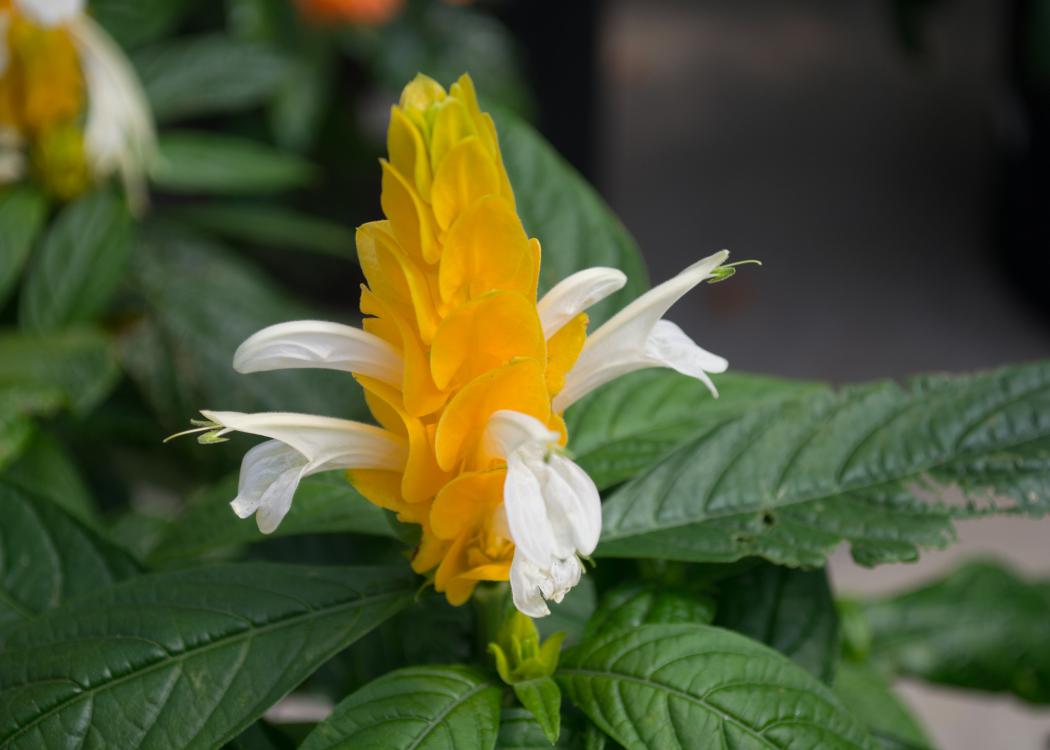
Angel’s trumpets come in both yellow gold and rich pink and give an exotic and tropical look to gardens. They perform well in Mississippi gardens, and really strut their stuff in late summer and fall. (Photo by Norman Winter/ Mississippi State University horticulturist)

The performance of Angel’s Trumpets at Mississippi State University’s Truck Crops Experiment Station in Crystal Springs recently had me mesmerized. I predict they will do the same for the many visitors expected at the Fall Flower and Garden Fest on Oct. 12 and 13.

These Angel’s Trumpets, which are yellow-gold and rich pink, look exotic and tropical. They have been coming back for years without much attention. They really complete the tropical section in any garden.

The plants are known botanically as Brugmansia. They come from Ecuador, but they couldn't look more at home in Mississippi. The most beautiful blooms on Angel's Trumpets reach 12 to 18 inches in length and make a statement in the landscape. It is hard to believe these plants are related to tomatoes and peppers.

This plant is passed from friend to friend, but Mississippi garden centers sell quite a few.

Although they often have a few early blooms, the plants really strut their stuff in late summer and fall. Revel in its beauty, but remember the plant is poisonous when eaten.

To add Angel’s Trumpets to a landscape, choose a site in full to partial sun and plant in well-drained, organic-rich beds. If you wait until next year, plant after the last frost and the soil has warmed. You may, however, stumble on some good planting opportunities now.

I normally say that protection from the wind and afternoon sun make for a prettier plant, but there are plenty of terrific displays around that can make me eat those words. Recently, I saw a small tree loaded with blooms in a large container, demonstrating that you can enjoy this plant just about anywhere.

During a dry summer like we often experience, supplemental water may be the most rigorous requirement. Angel's Trumpets only require feeding with light applications of a slow-released, balanced fertilizer about three times during the growing season.

In central Mississippi, the Angel’s Trumpets have no problem returning after the winter, but an extremely rare, very hard freeze may be a different story. Our plants at the experiment station are always frozen to the ground but come back from the base with vigor.

In north Mississippi, plant in a protected micro-climate around the house, grow in a container and move indoors, or take cuttings in the fall to root. They root easily, and it is not hard to hold small plants over the winter.

Rooting hardwood cuttings in water is common. To do this, remove all but one or two pairs of leaves from your cuttings. Place the cuttings in a jar or bucket containing about two inches of water. The Brugmansia Growers International suggests changing the water every day.

Keep the cuttings out of direct sun, in a warm, filtered light area. When you see white lenticels forming, pot the new plants in a good light soil mix. Do not over water. Rooting in potting soil and air layering are also very easy.

In addition to growing them with plants like bananas, try red coleus like Big Red Judy, Mariposa or Mississippi Summer, as well as the new Maple Sugar hibiscus.

Selections like Grand Marnier, Charles Grimaldi and Frosty Pink are worth searching for, but if you want to see more varieties than you ever imagined and read great information on growing Angel’s Trumpets, go to http://www.brugmansia.us.

We hope to see you in Crystal Springs at the 2007 Fall Flower and Garden Fest Oct. 12-13. Call (601) 892-3731 for more information.

-30-

Released: September 27, 2007
Contact: Norman Winter, (601) 857-2284

Editor's Note: Ideal publication dates of Southern Gardening columns are within one month of their release. Editors should examine older columns carefully for any information that could be time sensitive.

Publications may download photograph at 200 dpi