
MSU workmark -  OAC Link to MSU home page Link to Office of Agricultural Communications

New begonias burn brightly all summer

By Norman Winter

MSU Horticulturist
Central Mississippi Research & Extension Center

Gardeners looking for the perfect hanging-basket plant are finding an outstanding option in the new Bonfire begonia, which produces hundreds of fiery, scarlet-orange flowers. Bonfire brings incredible beauty and a rugged nature.

Bonfire morning sun: This Bonfire begonia blazes with its scarlet-orange flowers and attractive serrated leaves that are tinged with red and located on long, arching stems. (Photo by Norman Winter/Mississippi State University horticulturist)
Bonfire morning sun - This Bonfire begonia blazes with its scarlet-orange flowers and attractive serrated leaves that are tinged with red and located on long, arching stems.

Bonfire is known botanically as Begonia boliviensis. As the name suggests, it is from South America. It is a tuberous begonia. Some tuberous begonias have presented challenges to gardeners in the hot, humid South, but Bonfire will prove to be a cakewalk even for the novice.

The abundance of flowers can take your breath away, but Bonfire also has attractive foliage. The leaves on long, arching stems are deeply serrated and the margins are tinged in red.

Bonfire performs well in full sun to part shade. I am giving mine the extreme test by growing it in an Old World-style pot near the front door. In that location, the plant gets full, scorching afternoon sun. Its performance continues to amaze me. I know I would be ecstatic growing the Bonfire with my bananas, where it would get afternoon shade.

More good news is that Bonfire has a sibling, so to speak, called Bellfire, which is making its debut this year. Bellfire has flowers that are bell-shaped and a hot coral-pink. It is slightly bushier, and the very serrated foliage is a wonderful deep-plum color.

Good drainage is essential to the plant's success. For containers, choose a light potting mix sold by the cubic foot. Do not buy a brand sold by the pound and almost too heavy to carry.

Bonfire afternoon sun: The scorching afternoon sun does not hurt this Bonfire begonia, which looks perfect in an Old World-style pot. Bonfire performs well in full sun to part shade.
Bonfire afternoon sun - The scorching afternoon sun does not hurt this Bonfire begonia, which looks perfect in an Old World-style pot. Bonfire performs well in full sun to part shade.

If you plant yours in the landscape, work the soil properly to ensure good drainage and aeration. If you have tight, heavy, compacted clay, you should either work in 3 to 4 inches of organic matter like peat or compost to help loosen the soil or plant in raised beds in a prepared landscape mix. This will pay dividends in the winter for those in zones 7b and warmer.

This species will go dormant in the winter and return in May or June, provided the winter drainage was good. If you are in a colder area or you're growing in containers, give the plant protection so the soil will not freeze around the tuber. Very little water, if any, will be needed during the dormant season.

Bonfire and Bellfire are drought-tolerant once established, but keep the soil moist during the long bloom season to keep the flowers coming. Feed your plants once dormancy breaks in late spring and then again in midsummer. In containers, feed as recommended with controlled-release granules or with a diluted water-soluble fertilizer that you mix.

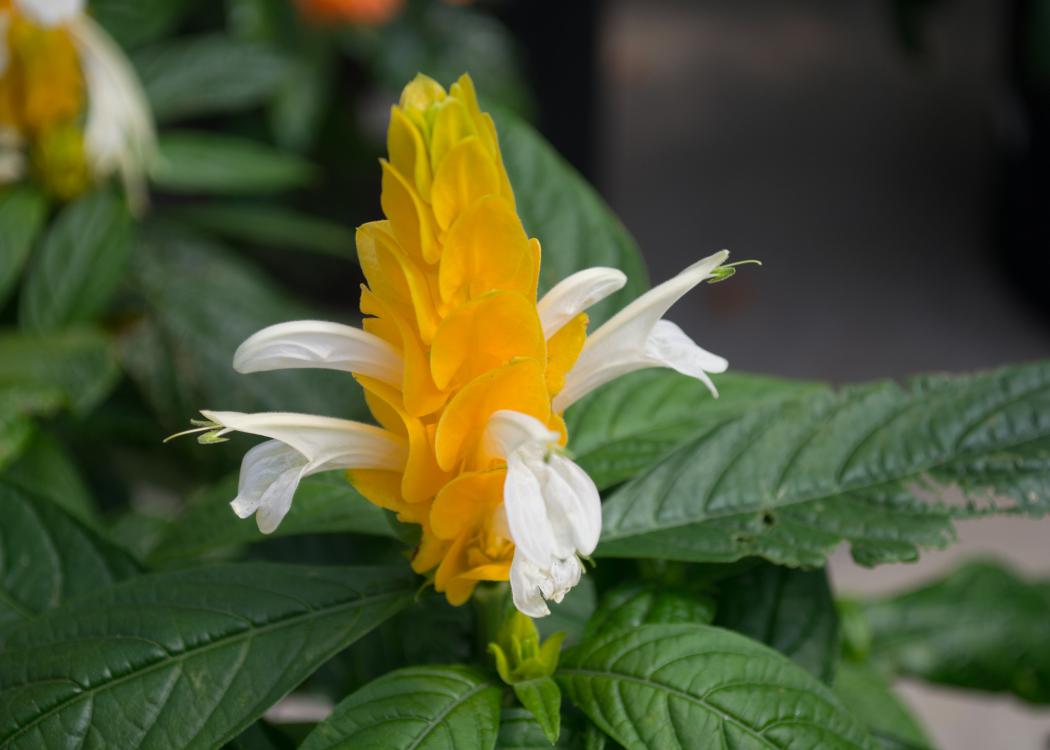
In the landscape, pant Bonfire in a tropical-style garden with bananas or Tropicanna cannas. Use in containers or window boxes with blue flowers like the Easy Wave Blue petunia or the spiky Victoria Blue. It would make a nice companion with yellow shrimp plants. The coral-pink Bellfire would look good with bananas or blue flowers in mixed containers.

Bonfire and Bellfire will be popular. Act quickly or some other shopper will get yours.

-30-

Released: July 5, 2007
Contact: Norman Winter, (601) 857-2284

Editor's Note: Ideal publication dates of Southern Gardening columns are within one month of their release. Editors should examine older columns carefully for any information that could be time sensitive.

Publications may download photographs at 200 dpi: Top | Bottom