Plumerias
provide Hawaiian
beauty
By
Norman Winter
MSU
Horticulturist
Central Mississippi Research & Extension Center
Mississippi
is a long way from Hawaii, but we still can enjoy a special
Hawaiian flower in our landscapes.
|

|
|

Growing plumeria can bring a Hawaiian
touch to Mississippi landscapes, and
growers will be amazed at how easy it is
to over-winter this tropical.
|
|
Most
people are familiar with the tradition of giving floral
necklaces called leis to visitors to Hawaii. The flower used
most commonly is a plumeria, also called frangipani. The
plumeria has a tantalizing fragrance and commands attention
whether grown in a container or the landscape. Once you
start growing it, you will become hooked.
Richard
and Wanda Dobbs, owners of Lei Tropicals in Gulfport, were
so passionate that they turned their hobby into a business.
They offer these exotic plants at garden and patio shows, as
well as at their home location.
If
you talk to Richard or someone with one of the plumeria
societies, they will tell you this is the easiest tropical
to care for and grow. How easy? So easy that anyone can do
it.
Would
you believe the secret to its success is neglect? Well, sort
of. The really neat thing about the plumeria is that most of
the plants are deciduous, meaning they lose their leaves in
the winter. Actually, they start dropping leaves in the fall
before the first freeze, so they are already on the road to
a deep winter sleep.
So,
from the 40-degree days of October to the first warm days of
April, they simply want to be stored in a non-freezing
location. They need no, zero, nada water or light. Giving
them a drink actually will do them harm because they can't
use it.
Just
think: with other tropicals, we struggle to over-winter, we
guess on water and tiny amounts of fertilizer, and then we
move them in and out as the weather dictates, constantly
struggling with sunlight. The plumeria, on the other hand,
could be stored in the attic or garage closet as long as it
doesn't freeze.
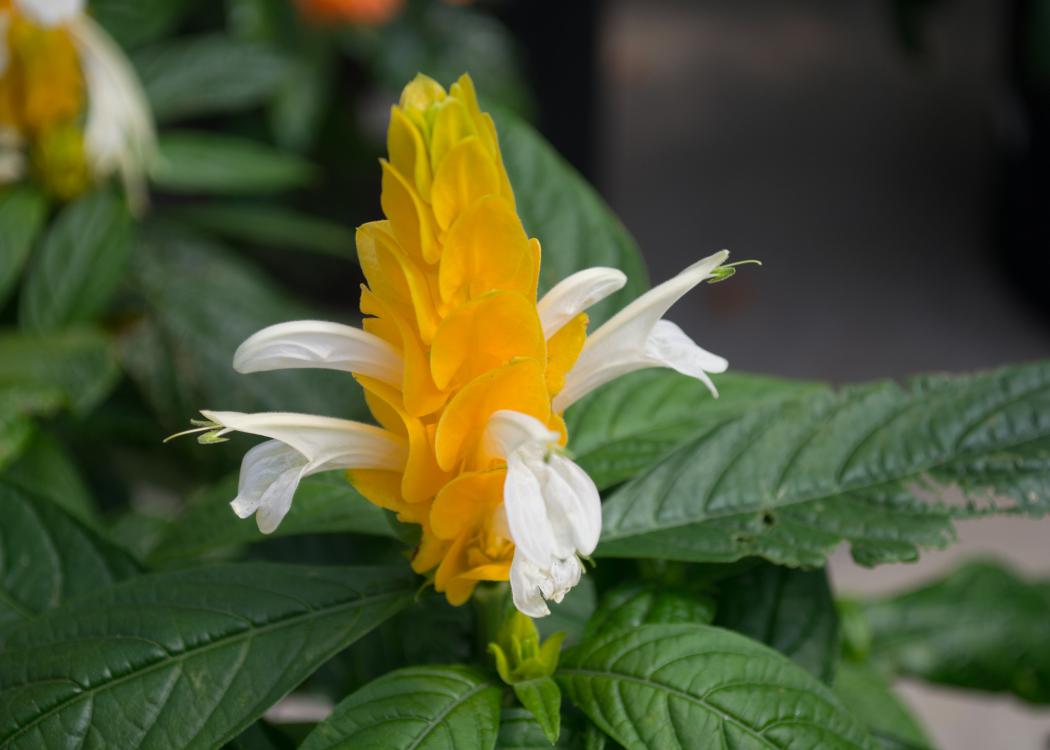
Plumerias
are native to tropical America and related to mandevillas,
allamandas and oleanders. They are started from cuttings.
During the next two to three years, they develop into small,
multi-trunked trees with large, lush-looking leaves. They
send up colorful bouquets of wonderfully fragrant flowers in
colors ranging from white (Polynesia White) and yellow-gold
(Aztec Gold) to multicolored blends like Kaneohe Sunburst,
which is a floral rainbow of red, yellow and orange. Another
multicolor is Kauka Wilder with fiery red and yellow
blossoms.
The
soil should be light, airy and very well drained, whether in
a container or the landscape. Dobbs starts his plumerias off
in the early spring with a super-bloom fertilizer followed
by a couple applications of a slow-release blend higher in
nitrogen. A dilute, water-soluble fertilizer applied every
other week also would work quite well.
At
any time you desire, you can take a 12-inch cutting and let
it cure for a couple of weeks or longer, then plant it in
moist but very well drained potting soil. Planting cuttings
is easiest during the growing season. Remember that water
during the dormant winter season can cause rot. Cuttings,
however, are easily bundled and stored during the
winter.
Although
not as popular as other tropicals, it is not uncommon to
find plumerias at your local garden center. Now that you
know these beautiful plants are no problem during the
winter, buy a few the next time you see them.
-30-
Released:
July 21, 2005
Contact: Norman
Winter,
(601) 857-2284
Editor's
Note: Ideal publication dates of Southern Gardening columns
are within one month of their release. Editors should
examine older columns carefully for any information that
could be time sensitive.
Publications
may download
photograph
at 200 d.p.i.
|