Spice up
landscape with showy gingers
By
Norman Winter
MSU
Horticulturist
Central Mississippi Research & Extension
Center
|
|
PEACH
GINGER -- Featuring larger
flowers and a sweet aroma, Peach ginger is
known usually as Hedychium angustifolium,
but has been reclassified as H.
coccineum.
|
|
|
|
|
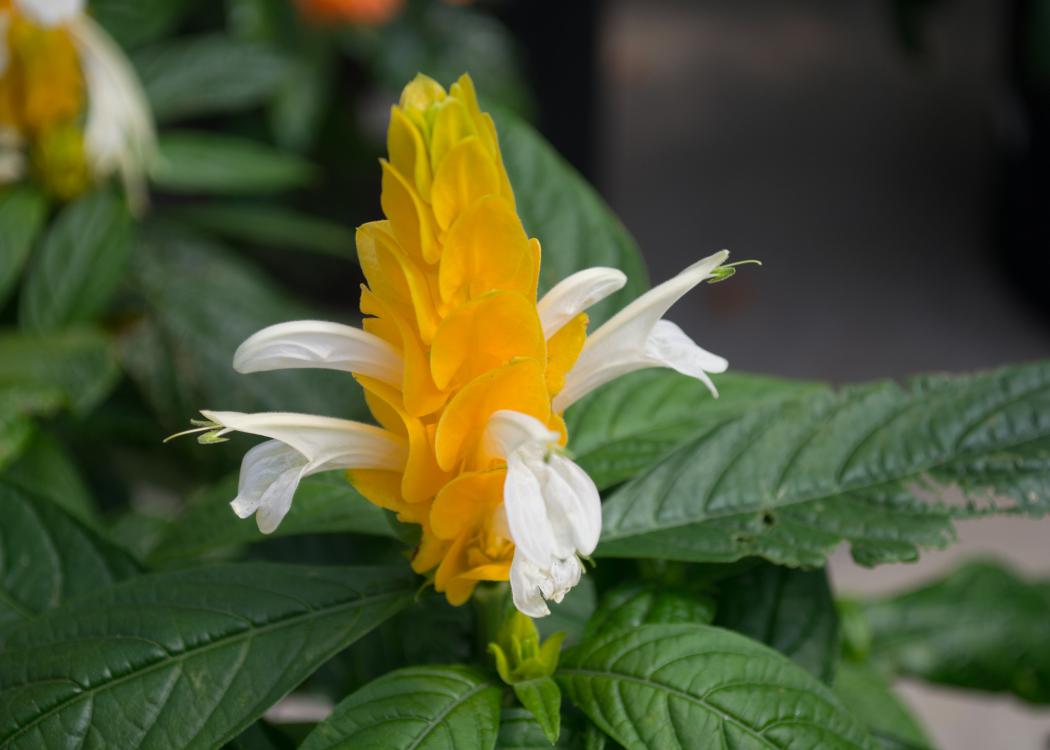
KAHILI
GINGER -- The choice ginger
selection may be the Kahili. This ginger
produces enormous canes topped by clusters
of large, yellow flowers with red
stamens.
|
|
One of
the lyrics in a Jimmy Buffett song says, "I have a Caribbean
soul I can barely control," and I must admit to the
affliction, too!
Sure,
the water and the laid-back atmosphere are great, but the
plant life is what I love. It was in the Caribbean that I
first discovered a passion for gingers, especially
hedychiums.
They
are all over the islands and appear to be native, but
actually they were brought in hundreds of years ago and have
now made themselves at home. Luckily, many of these gingers
will do the same in your garden.
If
you thought ginger was an herb or spice, you are right: it
is both. The edible ginger you buy at the store and grate
for those zesty chicken dishes is Zingiber officinale. The
spice Tumeric comes from the ginger known as Curcuma
longa.
Believe
it or not, all gingers are edible according to Madelyn Hill
and Gwen Barclay, authors of "Southern Herb Growing." They
do warn, however, to go lightly at first to see if you like
the particular flavor of the ginger you are
using.
Most
ginger-growers have no intention of eating the roots or
rhizomes. We want the lush, tropical-looking foliage and
spectacular blooms of hedychium gingers. This genus also is
noted for cold-hardiness and has some of the most fragrant
flowers available for the garden.
The
most common in the South is the butterfly ginger, Hedychium
coronarium. White, butterfly-shaped flowers top the tall,
dark green-leafed canes with a fragrance as enticing as a
gardenia.
The
scarlet ginger, Hedychium coccineum, is showier. This
exotic-looking ginger features 10-inch-long, orange to red
floral spikes produced on 6- to 7-foot canes. Tara is the
leading variety of the scarlet ginger, but I am partial to
one called Peach. Featuring larger flowers and a sweet
aroma, it is known usually as Hedychium angustifolium but
has been reclassified as H. coccineum.
The
choice selection may be the Kahili ginger, Hedychium
gardnerianum. This ginger produces enormous canes topped by
clusters of large, yellow flowers with red stamens. It also
is a perfumed delight.
If
you have decided to give them a try, know that gingers
thrive in dappled shade or filtered light. Occasionally I
see some looking good in almost full sun, but this is the
exception and not the rule. They do prefer deep,
well-prepared, well-drained beds rich in organic matter.
Soil preparation will pay big dividends in your ginger
bed.
Think
about the areas around your home that are microclimates,
offering a few degrees of added winter protection. Perhaps
you have a protected area next to a wall on the south or
east side of your home, or under large oaks.
Gingers
need plenty of moisture and fertilizer to keep them growing
vigorously. Feed in early spring and again in mid-summer
with a slow-release 2-1-2 fertilizer or 12-6-6 with minor
nutrients. Remove frost-bitten stalks in the fall, and add a
protective layer of mulch.
Gingers
combine wonderfully with bananas, cast iron plants, coleus,
elephant ears, ferns, philodendrons, hostas, caladiums,
impatiens, begonias and many more.
Why
grow hedychium gingers? When the dog days of summer make
many of us cast a wishful eye toward the Arctic for relief,
and our gardens are looking tired, the ginger really starts
to put on a show. Try some and you also may have a Caribbean
soul you can barely control!
-30-
Released:
July 29, 2004
Contact: Norman
Winter,
(601) 857-2284
Editor's
Note: Ideal publication dates of Southern Gardening columns
are within one month of their release. Editors should
examine older columns carefully for any information that
could be time sensitive.
Publications
may download photographs at 200 d.p.i. Peach
| Kahili
|