

Rose-form
impatiens meet
shade challenges
By
Norman Winter
MSU
Horticulturist
Central Mississippi Research & Extension
Center
This
time last year I accepted a new challenge, horticulturally
speaking, when my family moved into another home with a
sun-challenged yard. Shade inspired us to plant azaleas,
hostas, ferns and cast-iron plants like crazy, but some of
the most enjoyable flowers have been the impatiens,
especially the Fiesta double or rose-form
impatiens.
|
|
Rose-Form
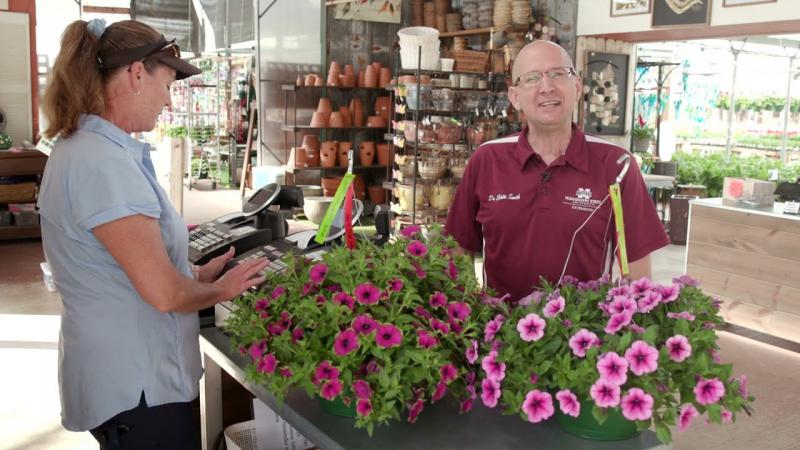
Impatiens -- Sparkler Cherry will be introduced in
2003, but it is part of the Fiesta Series of
rose-form impatiens that have more than a dozen
color varieties available at nurseries today. Some
of the varieties include Salsa Red, Burgundy Rose,
Coral Bells, Purple Pinata and Stardust
Lavender.
|
If you
have shade and want some drop-dead gorgeous flowers, you
must give impatiens a try. You might consider it a rose for
the shade or a rose with no thorns, virtually no diseases
and relatively few, if any, insect problems. Lastly, it is a
rose that blooms the entire season and never needs
deadheading. I know they are not really roses, but you
cannot help but admire the similarity when you look at a
bloom.
Rose-form
impatiens have been out for a few years, but big
improvements have been made recently. A decade ago, seed
companies were producing them, but were having difficulty
producing the seeds and keeping the rose-form stable. They
would revert back to single or semi-double.
Producers
propagate most of these impatiens vegetatively and put them
through a rigorous screening program for any unseen
diseases. The result has been phenomenal, with huge
rose-form flowers produced in abundance for terrific
landscape displays. They also are well suited to large
containers where they form huge mounds of blooms and leaves.
They really liven up a porch, patio or deck and other areas
receiving filtered light.
I still
see some sold generically, but those known for superior
performance are the Fiesta Series produced by Ball Flora
Plant and the Tioga Series produced under The Flower Fields
label, which is a division of Paul Ecke Ranch.
I am a
little partial to the Fiesta Series that has more than a
dozen colors, such as Salsa Red, Burgundy Rose and Coral
Bells, including Purple Pinata and Stardust Lavender and
Sparkler Cherry that will be introduced in 2003. The Tioga
Series also boasts a dozen colors such as a gorgeous Rose on
White, Purple Star and Neon Salmon.
These
plants have the capability of showing off in your landscape
from today until the first frost, so give them a proper
home. Choose a site with morning sun and afternoon shade or
high-filtered shade. Prepare your bed by incorporating 3 to
4 inches of organic matter to raise the beds and give good
drainage.
As you
till, work in 2 pounds of a slow-release, balanced
fertilizer per 100 square feet of bed space. These impatiens
get large, reaching 24 inches in height and as wide. Set out
at the proper spacing and plant at the same depth they were
growing in the container.
Impatiens
combine wonderfully with caladiums that have the same water
and light requirement. Try white caladiums with red veins
with red impatiens. Bold drifts of impatiens planted with
impatiens of complementary colors or colors of the same
family will create a show. They also look very showy planted
in front of evergreen shrubs, such as hollies, viburnums or
ligustrums.
Keep
them mulched, watered and fed every six to eight weeks with
light applications of a slow-release, balanced fertilizer
containing minor nutrients. In late summer, should they look
leggy, trim back about one-third to induce branching and new
growth. Taking care of them during late summer pays huge
dividends with color all fall.
-30-
Released:
June 10, 2002
Contact: Norman
Winter
(601) 857-2284 Editor's Note: Ideal publication dates of Southern Gardening columns are within one month of their release. Editors should examine older columns carefully for any information that could be time sensitive.
Publications
may download
photo
at 200 d.p.i.
|