

By
Norman Winter One of
my favorite plants that has been harder to find than a
four-leaf clover has been blessed recently by other Southern
horticulturists. Now that horticulturists whose words carry
more weight than mine are pronouncing Persian Shield a great
plant, nurseries everywhere will propagate it. Persian
Shield, known botanically as Stobilanthes dyerianus, has
been around for awhile. I could buy this spectacular plant
fairly easy when I lived in Louisiana in the early 1990s,
but it has almost disappeared in recent years. Persian
Shield is one of the most beautiful and unusual plants for
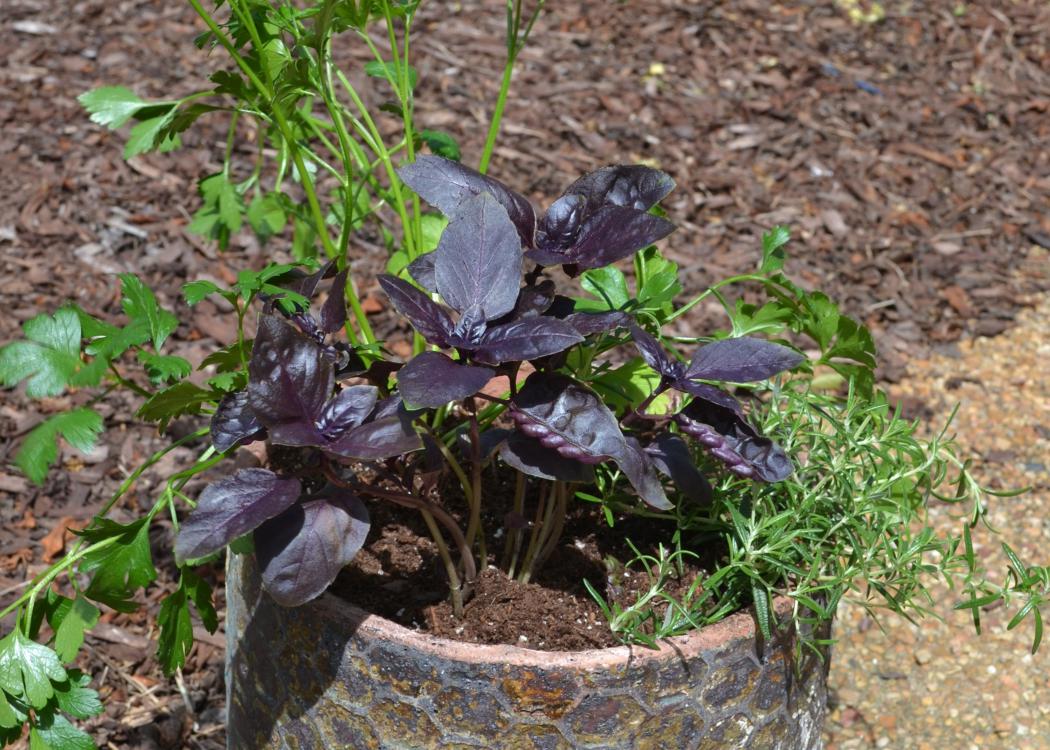
the garden. It is a native to Burma and has 8-inch long
leaves that are iridescent in shades of purple, lilac and
pink with purple-maroon on the undersides. If those colors
aren't awesome enough, the foliage looks as though it has a
light coat of silver electroplated to the leaf. There
are some great combinations to plant with the Persian
Shield. My first choice would be to use lilac-colored
impatiens as companions although pink also would work well.
Look for the Dazzler or Showstopper series that will have
several good choices for companions. Some of
the gray-leafed plants like artemesias, lambs ear and dusty
miller would also look exceptional. The Persian Shield is
ideally suited to being placed as the center plant in a
large container with companion plants. Every
week someone asks me what plants do deer not like? The
reports say that this is one of those plants deer will leave
alone. The
Persian Shield prefers well-drained, organic-rich soil. I
rarely see it in full sun looking its best. I recommend
planting it in morning sun and afternoon shade to keep its
brilliant colors from developing a scorched look. Wait to
plant until all danger of frost has passed, then space
plants on 18 to 24-inch centers. The plants should reach
close to four feet in height. Like coleus, pinching is
recommended to keep plants bushy. This is
not exactly a xeriscape (drought tolerant) plant. Keep the
plants uniformly moist throughout the growing season. This
is a tropical plant that likes our humidity and performs
well in our heat. Keep it growing vigorously by fertilizing
monthly with a light application of a slow release
fertilizer. My choice would be a 12-6-6 with minor
nutrients. This
plant has another huge virtue. It is easy to propagate by
cuttings. After you fall in love with it, you may want to
take cuttings in the fall and overwinter indoors. Cuttings
can also be done in late summer should they become a little
straggly looking. It is well worth the effort to mulch
heavily in the fall, which may entice its return in the
spring, especially closer to the Coast. I have
heard our some of our growers saying that they have included
it in this year's product line. Ask for Persian Shield and
give it a try. I believe you will like it. Released:
Feb. 21, 2000 Editor's Note: Ideal publication dates of Southern Gardening columns are within one month of their release. Editors should examine older columns carefully for any information that could be time sensitive.
Southern
Gardening
Persian Shield
Finally Attracts Attention
MSU Horticulturist
Central Mississippi Research & Extension
Center
Contact: Norman Winter, (601) 857-2284
Visit: DAFVM
|| USDA
Search our Site ||
Need more information about this subject?
Last Modified: Friday, 19-Dec-08 10:29:40
URL: http://msucares.com/news/print/sgnews/sg00/sg000221.htm
Mississippi State University
is an equal opportunity institution.
Recommendations on this web site do not endorse
any commercial products or trade names.