Question: I am running out of forage.
Is early weaning a good idea?
Answer: Early
weaning is often used to improve cow condition for rebreeding, particularly
when forage is limiting. The nutrient requirements of a dry (non-lactating)
cow are approximately 50% lower than the nutrient requirements of a lactating
cow nursing a calf. Research shows that when the stress of lactation is
removed by early weaning, cows gain body weight and condition. A Florida
study reported that early weaning thin cows resulted in a significant
reduction in the amount of total digestible nutrients (an indicator of
dietary energy often referred to as TDN) needed to support cow body weight
gain. Early weaning also effectively initiated postpartum estrus in these
cows. Improved pregnancy rates in cows with early-weaned calves have been
documented by numerous researchers. Early weaning may be most beneficial
in years when pasture production is inadequate to support herd nutritional
needs. Do not wait until the cowherd has lost significant body condition
and forage availability is very limiting to early wean.
Calves can achieve
dry matter feed conversion rates of 5 to 8 lbs. of dry matter per 1 lb.
of gain. Because early-weaned calves can gain weight efficiently, it may
be advantageous to retain calves and feed them for a period of time. This
allows for more flexibility in calf marketing. By feeding early-weaned
calves a concentrate-based diet from weaning time until the time they
would be conventionally weaned, research consistently shows that their
body weights will be equal to or greater than the body weights of calves
nursing their dams up to conventional weaning age. Operations developing
heifers for replacements may want to consider less aggressive preweaning
nutritional management strategies to prevent negative impacts on long-term
productivity. Choosing the most appropriate early weaning diet should
take into account whether or not calf ownership will be retained through
the feeding period and feed cost and availability. Steers weaned at approximately
five months of age versus seven months of age have been shown to have
lower feedlot feed intake and better feed conversion. Research indicates
that early-weaned calves tend to gain less in the feedlots, have lower
carcass weights, and have similar yield grades compared to calves weaned
at traditional ages.
One of the challenges
with early weaning is getting calves started eating and drinking. In situations
where calves are weaned at a very young age (less than three months),
intensive management may be necessary. These extremely young, lightweight
calves are highly stressed from weaning and may display a wide variation
of eating and drinking behavior. It is critical to get these young calves
trained to a feed bunk and water trough as quickly as possible to reduce
the risk of illness. To both lower the risk of health problems and promote
calf growth, implementing proper vaccination programs in consultation
with a veterinarian and getting calves accustomed to concentrate feeds
is essential prior to weaning. Furthermore, low-stress weaning techniques
such as fenceline weaning or fitting calves with anti-nursing devices
may be valuable in early weaning programs. Increased labor and feed costs
are typically associated with early calf weaning and subsequent backgrounding
along with the need for a separate feeding or pasture area. These increased
costs may be easily justified during drought conditions or when herd females
are thin and run the risk of low rebreeding rates.
With seedstock cattle, make sure that breed
association weaning age windows are adhered to for performance reporting
purposes when considering early weaning. Contact the respective breed
association for weaning age requirements. Early weaning just part of the
herd could be a good option as well. Start by early weaning young, pregnant
cattle.
Question: Will
creep feeding help stretch my forage or reduce lactation demands on my cows?
Answer: Generally, creep feeding will not greatly reduce grazing pressure
on pastures nor reduce the strain that nursing calves are putting on their
dams. However, the weaning weight advantages of creep feeding have been
documented in numerous research trials. Creep supplementation may be attractive
in situations of low forage quality where calf nutritional needs to support
acceptable growth are not being met. Early weaning may be a better alternative
to creep feeding when forage quantities are extremely limiting.
The
decision to supplement nursing calves impacts preweaning and postweaning
performance and should take into account cost and availability of feed
and forage supplements, replacement heifer concerns, calf prices, and
calf marketing plans. The value of improvements in calf gains and marketability
should offset the cost of supplementation. Look at creep supplementation
as a management decision that is evaluated with each calf crop instead
of as a management practice conducted each year.
No
difference in milk intake but higher total intake (milk + forage + creep
supplement) was observed in a research trial of nursing calves with access
to creep supplement. According to several studies, no differences in cow
performance were observed by changing the length of the creep feeding
period. Other research indicates that cows with creep grazed calves have
more body condition at weaning and entering late gestation than cows with
non-creep-grazed calves.
Profitability
of creep feeding may depend in large part upon current market conditions.
Typically, when calf prices are high, creep feeding becomes a more viable
and profitable option than when calf markets are lower. Seedstock producers
should also consider how increased average daily gains and weaning weights
due to creep supplementation affects and in many cases improves marketability
of bulls.
Question: What can I expect if I do
nothing to help meet the nutrient demands of cattle on drought-stressed
pastures?
Answer: Thin cows and lightweight calves are a likely result if nutrient
demands of the herd are not met. If cows are allowed to decline to a state
of poor condition, then additional nutrients will be required to regain
lost body condition. Research has consistently shown that reproductive
rates of thin beef females are lower than those of cattle in moderate
to high body condition. Dramatic declines in pregnancy rates occur when
cows fall below a body condition score of 5 (moderate condition with general
good overall appearance with spongy fat cover over ribs and palpable fat
cover on either side of tail head) on the 1 to 9 scale for beef cattle.
A change of one body condition score on this system equals approximately
75 to 80 lbs. change in body weight on an 1100 lbs. cow. Although there
is added expense in supplemental feed, the cost of having thin cattle
that do not rebreed or calves that do not grow like they should can be
even more costly to profitability. In addition, dramatically reduced weaning
weights for calves from inadequate nutrition can hurt profitability.
Question: I am considering reduced
herd numbers to reduce forage and feed demands on my operation. Which
cattle should be culled first?
Answer: During drought or
other conditions where forage and feed resources are limited, culling
deeper into the herd than normal is often appropriate. Culling can help
alleviate grazing pressure on drought-stressed pastures and decrease overall
operation demand for supplemental feed or forage. Stocker operators running
short of forage may want to consider shipping cattle to feedlots early
and can still take advantage of retained ownership opportunities as they
pencil out. In cow-calf operations, prime candidates for culling are open
(non-pregnant) cows, cows without calves, cows with physical defects (cancer
eye, bad udder, feet and leg soundness problems), older cows (10 years
old and older), poor producers, late calving cows, cows outside of the
desired calving season, and bad
temperament cows.
A
logical culling order that may be used is as follows:
Open
old cows
Open replacement heifers (still young enough to feed out and meet fed
market targets)
Old cows with unsound mouth, eyes, feet and legs
Open cows of any age
Thin cows over 7 years old (body condition score < 4)
Very late bred 2 year olds
Healthy bred cows that are over 7 years old
Healthy bred young cows 2 or 3 years old
Healthy bred cows 4 to 7 year old cows
Cull
cow price levels and seasonal trends should be taken into consideration
when deciding when to sell cull cows. When cull cows prices are trending
upward, it is often advantageous to wait to market cows if the increasing
values can cover added production expenses from holding over cull cows.
It may also be advantageous to retain cull cows until weight and body
condition can be added. Unlike feeder cattle prices, cull cow prices generally
increase on a per pound basis with increasing cattle weights. If cull
cow prices are trending downward, however, it may be advisable to market
cull cows in a timely manner before more money is invested in cow maintenance,
particularly if this investment will not likely be recovered. In Mississippi,
the traditional seasonal highs for cull cow prices usually occur in March,
while the seasonal lows usually occur in November.
Question: I am concerned about having
enough forage and feed going into the winter. What can I do now to plan
ahead for winter feeding?
Answer: Priority should be placed on determining nutrient needs
of the cattle herd. The
best time to improve cow body condition in preparation for calving and
breeding is in the months right after weaning. Daily dry matter intake
needs approach 2% of body weight for mature cows immediately after calves
are weaned. As calving nears, dry matter intake needs will increase, and
after calving daily dry matter intake levels should be closer to 2.5%
of body weight. If hay quality/supply appear short and grazing plans cannot
provide adequate levels of nutrients for the herd, then supplemental feed
may become necessary.
Plan cool-season grazing to limit the amount of hay and
supplemental feed needed. Develop a cool-season forage plan for this winter
keeping grazing needs in future winters in mind. Annual ryegrass and tall
fescue are two common cool-season grasses that are used in many winter
grazing programs in Mississippi. As an annual forage crop, annual ryegrass
acreage decisions should focus on cool-season forage needs for this winter
and spring. Tall fescue, on the other hand, is a perennial forage, so
tall fescue fields established this autumn need to be pampered during
establishment and not grazed until next spring. Therefore, do not plan
for acreage established this autumn into tall fescue to be part of the
winter feeding plan for this year. Instead, it should be considered a
component of a long-term winter-feeding plan where additional cool-season
forage production is desired. Small grain forages, such as oats, wheat,
and rye, are worth considering also, as they can compliment annual ryegrass
production by providing earlier grazing.
Stored forages and feeds should be located, evaluated for
nutrient value and price, and purchased or forward contracted. Many hay
suppliers fill orders to a regular customer base first before marketing
to new customers, especially when hay supplies are tight relative to hay
demand. Word of mouth is a common way of locating hay supplies. The Mississippi
Market Bulletin and Internet-based hay directories (Mississippi
Hay Directory) are also potentially useful sources of information
on hay suppliers.
By-product commodities are a viable feed alternative to
commercially mixed supplements. Take time to evaluate both commodity feeds
and commercial supplements to determine what ingredients price in as the
most cost-effective to achieve target production levels. It is useful
to reevaluate diets over time as feed prices and availability change to
make sure that the cost of the
current nutritional program is reasonable in comparison with other feeding
options. The Mississippi Commodity Feed Sources
Directory includes contact information for commodity feed manufacturers,
brokers, and dealers to assist producers in locating feed supplies.
By-product commodity prices for many common ingredients
in beef cattle diets often follow seasonal price trends. Dried
distillers grains usually reach seasonal lows around early autumn. Whole
cottonseed prices, on the other hand, tend to start falling after June
and usually reach annual lows in October and November. Cottonseed hull
prices tend to climb in November and December over September and October
prices and then drop again in January and February. The best prices on
soybean hulls are typically in early summer, with soybean hull prices
often rising after August before starting to decline again after January.
Prices of wheat midds are generally lowest in May and reach their peaks
in December. Price trends in the current year can always buck the traditional
seasonal trend, however, so it is important to stay up to date on current
commodity prices. Pool
resources with neighbors when possible. Purchasing feed in bulk can often
reduce cost per unit.
Just
because certain by-products are cheap in terms of dollars, does not mean
that they are necessarily a good value. The nutritional makeup of feeds
and what they will contribute to beef cattle performance determine their
true value. Farm feed storage, mixing, handling, and feeding capabilities
also determine the feasibility of different diets for the herd. Specific
feeds can have characteristics that require special handling considerations,
as in the case of the flowability limitations associated with fuzzy whole
cottonseed. A cornstarch coating process for whole cottonseed shows promise
for alleviating this handling problem though. Some feeds can be fed free-choice
in self feeders, while others required daily hand feeding. Because each
feed has its own unique feeding advantages and limitations, it is worth
the time to visit with someone who is competent in formulating beef cattle
diets to avoid any potential nutritional problems or disorders in the
herd.
Using
ionophores (monensin or lasalocid) in cattle diets can improve gains on
high-roughage diets and efficiency of high-grain diets. Consider incorporating
ionophores into beef cattle nutritional programs. However, be cautious
about using these products where other classes of livestock such as horses
are relying on the same feeding areas or equipment as ionophore ingestion
in small quantities can be fatal to these animals.
Question: What are brassicas and how
can they be used for grazing in a drought?
Answer: When drought limits hay stocks and forage resources, many producers look
towards alternative forage crops to help offset this shortage. The use
of Brassica crops (Turnip, Rape, and RapeXTurnip hybrids) is an alternative
to consider. While brassica crops are not very drought tolerant themselves,
they can be planted in late summer and will be ready to graze very quickly
(relative to other annual crops).
Adequate
fertility (N,P, and K) and grazing management are needed in order to extract
maximum benefit from these crops. Producers need to wait until the crop
has reached a certain maturity before grazing (40-60 days from planting
or when the crop is about 12-20"). Introduce animals slowly with
an alternative feed sorce (hay or old pasture). If the animals have not
eaten brassicas before, then it will take a day or two for them to work
out that they are good to eat. Once this occurs the animals will prefrentially
graze the brassicas, so care needs to be taken not to overgraze (leave
4-5" of stubble height).
Brassicas
are extremely high quality, so a roughage source should be feed with the
crop (at least 25-30% of the diet should be hay or grass pasture). The
brassicas can also be seeded with annual ryegrass and small grains, but
cut the recommended seeding rates
for the grasses back to 2/3. Brassicas are suitable for cattle, sheep,
and goats but are not recommended for horses.
Question: Can sweet potatoes work
in a beef cattle feeding program?
Answer: Sweet potatoes can serve as a highly palatable and digestible energy source
in beef cattle diets. They are often readily available in Mississippi at relatively low cost versus many other feedstuffs for cattle. There are some important considerations that must be managed in order to safely feed them to cattle.
Sweet
potato roots are high-moisture feedstuffs that serve primarily as an energy source. They contain approximately 80% moisture, 8% crude protein,
6.5% acid detergent fiber, and 25% neutral detergent fiber on a dry matter
basis. Much of the total protein is not digestible. Sweet potatoes contain practically no fat or the fat-soluble vitamins important in cattle diets (vitamins A, D, and E). However, culled sweet potato French fries may contain high levels of fat that can lead to digestive upset in cattle if not fed in moderation.
Nearly half of the protein in sweet potatoes is non-protein nitrogen. Because of this, take care to avoid feeding raw whole soybeans in combination with sweet potatoes as this can be a deadly combination. Use other non-protein nitrogen feeding precautions, such as avoiding feeding to young, lightweight calves. Sweet potatoes tend to be low in minerals needed by cattle. In particular, the calcium content of sweet potatoes is variable, but is often relatively low. Cattle diets high in sweet potato content must be supplemented with protein, fiber, minerals, and vitamins.
Severe dental decay can result from pH problems in sweet potatoes. Long-term feeding of sweet potatoes increases the likelihood of dental problems in cattle. This is of particular concern in situations where cattle remain in a herd over a period of years where sweet potatoes are a routine supplement, such as may be the case with breeding cattle.
Cattle can choke and even suffocate when eating sweet potatoes. Chopping potatoes will help prevent choking in cattle,
but they can be fed whole if necessary. Choking risk is minimized if cattle keep their heads down with their throats extended while eating. To accomplish this, feed cattle from low troughs and use a bar or electrified wire placed above the troughs to prevent cattle from raising their heads while eating. Try also to reduce cattle feeding competition to keep cattle from rapidly gulping down sweet potatoes and choking. Allow adequate trough space for the number of head fed.
Avoid using rotten, molded, sprouted, or frozen
potatoes as a beef cattle feed. When feeding cull sweet
potatoes, use only fresh potatoes. Molded sweet potatoes can contain mycotoxins that can be fatal to cattle when consumed. Mycotoxins can be present even when there is not visible evidence of mold. Sprouted or sunburned potatoes can contain toxic glycoalkaloids.
The concentration of these toxins increases with exposure of the sprouts or peelings to light in warm, moist conditions. Remove long sprouts before feeding. Glycoalkaloid toxicity signs include staring eyes, dilated pupils, trembling, staggering, weakness, and possible convulsions. Never offer frozen potatoes to cattle because of the choking risk.
Sweet potatoes are better used in mature or yearling cattle diets than in calf diets. Because sweet potatoes are high in readily fermentable
starch, adjust cattle to the potatoes gradually to
minimize the risk of digestive disturbances such as acidosis. Start by feeding two or three pounds of sweet potatoes per head per day and slowly increase feeding amounts over a period of several weeks until the cattle are getting the desired amounts. Sweet potatoes are not a good fiber source for cattle. Make sure that cattle have a free-choice source of roughage available to them at all times when feeding sweet potatoes.
Fresh sweet potatoes can substitute for at about one-half of the grain fed to cattle. Wet potatoes or dried potato meal may be used as cattle feed up to about 20 to 25 percent of the diet on a dry matter basis. Sweet potatoes and their processing wastes can be ensiled for use as a cattle feed. When making ensiling sweet potatoes, include 1 pound of dry grass hay with every 4 pounds of sweet potatoes. Alternately, mix 4 pounds of corn silage with every 1 pound of ensiled sweet potatoes. Producers may notice loose manure and increased urine production in cattle when feeding large quantities of sweet potatoes.
There is limited information about cattle performance on sweet potato-based diets. Because of the high moisture content of many sweet potato products, rumen fill can limit performance. This may necessitate feeding additional roughage or grain. One feeding trial in Pontotoc,
MS comparing cattle fed 4 pounds of corn and 1.75 pounds of cottonseed meal per
head per day to cattle consuming 1.5 pounds of corn, 2 pounds of cottonseed meal,
and 10 pounds of sweet potatoes showed no differences in animal average daily weight gains
over an 84-day period.
Question: How can I get the most out
of my hay supplies?
Answer: Conserve the hay crop that is available by minimizing hay
storage and feeding losses. Barn storage is ideal for hay, but there are
many other methods of hay storage (tarps, on wooden racks, on gravel,
proper site selection and bale orientation, etc.) that will reduce storage
losses compared to outside storage on the ground. Hay storage losses of
30% or more are common in the Southeastern U.S. over several months of
outside storage on the ground. Feeding losses from trampling, refusal,
and leaf shatter can exceed 50% of hay dry matter in extreme cases. Do
not allow cattle unlimited access to hay. Hay racks and rings will help
reduce hay feeding waste. Also feeding high quality hay can result in
less animal refusal.
For
more efficient use of nutritional resources, cattle can be divided into
feeding groups based on nutrient needs. As a general rule, lactating cows
need higher nutrient levels than dry cows, and first-calf heifers need
higher nutrient percentages in their diets than mature cows. The better
quality hay should go to the feeding groups with higher nutrient needs.
Another approach is to allocate higher quality grazing paddocks to the
feeding groups with higher nutrient demands.
Question: Can rotational grazing help
my forage situation in time of drought?
Answer: Rotational grazing is a good method for managing forage utilization, particularly
during a drought. Do not overgraze pastures. While this might sound difficult
with low forage growth rates, try to keep at least a 3” of post-grazing
residual on pastures. Water loss through evaporation is much greater on
bare ground than where a good plant cover is present. To avoid overgrazing,
try to limit graze animals for a few hours a day and then move them to
an area where hay or other supplemental feeds can be fed. Pastures that
are not overgrazed will also retain more water and recover more quickly
once moisture does arrive. Simple electric fencing systems can be used
for rotational, limit, or strip grazing.
Question: Can CRP ground be released
for grazing during a drought?
Answer: The Conservation
Reserve Program (CRP) is a voluntary program for agricultural landowners
that encourages farmers to convert highly erodible cropland or other environmentally
sensitive acreage to vegetative cover, such as tame or native grasses,
wildlife plantings, trees, filterstrips, or riparian buffers. Farmers
receive an annual rental payment for the term of the multi-year contract.
The program is funded through the Commodity Credit Corporation (CCC).
CRP is administered by the Farm Service Agency (FSA), with the Natural
Resources Conservation Service (NRCS) providing technical land eligibility
determinations, conservation planning and practice implementation. For
more information on CRP, contact your local FSA office or visit FSA’s
website. Mississippi
county FSA office contact information is available online as well.
Your local FSA office can answer questions about CRP grazing restrictions
and options in times of drought.
Question: Is there insurance available
on pasture and hay losses that can help me better plan for future droughts?
Answer: USDA recently announced
the availability of two new pasture insurance programs from USDA's Risk
Management Agency. These programs, the Rainfall index insurance program
and the Vegetation index insurance program are intended to help producers
who have suffered from drought conditions better prepare for future conditions.
For complete details about these programs, visit http://www.rma.usda.gov/policies/pasturerangeforage/.
In addition, buying a livestock insurance policy is another risk management
option. Producers should always carefully consider how a policy will work
in conjunction with their other risk management strategies to insure the
best possible outcome each year. Livestock insurance agents and other
agri-business specialists in the private and public sectors can assist
farmers in developing a good risk management plan. The USDA Risk Management
Agency website is a good resource for livestock insurance information: http://www2.rma.usda.gov/livestock/.
Question: Should fertilizer be applied
during a drought?
Answer: Identify areas of the farm that have better water-holding
capabilities and apply fertilizer inputs on these areas only. While this
may not always be the case, most producers will have a mixture of soil
types on their farms. It is often very easy to see these in a drought,
as the ridges become brown and the valleys or bottoms stay green. If these
different areas are identified, then it is better to put your nitrogen
fertilizer on the ground with better water-holding capacity and avoid
wasting fertilizer by applying it to the more drought-prone soils. In
fact, applying nitrogen fertilizer to drought affected pastures can be
very dangerous as the plants will take up the nitrates until they reach
toxic levels in the plant, and this can kill cattle and other livestock
very quickly. If nitrogen fertilizer has been applied to drought-affected
pasture, then it may be prudent to get a nitrate test conducted at the
state chemical laboratory to make sure nitrate levels are below those
considered toxic before grazing or making this forage into hay. Try to
keep any N applications during a drought around 30 lb N/A or less to help
reduce the risk of nitrate toxicity and to give the plants a better chance
of using the N if the weather remains dry.
Question: Where can I get my forages
tested for nitrates?
Answer: The Mississippi
State Chemical Laboratory offers two nitrate tests. The qualitative
test is $15 per sample and indicates whether or not nitrates are present
in the forage sample. The quantitative test is $35 per sample and indicates
a specific nitrate level present in the forage sample.
Question: What are the signs of nitrate
poisoning in beef cattle?
Answer: Signs
of nitrate poisoning include bluish discoloration of the skin, bluish-brown
mucous membranes, labored or rapid breathing, muscle tremors, lack of
muscle control, staggering, weakness, diarrhea, frequent urination, dark-
to chocolate-colored blood, rapid pulse, possible coma, and eventual suffocation.
Necropsy results often reveal brown-colored and badly coagulated blood.
Pregnant females that survive nitrate poisoning may abort due to lack
of oxygen to the fetus. Abortions generally occur 10 to 14 days after
exposure to excess nitrates.
Question: Will nitrate levels drop
if high nitrate forage is harvested as hay and stored for several months?
Answer: If forage has high nitrate levels, they will not fall once
it is made into hay. Depending on the nitrate level, forage containing
nitrates will need to be "diluted" with other feed sources to
make the total nitrate levels less that 1% on a dry weight basis for feeding
to beef cattle.
Question: Drought-stressed corn is
available for grazing. Is this a good option for beef cattle?
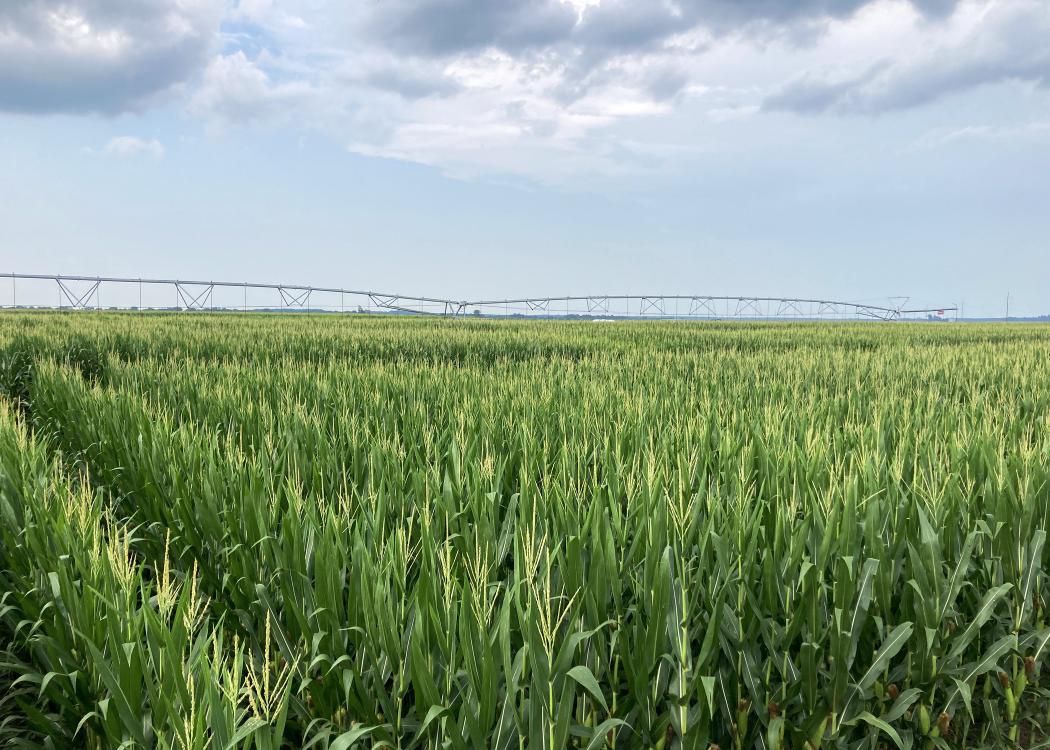
Answer: It may be tempting
to salvage drought-stressed dryland corn by grazing. Get a nitrate test
first! Drought-stressed corn is a prime candidate for nitrate accumulation
at levels that may be toxic to cattle. The highest risk typically occurs
one for three days after a rain.
Question: During a drought are there
any poisonous plants in Mississippi that I should be concerned about cattle
consuming?
Answer: Perilla mint, nightshades,
bracken fern, lantana, mountain laurel, and pokeweed are examples of poisonous
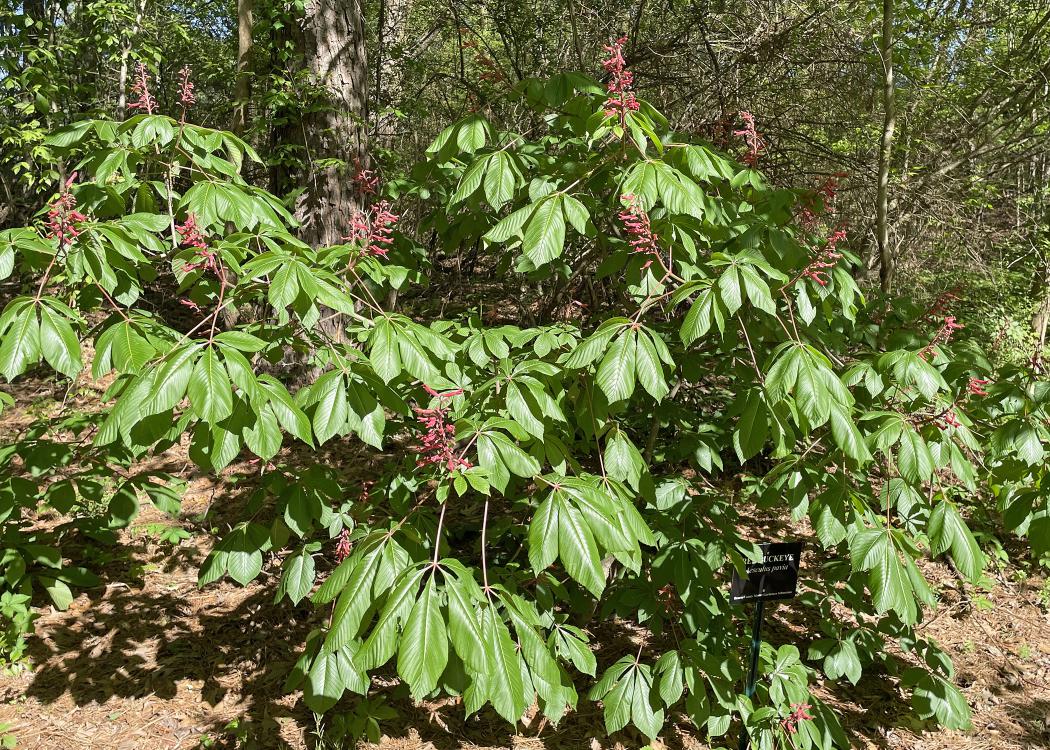
plants that can cause problems in cattle when consumed. Buckeye (horse
chestnut), wild cherry (black cherry), and oak trees can also cause potential
livestock disorders if their leaves or nuts are consumed. In most cases
grazing cattle with a good supply of forage and or hay will not consume
poisonous plants. However, with limited forage availability, pastures
should be searched for poisonous plants common in Mississippi and cattle
should be checked for problems on a regular basis. MSUcares
pasture weed ID pictures
Question: Are there any nutritional
concerns with drought-stressed pastures other than nitrate poisoning or
poisonous plants that could affect my cow herd?
Answer: Vitamin A deficiency
can be a problem on drought-stressed forages. Actively growing forages
normally provide acceptable levels of Vitamin A to beef cattle. Supply
cattle with a complete mineral supplement at all times. Include at least
200,000 units per pound of Vitamin A in the diet. Vitamin A is required
for normal night vision, epithelial cells that line body surfaces and
cavities, and bone growth.
Question: Is aflatoxin going to be
a problem for my cow herd during a drought?
Answer: Aflatoxin is a naturally
occurring toxic chemical by-product from the growth of the fungus Aspergillus
flavus on corn and other crops such as peanuts and cottonseed. Aflatoxin
contamination is generally a more substantial problem in very droughty
years. However, very aflatoxin problems have been reported so far in 2006.
Different animals can tolerate varying levels of aflatoxin contaminated
corn. Finishing beef cattle can tolerate a higher level (300 ppb) than
any other animal classification as established by the U.S. Food and Drug
Administration. More information on tolerable levels in beef cattle is
available in the Information Sheet "Minimizing
Aflatoxin in Corn."
There is no reliable visual indicator of aflatoxin
presence, including black light (as was often used in the past). The only
reliable method to detect aflatoxin contamination is by chemical analyses.
The MSU Chemical Laboratory (662-325-3324) can run this test or aftermarket kits can be purchased
from various manufacturers. Samples cost $35 each at the MSU Chem Lab.
Samples can also be analyzed by:
Envirologix (Lee Daughtry, retired Seed Director, MDAC-BPI: 662-418-1115)
Neogen
Corporation
Romer
Labs, Inc.
VICAM
Diagnostix
The
variability associated with aflatoxin analyses is very high because very
few kernels (1 per 1000 or so) are normally infected. Thus, a large sample
and multiple analyses will help minimize testing variability. One of the
best methods to reduce variability is to grind a very large sample of
grain, then mix and subsample a portion of this meal for analysis.
Question: Will deworming help my cow
herd in a drought?
Answer: Internal parasites
are an additional burden on the cow herd. Visit with a veterinarian about
internal parasite control programs best suited for your area. Mid-summer
deworming offers the advantages of addressing a controlled parasite load
in cattle with reduced chance for reinfestation in dry, hot weather.
Question: What are some tips on managing
cattle during hot weather?
Answer: Cattle need access
to clean water and a proper mineral supplement at all times. Ponds that
are drying up may not provide adequate fresh, clean water for cattle.
Alternate water sources may be necessary. Cattle should not have to travel
long distances for water. Water requirements of cattle depend on a number
of factors including air temperature, water temperature, milk production
level, pregnancy status, physical activity, growth rate, diet type, moisture
level in the diet, salt intake, and dry matter intake. Temperature increases
from 50 degrees F to 90 degrees F can increase daily water requirements
by 2.5 times
Ample shade should
be provided (at least 30 to 40 ft2 per head for mature cows on pasture).
If cattle crowd too closely together, limited shade can be worse than
no shade at all. Shade options include natural (trees), permanent (barns
and sheds), and portable shades. Strategic planting of trees along the
west side of a pasture will help provide afternoon shade. If a metal roof
is used on a permanent shade, make sure that it is insulated and does
not radiate heat like an oven. Portable shades are usually less expensive
than permanent shades and can be moved to accommodate different grazing
systems. Shade placement should be strategic since it will affect cattle
distribution and forage utilization. Shades need to be high enough (at
least 10 feet off the ground) to allow adequate airflow. Good ventilation
and airflow is also recommended for confined cattle.
Kentucky researchers
have reported higher average daily gains in cow-calf pairs grazing toxic
endophyte-infected tall fescue with shade than without shade. Feedlot
studies conducted by Texas Tech University have shown that providing shade
is effective in decreasing heat stress and lowering the negative effects
of heat on cattle performance. Shaded heifers had higher dry matter intake
and average daily gain than unshaded heifers. The incidence of dark cutters
was decreased approximately in half in carcasses from shaded versus unshaded
heifers.
Arrange to work cattle
during cooler parts of the day instead of during the heat of the day.
While working cattle in the late evening may seem like a good idea, cattle
build up a heat load during the day and need at least six hours to dissipate
heat and cool down from an extremely hot day. Researchers have observed
cattle body temperatures reaching daily maximums at 10 p.m., well after
outside temperatures peaked. If possible, try to work cattle early in
the morning before the temperature rises to uncomfortable levels.
Make an effort to
limit the amount of time cattle must spend in a confined area with limited
air movement when working cattle. If cattle remain in a confined area
for an extended period, then attempt to provide access to fresh, cool
water. Very excitable cattle are particularly prone to heat stress. Practices
that reduce cattle stress are beneficial during hot weather.
Implementing
a few precautionary measures to help the herd beat the heat can make the
difference in avoiding production losses associated with heat stress. |