Coast Gardener
Formosan termites spread in crossties
Coast Gardener Newspaper and Web Column - October 6, 2001
Many homeowners and landscapers frequently use old railroad crossties in their landscapes, but in some cases these wooden borders could be spreading Formosan termites.
Formosan termites are a subterranean species that require moist environments to live. This species of termite originated in the Far East. The termites tunnel from location to location so as not to dry out should they become exposed to above-ground conditions.
Formosan termites have caused tremendous problems in New Orleans. Infestations can be found in the Coastal counties of Jackson, Harrison and Hancock, as well as further north in Lamar, Forrest,
Jones, Rankin, Madison and Lauderdale counties. Some evidence suggests areas in Mississippi south of a line from West Point to Cleveland can support Formosan termites. The southern third of the state remains the primary area of concern.
Crossties have been found to be responsible for several of the Formosan termite infestations found away from the Coast. Evidence indicates Formosan termites are being moved fairly long distances in crossties.
About 10 or 15 years ago, several small railroad lines in the southern United States were abandoned. Some of the crossties on these railroads in south Mississippi and Louisiana were infested with Formosan termites. People salvaged the rails and the crossties, and the Formosans began to spread as the crossties were sold.
Crossties are a popular landscape feature used to edge gardens and make raised beds. Crossties are treated with creosote to give them a long life, but in time it becomes less concentrated and termites can enter the wood as it cracks. Gardeners like the weathered look of old crossties and the fact that the creosote is no longer toxic to plants.
Don't buy the crossties if you see termites. If the crosstie contains worker, soldier and reproductive termites, the group can establish a colony wherever the crosstie ends up.
Be careful when you buy crossties. Inspect them to see if they are infested with termites and determine where the crossties came from. To inspect crossties for termites, separate the bundles and look for evidence of termites between the crossties. Check for live termites, tunnels and soil that has been carried into the wood. Drop one end of the crosstie and examine what falls out.
Examine crossties already in yards and look for evidence of termites. Have a professional identify any termites found. A termite's species cannot be determined from the workers, so look for the winged form or a soldier with its enlarged head and noticeable mandibles.
Nine times out of 10, if there are termites in the crossties, it is not necessary to do anything about them unless the crossties actually touch the foundation of the house. Where they touch the foundation, move them back or remove them. If the termites are Formosans and the house is under a treatment contract, then continue on with whatever service you're using.
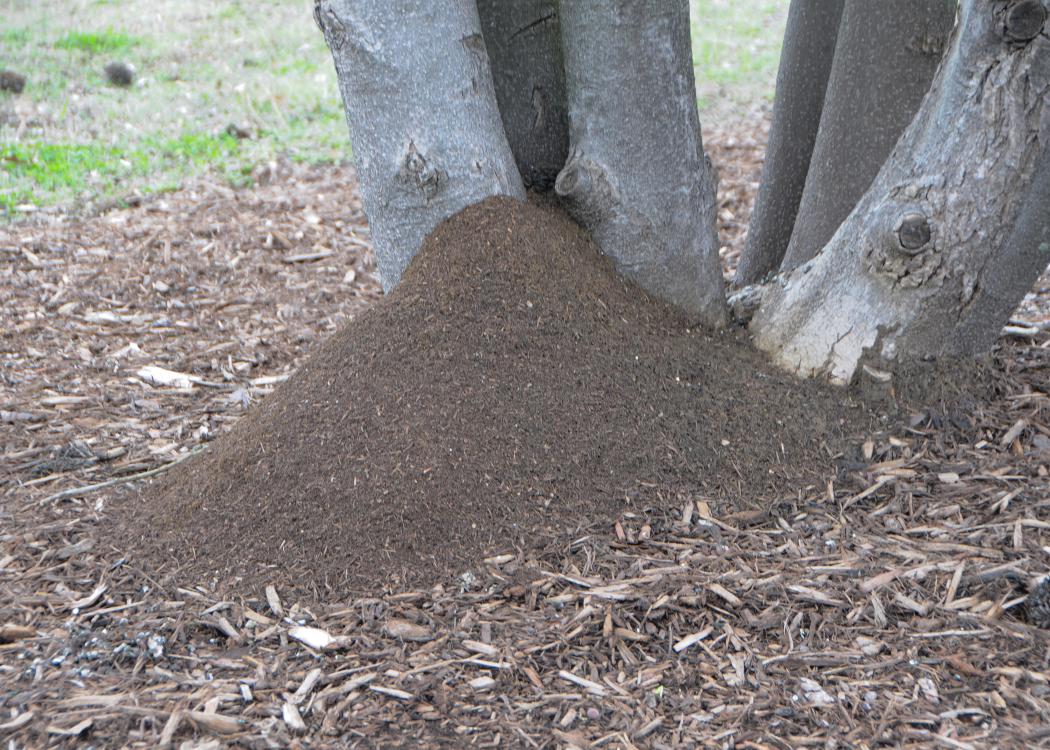
Formosans are different from Mississippi's native subterranean termites, the eastern termite, in that they form much larger colonies and they build what is known as a carton when they get in buildings. This carton protects the termites and serves as a place where moisture accumulates, eliminating the need for termites to go back outside as often.
Treat formosans much like you treat other subterranean termites, although the carton must be found and removed to rid a building of termites. Use a non-repellant liquid insecticide on this species. Termites are not repelled by treated soil, so they enter the area and the insecticide affects the colony in different ways. If the material just repels them away from the treated area, then you have not put any pressure on the termites. They're still there and as happy and healthy as they were. They'll continue to move around and feed and may find a way into the house.
These archived gardening columns were written by Chance McDavid, former Harrison County Extension Agent.